Hybrid linear-attention architectures have recently scaled to large open-weight models, offering quality competitive with full attention while substantially reducing key/value (KV) cache growth. However, their in-place recurrent-state updates complicate cache management: prefix reuse requires state checkpoints alongside full-attention KV, while storing state checkpoints in full increases memory pressure, leading to more evictions and repeated prefill. By analyzing the decay structure of Gated DeltaNet (GDN) and Kimi Delta Attention (KDA), we find that different heads and channels retain prefix information over markedly different timescales, which we term \emph{retention horizons}. This variation suggests substantial compression potential in persistent state checkpoints. Building on this observation, we introduce \emph{Decay-Aware State Compression} (DASC), which derives retention horizons from model weights, selects long-horizon state units, and packs them into a ragged state checkpoint layout. To integrate efficiently with tensor-parallel inference engines, DASC furtherly balances compressed state checkpoints across TP ranks. On reuse, DASC either zero-fills omitted units or refreshes them from a bounded suffix with additional compute cost. Across retrieval and end-to-end reasoning benchmarks on Kimi-Linear, conservative DASC configurations remain close to full caching while compressing KDA recurrent state checkpoints by $2.63\times$. Under fixed state checkpoint memory budgets, the resulting capacity gains reduce mean Time to First Token (TTFT) by 42.6\% and improve input throughput by 68.4\%. At larger compression ratio, suffix refresh recovers much of the accuracy lost to more aggressive omission, at the cost of additional replay computation. Qwen with GDN exhibits a similar quality--efficiency trend, showing that DASC extends from channel-wise KDA to head-wise GDN.
Yanqi Yu, Pingwei Sun, Jianchao Tan et al.· 0 citations
By introducing RSLM (Rotated Scaled Lloyd-Max), a family of training-free vector quantization codecs compressing embeddings to 1--4 bits per dimension, we reduce memory cost and memory bandwidth of a typical large-scale Approximate Nearest Neighbor (ANN) search system, while reducing its complexity and keeping or improving recall across multiple benchmark datasets. State-of-the-art systems filter candidates using coarse partitions, approximately score them to narrow the set, and then rescore the best with higher precision representations (often >=8 bits per dimension). Our relativized codecs can bring this down to 2--4 bits per dimension.
We use the properties of the ANN system to encode residual vectors instead of full vectors, both for the approximate scoring phase and the rescoring phase. Since Maximum Inner Product Search (MIPS) is very sensitive to vector norms, we correct the $L_2$ norms of quantized vectors. Our major innovation is that we correct the $L_2$ norm of the final reconstructed vector rather than just the residual. Our rescaling replaces more complicated schemes, such as Anisotropic loss. The residualization scheme gives us a more favorable quality vs size trade-off than generic quantization methods.
Our high-performance implementation leverages a block-wise cascaded Fast Walsh-Hadamard Transform (FWHT) with linear-like complexity, AVX SIMD-optimized codebooks, and a steganographic encoding of scaling factors for perfect cache-line alignment.
Rastislav Lenhardt, Teodora Dobos, Thomas Vecchiato et al.· 0 citations
Popular adaptive stochastic gradient descent (SGD) methods to train artificial intelligence (AI) systems include the RMSprop, the Adam, and the AdamW optimizers, where the adaptivity parts in Adam and AdamW basically just coincide with RMSprop. Such adaptive methods involve several hyperparameters including the regularization parameter $\epsilon$ (which ensures that one does not divide by 0 and is often chosen to be very close to zero such as $10^{-8}$ in PyTorch by default) and the second moment decay parameter $\beta$ (which is often chosen to be very close to $1$ such as 0.99 (RMSprop) and 0.999 (Adam and AdamW) in PyTorch by default). Despite the high relevance of such methods, it remains an open research problem to provide error estimates for such methods with the error constants being not exploding but uniformly bounded with the respect to the hyperparameters, even in the situation of convex stochastic optimization problems.
It is the key contribution of this work to essentially solve this problem for RMSprop. Specifically, we bound the expectation of the stopped evaluation of the objective function at the RMSprop process from above by the sum of an initialization term that decays exponentially in the training time, a stochastic approximation remainder of order $\gamma_n$, and a memory error of order $( 1 - \beta)^2$ with the error constants being uniformly controlled over all admissible choices of the step sizes, the second moment decay parameter $\beta$ and the regularization parameter $\epsilon\in[0,1]$ (also covering $\epsilon=0$). Our non-asymptotic error estimates hold not just for all sufficiently large n but hold for every gradient step $n=1,2,3,...$ with all error constants being explicitly specified. The key innovative new feature in the proof of our analysis are suitable inverse moment bounds for the second moment process in RMSprop.
Transformer-based electrocardiogram (ECG) models commonly tokenize waveforms into fixed temporal patches. Though convenient, fixed patching can split heartbeat structures across token boundaries. We study beat-synchronous tokenization as a physiologically grounded alternative, comparing fixed patches with three beat-aligned strategies: resampled beats, adaptive pooled beats, and resampled beats augmented with R--R interval information. Experiments span two settings: 10-second 12-lead diagnostic classification on PTB-XL after MIMIC-IV-ECG masked pretraining, and 60-second single-lead rhythm classification on Icentia11k after patient-level contrastive pretraining. On PTB-XL, resampled beat tokens achieve the highest mean macro Area Under the ROC Curve (AUROC; 0.8945) and nearly match the best fixed-patch macro Area Under the Precision-Recall Curve (AUPRC; 0.7414), reducing average sequence length from 100 to 11.2 tokens. On Icentia11k, beat-synchronous tokenizers obtain comparable AUPRC to fixed patching with better stability across runs. These results suggest morphology-preserving beat tokenization is a compact, competitive alternative to fixed temporal patching.
Ahmed Sameh, Nolan Wilson, Max Enderlein et al.· 0 citations
Reach audiences
Advertise in front of researchers, engineers, and readers.
The loss landscape of Deep Neural Networks (DNNs) exhibits highly complex and non-convex properties. Recent studies have revealed the phenomenon of mode connectivity, demonstrating that independently trained network modes can be connected via a continuous low-loss path. However, existing mode connectivity research is predominantly confined to classifier-based models, leaving it an open question whether similar geometric properties exist in modern complex models. In this paper, we extend the boundaries of mode connectivity to generative and contrastive domains (specifically DDPM and NanoCLIP). Addressing the unique architecture of DDPM and CLIP, we propose an architecture-aware connection building algorithm. Extensive empirical results demonstrate for the first time that we successfully discover mode connectivity between independently trained DDPM and NanoCLIP modes. Our work provides a novel perspective for understanding the geometric properties of the loss landscapes in modern generative and contrastive models.
Retail banking attrition is usually represented as a terminal binary event, even though client relationships often weaken earlier through partial movements of deposits, investments, and recurring activity to external financial institutions. This paper defines that preceding state as financial fragmentation and presents an end-to-end temporal machine-learning system for predicting it before complete disengagement. Using anonymized multi-source data from a large retail bank, the framework predicts whether a valid external transfer or investment event will occur within 90 days. The study uses 595,220 client-month observations, with 346 engineered features combining monthly client profiles, balances, product relationships, prior flow-of-funds behavior, macroeconomic conditions, and competitor activity. A four-stage XGBoost cascade estimates (1) whether an external outflow will occur within 90 days, (2) the expected amount, (3) the originating product, and (4) the destination financial institution. The primary classifier achieved a test precision-recall area under the curve of 0.823. At the validation-selected threshold, it produced 86.4% precision, 75.1% recall, and an F1 score of 0.803. Ranking test observations in descending Stage 1 fragmentation score, the top 1% of clients yielded 95.3% precision, while the top 5% captured 78.7% of observed outflow cases. The amount model placed 94.9% of predictions within an adjacent amount bucket. Destination prediction reached a macro-F1 of 0.81 across 27 classes; source-product prediction achieved a weighted F1 of 0.92. By moving the analytical focus from terminal churn to earlier fund migration, the proposed approach provides a practical foundation for proactive, explainable, and economically informed client-retention decision support.
Ananyaa Chopra, Brandon Xu, Brendan Yuen et al.· 0 citations
Antimicrobial peptides (AMPs) often act against multiple pathogen classes, making multi-label activity prediction a more realistic screening target than binary antimicrobial classification. The ESCAPE benchmark formalizes this setting, but leading approaches typically rely on multimodal, structure-conditioned deep models that are costly to train and tune. We show that a simple, sequence-only pipeline can match and surpass these methods by combining 330 interpretable sequence descriptors with TabPFN, a tabular foundation model that performs in-context prediction in a single forward pass without gradient-based training or hyperparameter search. On ESCAPE (82,359 peptides; five labels), a label-powerset TabPFN model achieves mAP-5 = 77.8%, improving on the previously best reported 72.1%. A probabilistic classifier chain is the first method to match or exceed the best published average precision on each of the five labels simultaneously. The gains persist under the prior state-of-the-art single-fold training protocol, indicating they are not a training-set-size artefact, and are largest for remote homologues (+11.2 points below 30% sequence identity). Ablations further show that predicted structure is unnecessary at inference and that performance is not driven by any single descriptor family: ten global physicochemical scalars recover 91% of full-feature performance. Finally, explicitly modelling label dependence yields targeted benefits for scarce activities and supports ranking which activity to assay next from partial positive evidence.
Raunak Kumar, Anuj Pal, Dhruvi Solanki et al.· 0 citations
Classical numerical solvers for partial differential equations (PDEs) are computationally expensive to solve repeatedly across varying initial conditions, motivating the need for learned surrogates. In this paper, we propose a trainable Neural Cellular Automata (NCA) based surrogate model for learning long time PDE dynamics. Rather than mapping an entire initial field to a full trajectory in one shot, our proposed model learns a small, local, homogeneous update rule that is applied identically and repeatedly at every grid cell, mirroring the locality of differential operators. We benchmark this framework against three baselines: PDE - Net, a modified physics-informed neural network (PINN), and a Fourier Neural Operator (FNO), on five canonical PDEs (heat, advection, Burgers, Allen - Cahn, and Fisher - KPP), evaluated at temporal domain two times beyond the training temporal domain. The proposed model achieves the lowest long-horizon relative errors on the majority of the experiments.
Normal behavior models have shown promise for reliable fault detection in wind turbines. However, these unsupervised anomaly detection models require sufficient fault-free training data to learn the normal operation behavior of turbines. Under data scarcity, for example in newly deployed wind turbines, these models may result in poor fault detection performance. In this work, we propose a multi-domain generative domain mapping approach based on Star Generative Adversarial Networks (StarGAN) to improve fault detection on data-scarce wind turbines. Our model maps SCADA measurements from a data-scarce turbine to resemble those of several data-rich turbines. By preserving the operational state during translation, faults occurring in a data-scarce domain can be mapped and detected by reliable pre-trained normal behavior models of data-rich domains. Highlighting the benefits of an ensemble fusion strategy, we show that under severe data scarcity our method can produce anomaly scores comparable to models trained on large representative datasets. Our approach can consistently outperform models trained on scarce data when less than 2 weeks of training data are available. With just 2 weeks of accumulated training data, we achieve an anomaly score similarity that is, on average, +16% higher than conventional fine-tuning, and +10% higher than single-source domain mapping. As a step towards unsupervised model selection, we propose a proxy metric that detects poor performance at training time, despite an absence of anomalies. Our study presents the potential and challenges of multi-domain mapping for wind turbine fault detection under unrepresentative training data.
Online dynamic origin-destination (OD) matrix estimation (DODE) calibrates time-dependent OD demand to reproduce observed link-flow trajectories. In online, OD demand should be estimated from current observations and propagated network states while subsequent observations and stochastic dynamic network loading (DNL) outcomes remain uncertain. Recently, reinforcement learning (RL) has emerged as a promising alternative, reducing computational burden by replacing iterative algorithms while being applicable to stochastic environments. However, because the policy is trained offline and deployed online, it must handle varying target link-flow trajectories; since each target trajectory defines the link-flow error used in the reward, the same OD demand vector can require different adjustments, making conventional scalar feedback ambiguous. To address this gap, this study proposes LFPG-RL, which integrates link-flow propagation guidance (LFPG) into proximal policy optimization (PPO). LFPG combines link-flow error sensitivities with the contribution of each OD-time demand component to simulated link flows, transforming aggregate mismatch into OD-specific advantage shaping for PPO actor updates. At deployment, the policy requires only a single forward pass. LFPG-RL is developed and evaluated on 250 weekday trajectories of 15-min link-flow data from a Melbourne arterial network modeled by a link transmission model with stochastic route choice. On held-out trajectories, LFPG-RL achieved an RMSE of 4.69, MAPE of 20.15%, and Pearson correlation of 0.995. These results support the contention that our method is a more efficient and accurate online OD demand calibration method compared to existing ones.
Token embeddings are the basic representational units that connect discrete tokens with continuous computation in language models. Although modern language models learn embeddings from random initialization through gradient-based training, the dynamical mechanism by which meaningful embedding structures emerge remains unclear. In this work, we identify that the evolving embedding structures are closely related to token-conditioned label and contextual distributions, which we formalize as probability signatures. We observe a progressive learning process, which we term Context Staircase: embeddings learn the low-order statistic signatures of the data before the high-order ones. More specifically, we observe that early in training they align with the simplest, context-free signature linking a token to its label, and as training proceeds, they progressively reflect signatures involving more and more context tokens. We then analyze the gradient flow of embeddings under small initialization to explain this phenomenon, deriving embedding evolution equations for feed-forward and self-attention architectures. We further extend these observations to real language-model training. Finally, we show that these embedding structures play an important role in both task learning and the incorporation of semantic structure into the embedding space. Overall, our results provide a dynamic explanation of how data statistics and architecture jointly shape token embeddings in language models, and reveal an implicit bias in the space of data statistics: training proceeds from simpler, low-order statistical relations toward increasingly complex, context-dependent ones.
Junjie Yao, Liangkai Hang, Zhi-Qin John Xu· 0 citations
Hybrid large language models interleave full-attention layers with linear-attention layers to reduce the cost of long-context inference. This structure complicates prefix caching: full-attention key-value caches are token-addressable, whereas linear-attention layers maintain recurrent states that cannot be rolled back to arbitrary prefix boundaries. Existing hybrid prefix caching methods address this mismatch by storing recurrent-state checkpoints. As a result, token-level matches are directly usable only at positions aligned with stored checkpoints, constraining prefix reuse to a discrete set of boundaries. We present Tail-Replay, a prefix caching mechanism that enables unconstrained token-level prefix reuse in hybrid large language models. The key insight is that linear-attention mechanisms such as Gated DeltaNet can be viewed as a structured, lossy compression of the input prefix: gated recurrent updates progressively attenuate the contributions of earlier inputs. Consequently, the recurrent state of a matched prefix can be well approximated by replaying only a short, recent suffix of that prefix. Tail-Replay exploits this property by caching the exact full-attention key-value cache while omitting recurrent-state checkpoints. On a cache hit, it reconstructs the linear-attention states by replaying a short, recent suffix of the matched prefix. As a result, the reuse boundary is determined by the shared tokens rather than by recurrent-state checkpoints. We evaluate Tail-Replay on three Gated DeltaNet-based hybrid models using the LongBench and RULER benchmarks. With only a 5--10\% replay budget, it retains 92.8--99.9\% of full-prefill quality on LongBench and RULER. For serving efficiency, we evaluate time-to-first-token speedups across multiple matched-prefix lengths---8K, 16K, and 32K. The speedup grows with prefix length, reaching $9.1$--$14.3\times$ over full prefill at 32K.
Yirui Liu, Ruoling Qi, Xuaner Wu et al.· 0 citations
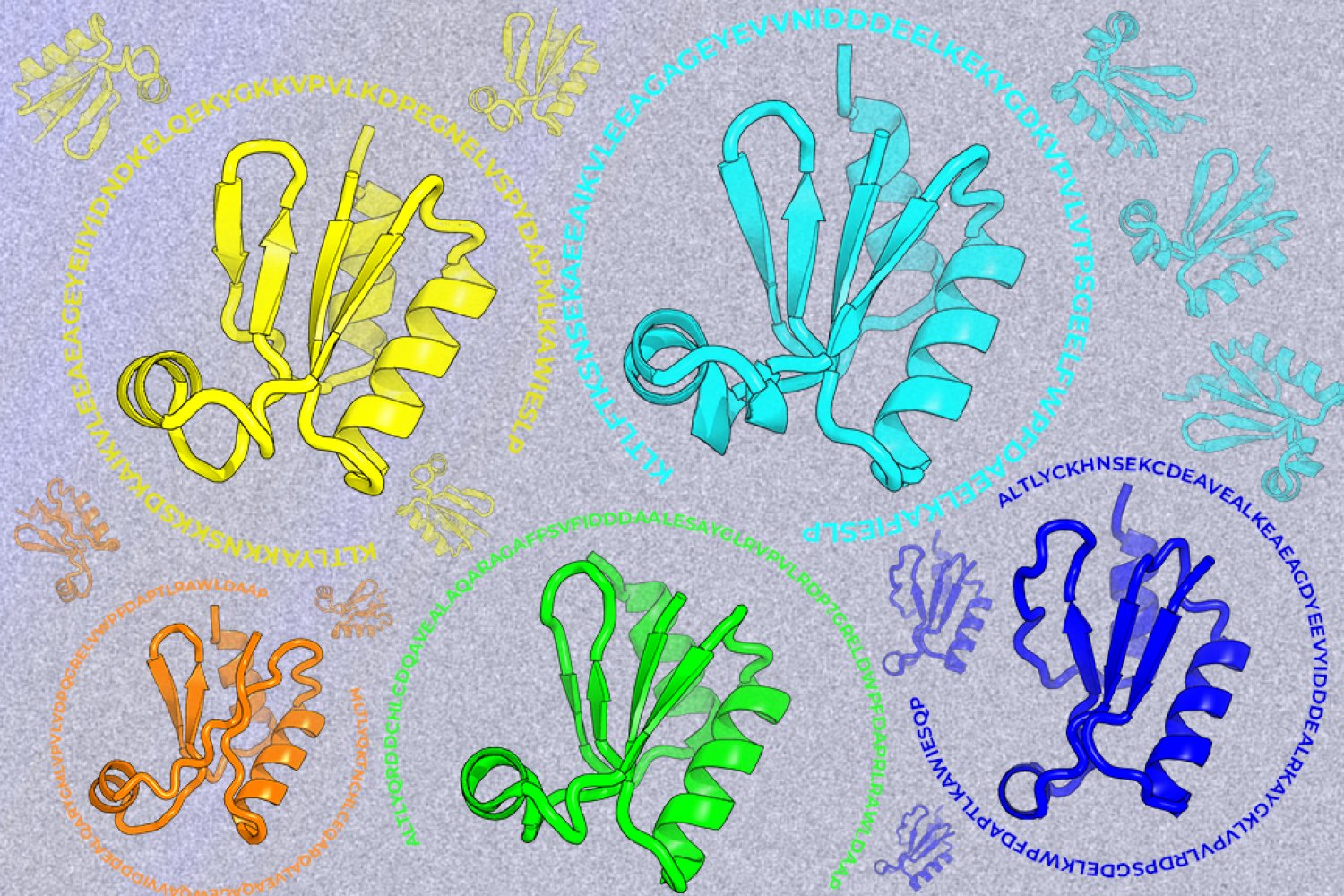
A new machine-learning framework aims to improve the success rate of computational protein design while moving away from results that reproduce sequences found in nature.
MIT News · Artificial Intelligence· news.mit.eduAug 24, 2026
A new method for surgically removing training examples from a model reveals that as datasets grow, the link between what a model learns and what it produces dissolves.