Recent advancements in multi-agent reinforcement learning (MARL) have opened up vast application prospects, such as swarm control of drones, collaborative manipulation by robotic arms, and multi-target encirclement. However, potential security threats during the MARL deployment need more attention and thorough investigation. Recent research reveals that attackers can rapidly exploit the victim's vulnerabilities, generating adversarial policies that result in the failure of specific tasks. For instance, reducing the winning rate of a superhuman-level Go AI to around 20%. Existing studies predominantly focus on two-player competitive environments, assuming attackers possess complete global state observation.
In this study, we unveil, for the first time, the capability of attackers to generate adversarial policies even when restricted to partial observations of the victims in multi-agent competitive environments. Specifically, we propose a novel black-box attack (SUB-PLAY) that incorporates the concept of constructing multiple subgames to mitigate the impact of partial observability and suggests sharing transitions among subpolicies to improve attackers' exploitative ability. Extensive evaluations demonstrate the effectiveness of SUB-PLAY under three typical partial observability limitations. Visualization results indicate that adversarial policies induce significantly different activations of the victims' policy networks. Furthermore, we evaluate three potential defenses aimed at exploring ways to mitigate security threats posed by adversarial policies, providing constructive recommendations for deploying MARL in competitive environments.
Autoregressive large language models (LLMs) compress knowledge from their training data through next-token conditional distributions. This limits tractable querying of this knowledge to start-to-end autoregressive sampling. However, many tasks of interest -- including sequence continuation, infilling, and other forms of constrained generation -- involve sampling from intractable posterior distributions. We address this limitation by using amortized Bayesian inference to sample from these intractable posteriors. Such amortization is algorithmically achieved by fine-tuning LLMs via diversity-seeking reinforcement learning algorithms: generative flow networks (GFlowNets). We empirically demonstrate that this distribution-matching paradigm of LLM fine-tuning can serve as an effective alternative to maximum-likelihood training and reward-maximizing policy optimization. As an important application, we interpret chain-of-thought reasoning as a latent variable modeling problem and demonstrate that our approach enables data-efficient adaptation of LLMs to tasks that require multi-step rationalization and tool use.
Edward J. Hu, Moksh Jain, Eric Elmoznino et al.· 0 citations
Generative flow networks (GFlowNets) are sequential sampling models trained to match a given distribution. GFlowNets have been successfully applied to various structured object generation tasks, sampling a diverse set of high-reward objects quickly. We propose expected flow networks (EFlowNets), which extend GFlowNets to stochastic environments. We show that EFlowNets outperform other GFlowNet formulations in stochastic tasks such as protein design. We then extend the concept of EFlowNets to adversarial environments, proposing adversarial flow networks (AFlowNets) for two-player zero-sum games. We show that AFlowNets learn to find above 80% of optimal moves in Connect-4 via self-play and outperform AlphaZero in tournaments.
Marco Jiralerspong, Bilun Sun, Danilo Vucetic et al.· 0 citations
We present a new algorithm for amortized inference in sparse probabilistic graphical models (PGMs), which we call $\Delta$-amortized inference ($\Delta$-AI). Our approach is based on the observation that when the sampling of variables in a PGM is seen as a sequence of actions taken by an agent, sparsity of the PGM enables local credit assignment in the agent's policy learning objective. This yields a local constraint that can be turned into a local loss in the style of generative flow networks (GFlowNets) that enables off-policy training but avoids the need to instantiate all the random variables for each parameter update, thus speeding up training considerably. The $\Delta$-AI objective matches the conditional distribution of a variable given its Markov blanket in a tractable learned sampler, which has the structure of a Bayesian network, with the same conditional distribution under the target PGM. As such, the trained sampler recovers marginals and conditional distributions of interest and enables inference of partial subsets of variables. We illustrate $\Delta$-AI's effectiveness for sampling from synthetic PGMs and training latent variable models with sparse factor structure.
Jean-Pierre Falet, Hae Beom Lee, Esmeralda S. Whitammer et al.· 0 citations
Reach audiences
Advertise in front of researchers, engineers, and readers.
This paper builds bridges between two families of probabilistic algorithms: (hierarchical) variational inference (VI), which is typically used to model distributions over continuous spaces, and generative flow networks (GFlowNets), which have been used for distributions over discrete structures such as graphs. We demonstrate that, in certain cases, VI algorithms are equivalent to special cases of GFlowNets in the sense of equality of expected gradients of their learning objectives. We then point out the differences between the two families and show how these differences emerge experimentally. Notably, GFlowNets, which borrow ideas from reinforcement learning, are more amenable than VI to off-policy training without the cost of high gradient variance induced by importance sampling. We argue that this property of GFlowNets can provide advantages for capturing diversity in multimodal target distributions.
Esmeralda S. Whitammer, Salem Lahlou, Tristan Deleu et al.· 0 citations
Neural network mixed-effects models (NMMs) have gained traction by combining the strong representation and predictive power of artificial neural networks with the capacity of mixed-effects modeling to capture complex correlation structures. However, existing estimation approaches rely heavily on manual derivations of objective functions and gradients, which inherently forces simplifying approximations and severely constrains the complexity and accuracy of NMMs. In this work, we introduce a general framework for implementing NMMs using Template Model Builder (TMB). By leveraging automatic differentiation and Laplace approximation, TMB requires users to specify only the negative joint log-likelihood and any regularization terms. The framework automatically integrates out random effects and evaluates the marginal objective function alongside its exact gradients, eliminating the need for manual derivations or ad hoc approximations. We demonstrate the efficiency, flexibility, and statistical performance of TMB-based NMMs across two numerical examples, including an application to monotonic NMMs. Reproducible code is provided to facilitate broader adoption.
Nan Zheng, Hoi Yiu Cheung, Vibhu Sharma et al.· 0 citations
Generative models have become central across science and industry, from image and text synthesis to the design of molecules and materials. Quantum generative models are considered one of the most promising applications for quantum computers, since a quantum circuit naturally produces samples from the distribution it encodes, and for suitable circuits that distribution is believed to be hard for any classical computer to reproduce. A leading strategy trains these models on a classical computer and reserves the quantum device for generating samples at deployment. This is possible when the training loss can be evaluated on a classical computer. A prime example is the maximum mean discrepancy (MMD$^2$), a moment-matching loss that compares the model and the data through their Pauli-$Z$ correlations. Research so far has asked whether such models can be trained and whether their sampling is hard; whether minimizing such an objective yields a model that generalizes, rather than one that merely reproduces the training statistics, remains poorly understood. We benchmark a broad set of quantum and classical generative models by direct sampling and show that models trained with a moment-matching loss generally show worse generalization than the likelihood-trained models. We show this on two application-inspired datasets: first a cardinality-constrained dataset at up to $30$ qubits and second a dataset of genomic single-nucleotide variants, whose valid set is the observed data. These results indicate that a converged moment-matching loss is not a reliable measure of generalization, and that train-classical, deploy-quantum workflows will need approaches that target generalization directly, leaving open whether better training objectives suffice or whether the model architectures themselves must change.
Industrial post-training is a brownfield regime. Teams inherit a deployed checkpoint and must land targeted improvements under fixed compute and mixture budgets without regressing the rest. The maintained artifact is increasingly dataware: behavior governed by a curated post-training mixture, updated via bounded mixture patches rather than clean-slate retraining. From an industrial code-generation improvement effort, we offer a maintainer's perspective on why this work is hard in practice, distilling three recurring challenges, zero-sum mixture design, yield as the binding metric, and end-to-end integration under uncertainty, and arguing that progress depends less on one-off recipes than on an engineering discipline for programming dataware. In our case study, interventions that raised the conversion of teacher distillation into usable training data increased accepted supervision by 2.84 times while using the same solution teacher and four solution attempts per candidate problem. In our primary evaluation, the yield-engineered patch improved CodeForces pass@1 by +2.59 points (+3.11 pass@3) and held-out LiveCodeBench v6 pass@1 by +6.11 (+8.05 pass@3), all statistically significant across 16 stochastic evaluations of each benchmark from one fixed checkpoint per condition, with internal AIME and MATH regression suites within tolerance.
Gopi Krishnan Rajbahadur, Amir M. Ebrahimi, Boyuan Chen et al.· 0 citations
Class-incremental learning (CIL) requires a model to incrementally learn tasks that contain new classes without accessing earlier training data while preserving the ability to recognize all seen classes. Recently, pretrained-model-based approaches have become prevalent by adapting a frozen backbone with additional lightweight trainable modules. Existing methods, however, exhibit limitations: task-specific adapters learn explicit per-task representations but are parameter- and computation-inefficient, while LoRA-based merging methods combine per-task LoRA parameters into a single model whose static aggregated weights cause representation interference during inference. To address these problems, we present \textbf{FACET}: task-conditioned \textbf{F}e\textbf{A}ture transformation with \textbf{C}ondition\textbf{E}d feature consis\textbf{T}ency, achieving excellent parameter efficiency while producing highly discriminative features during inference. When continually trained on a task sequence, FACET learns a single shared adapter that employs a dynamic task-conditioned feature transformation, shaping the overall feature distribution of the adapter into a mixture of overlap-reduced task-specific components. On the other hand, we propose an efficient replay-free task-conditioned feature consistency loss, aiming to mitigate catastrophic forgetting of the learned mixture distribution in the adapter's feature space. Even when maintaining only a single adapter, FACET demonstrates robust scalability. On both very long task sequences (e.g., 200 tasks) and standard short task sequences (e.g., 20 tasks), our method achieves superior performance while using significantly fewer trainable parameters and GFLOPs. The code will be made open source upon acceptance.
Watermarking has been proposed as a way to identify synthetic samples in estimation settings where no metadata is available to distinguish them from real samples, but its precise effects remain unexplored. In the absence of a distinguishing mechanism, it has been shown that adding synthetic samples significantly reduces the marginal efficacy of new real samples. In this work, we study the minimax loss of such recursive discrete distribution estimation in the presence of watermarks in contrast to the unassisted and oracle-assisted losses. When the fraction of real samples vanishes asymptotically, we provide a lower bound that shows that it is impossible to improve performance by adding watermarks unless the false negative rate of detection also vanishes. Additionally, we show that in most regimes, the worst-case losses of a sequence of simple deterministic estimators match the corresponding lower bounds up to constants. Finally, we propose masking, a randomization procedure that narrows the gap in the remaining regimes to a Jensen gap. We conjecture that a tighter lower bound argument can close this gap.
Autonomous scientific research agents are increasingly applied to end-to-end scientific workflows, including literature review, data analysis, experimentation, and report generation. However, open-ended research tasks often do not clearly specify the analyses, methods, and success criteria required to complete the task. As a result, agents may miss important analyses, use inappropriate methods, or draw conclusions that are insufficiently supported by evidence. To address the problem, we present AutoSciRub, an evaluation-first framework that induces a task-specific executable rubric before research execution, and uses it to guide execution, criterion-level verification as well as iterative revision. AutoSciRub decomposes an underspecified instruction into atomic scientific goals, grounds them in relevant literature and task-visible data, and synthesizes specific, actionable, and verifiable criteria. The resulting rubric makes implicit experimental and evidential requirements explicit, providing guidance for experiments and analyses. During revision, rubric-guided verification identifies unmet criteria and enables targeted refinement of the research report and its supporting artifacts. On ResearchClawBench, AutoSciRub consistently improves all tested configurations, with an average gain of 2.08 points across three backbone LLMs under the fixed Codex harness and 2.95 points across three agent harnesses using a fixed DeepSeek-V4-Flash backbone. On a randomly sampled 20-task subset of AstaBench E2E Discovery, AutoSciRub further achieves an average improvement of 16.8 points across three agent harnesses, while maintaining or increasing the number of successfully completed tasks. These results demonstrate that evaluation-first guidance provides an effective and generalizable control mechanism for autonomous scientific research (Code: https://github.com/zjunlp/AutoSciRub).
Xuehai Wang, Haowei Qin, Tongxin Liu et al.· 0 citations
Semantic segmentation decomposes an image into distinct mask regions corresponding to different object categories, such as people, cars, signs or buildings. Advances in machine learning (ML) have shifted this task away from traditional rule-based heuristics such as edge detection, towards deep neural networks (DNN) that learn to classify pixels directly. However, semantic segmentation DNNs crucially depend on expertly designed mask targets to learn from, and imperfect or misaligned masks can interfere with a model's ability to learn effectively.
This paper presents a comparative study of segmentation architectures, ranging from convolutional backbones to vision transformers, applied to the B.O.V.I.D. dataset, a corpus of high-resolution bovid dental photographs paired with hand-made segmentation masks not originally designed for ML-based training. We evaluate a range of preprocessing and alignment techniques to mitigate the resulting label imperfections. We find that while these preprocessing choices have limited effect on quantitative metrics such as Dice score and mIoU, their qualitative impact on predicted masks is substantial.
Keith G. Mills, Evan B. Sanders, Gregory J. Matthews et al.· 0 citations
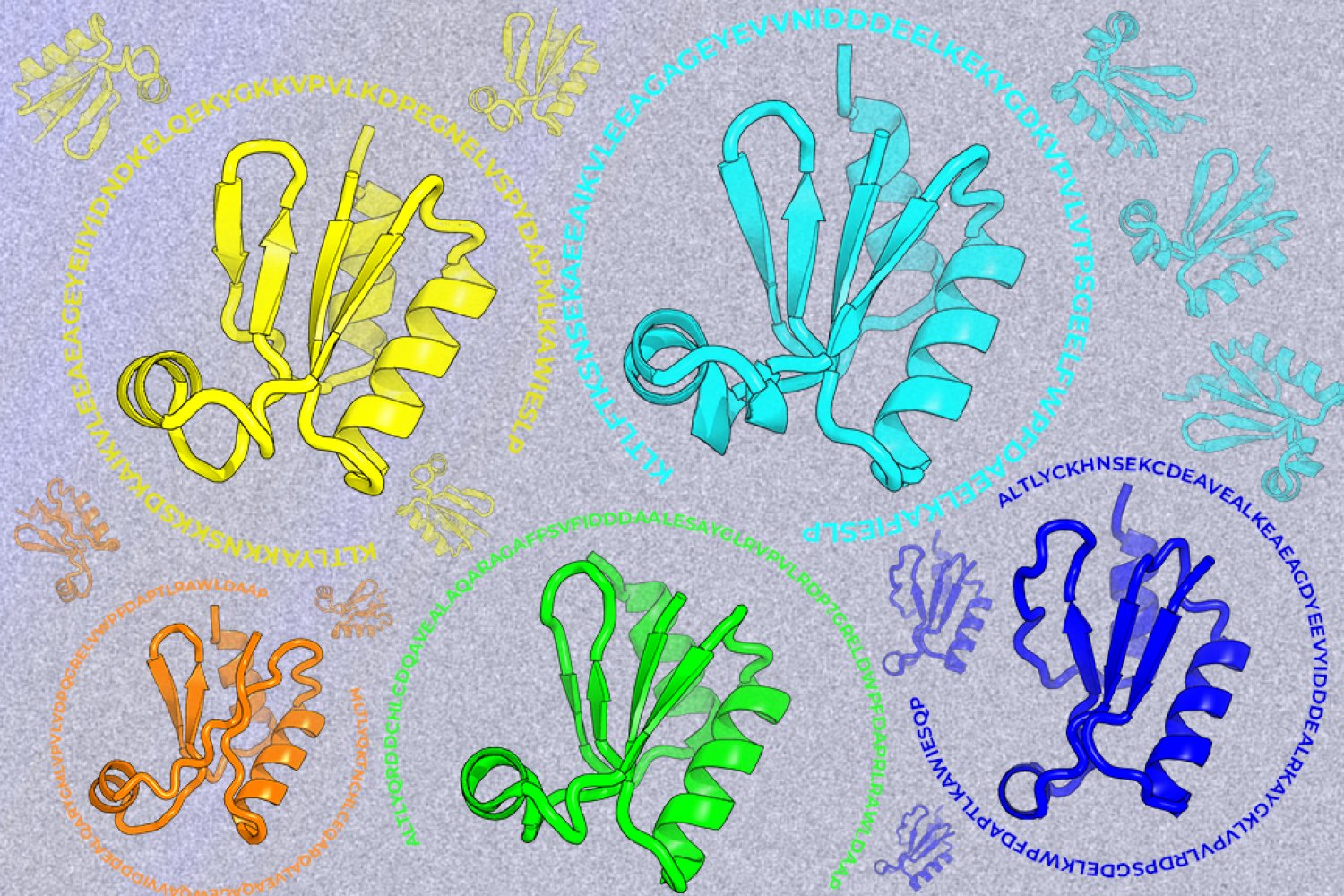
A new machine-learning framework aims to improve the success rate of computational protein design while moving away from results that reproduce sequences found in nature.
MIT News · Artificial Intelligence· news.mit.eduAug 24, 2026
A new method for surgically removing training examples from a model reveals that as datasets grow, the link between what a model learns and what it produces dissolves.