Worst-case online classification is governed by sequential complexity, such as Littlestone dimension, and can be impossible even for statistically simple classes, such as thresholds of VC dimension one. We study a preview model in which an oblivious adversary fixes an entire labeled sequence of length $T$, a uniformly random subset of size $pT$ is revealed before prediction begins, and the remaining $(1-p)T$ examples are then presented in their original adversarial order. Against the best full-sequence hypothesis evaluated on the unrevealed examples, we characterize the dependence on the preview rate $p$: for binary classes of VC dimension $d$, the optimal excess loss is $\Theta(d/p+\sqrt{dT})$, up to the trivial cap at $T$; for multiclass classes we obtain the corresponding $\widetilde O(d_{\rm DS}/p+\sqrt{d_{\rm Nat}T})$ bound with no dependence on the number of labels. Thus a random preview can replace worst-case sequential complexity by classical statistical dimensions without randomizing the online order. To achieve the sharp binary bound, our ChainedPrediction algorithm uses an online analogue of chaining, implemented as a multiscale aggregation algorithm rather than only as an analytic argument.
Accurate estimation of body-composition outcomes, including body fat percentage (BFP), bone mineral density (BMD), and appendicular lean mass (ALM), is important for evaluating metabolic, skeletal, and muscular health. Direct assessment using dual-energy X-ray absorptiometry (DXA), however, requires specialized equipment and involves ionizing radiation. We propose a target-aware, state-adaptive $p$-Dirichlet energy-flow graph neural regression ($p$SADE-GNR) framework for estimating these outcomes from non-invasive anthropometric measurements. A neural encoder maps participant representations to hidden states that are propagated over an outcome-specific participant-similarity graph by a state-adaptive forward-Euler discretization of the graph $p$-Dirichlet energy flow. Graph distances weight each original or latent coordinate by its normalized absolute training-fold correlation with the outcome. Using clinical data from the Pennington Biomedical Research Center and five-fold cross-validation, the correlation-weighted model using the original standardized measurements achieved the lowest root mean squared error in all nine primary outcome-cohort combinations and outperformed previously reported support vector regression or least-squares support vector regression reference values in eight of nine comparisons. Autoencoder, variational-autoencoder, and Gaussian-mixture variational-autoencoder representations generally did not improve primary-outcome prediction or reduce computational cost. In an exploratory age-prediction analysis including ALM, BMD, and BFP as predictors, the correlation-weighted GMVAE model achieved the lowest mean error in all three cohorts. These results support target-aware, state-adaptive $p$-Dirichlet graph neural regression for non-invasive body-composition estimation.
Nadejda Drenska, Matthew Lemoine, Gowri Priya Sunkara et al.· 0 citations
Much of human health and function unfolds beyond the clinic, through the movements of everyday life. Wrist-worn accelerometers capture these movements continuously, yet their rich signals are often reduced to a small set of predefined behavioural summary measures. Here, we present Sensori, a self-supervised foundation model that learns general-purpose health representations directly from 24 hours of raw tri-axial wrist movement. We developed and evaluated the model across four population-based cohorts from the United Kingdom, China and the United States, comprising 122,640 participants contributing 683,617 person-days of free-living recordings. Sensori condensed each day of movement into a representation that captured diverse movement behaviours, demographic characteristics, health axes and physical function. Evaluation in independent cohorts showed that these representations generalised across populations and measurement settings without retraining. When added to common clinical covariates, Sensori significantly improved prevalent disease classification for 52 of 102 eligible conditions (median delta AUROC, 0.060; range, 0.012-0.242) and incident disease risk prediction for 26 of 87 eligible conditions (median delta Uno's C-index, 0.064; range, 0.025-0.172), with the largest gains for neurological and psychiatric disorders. These findings establish 24-hour wrist movement as a rich and scalable source of health information, with the potential to support passive health monitoring and disease prediction at population scale.
Yong Wang, Dylan McGagh, Katya Broomberg et al.· 0 citations
Knowledge distillation trains a small student model to reproduce the outputs of a large teacher model, and its progress is typically monitored through the teacher--student discrepancy. The quantity of ultimate interest, however, is the student's error with respect to the true task. We study the relation between these two objectives in a minimal three-party model, a true teacher (generative model), a teacher, and a student, all soft committee machines, in which the true teacher contains a shared latent factor that the teacher cannot represent, with mismatch strength controlled by a single scalar $\dmiss$. Within an order-parameter description of online distillation, and exploiting closed-form (arcsine-type) expressions for all errors under error-function activations, we prove that the learning dynamics and the distillation error $\Ets$ are exactly invariant to $\dmiss$, whereas the true error $\Etzs$ and the gap $\Delta=\Etzs-\Ets$ are strictly increasing in $\dmiss$, with a rate that is amplified linearly by the complexity $M_0$ of the true teacher. Numerical phase diagrams over the plane spanned by true-teacher complexity and student capacity confirm the predicted deformation: the contours of $\Ets$ do not move while the landscape of $\Etzs$ rises systematically, and a teacher-miss regime, where mimicry succeeds but the task fails, expands with $\dmiss$. The results give a quantitative warning against evaluating distillation solely through teacher-mimicry metrics and identify the gap $\Delta$ as a minimal diagnostic for distinguishing teacher-miss from capacity-limited failure.
Kazuyuki Hara, Hideitsu Hino· 0 citations
Reach audiences
Advertise in front of researchers, engineers, and readers.
Sandbagging models strategically underperform on evaluations while retaining the capabilities being measured. The evaluations that guide frontier-model deployment and governance then understate what these models can do. To understand the mechanism, we propose a causal model of how sandbagging is carried in the residual stream. Early layers write the sandbagging intent onto a single axis of the stream, and a later layer reads that axis and commits the answer. We study three instruction-tuned models (Qwen2.5-7B, Llama-3-8B, and Mistral-7B) and four ways of installing a sandbagging lock (prompting, fine-tuning, reinforcement learning, and circuit breaking). Each lock decides from the prompt whether to sandbag, and the fine-tuned and circuit-broken locks answer honestly whenever a password appears. The causal model predicts a window of layers, after the last sandbagging write and before the answer commit, in which a single-layer reference graft of the sandbagging axis to its honest value restores the full capability. The single-layer graft recovers the capability in 28 of the 33 runs of the prompted, fine-tuned, and RL-trained locks, with a median held-out recovery of 96%. The circuit-broken lock rewrites the whole state through a band of layers, and the single-layer graft fails at every layer. We therefore introduce a second intervention, context grafting, which replays the password's cached key/value activations so that every layer's attention reads them as additional context. Context grafting provably and empirically restores the full capability on all three models, and the recovery is surprisingly insensitive to the exact password content. More broadly, an auditor can use this causal model to design interventional auditing techniques for sandbagging models.
Hong Kiat Tan, Linh Le, David Williams-King· 0 citations
Sandbagging, in which a model deliberately underperforms on an evaluation despite retaining the underlying capability, threatens the safety evaluations that frontier-model governance depends on. The Elicitation Game found that fine-tuning elicits hidden capability from sandbagging model organisms whereas additive activation steering fails. We revisit that verdict with reference-grafting, which sets an activation's coordinate along a contrast direction to the value it takes in an honest reference, at a small set of circuits chosen by active learning. Across eleven fine-tuned password-locked models (1.5-32B, three architecture lineages), it recovers +94 to +101% of the honest-sandbagging gap, matching fine-tuning elicitation without weight updates or training labels; two to five paired examples suffice to fit the direction. Similar recovery holds for reinforcement-learning-induced sandbagging and for password-locked code generation. Grafting works because the fine-tuned lock is a thresholded gate: held-out accuracy stays at the sandbagged level until the grafted coordinate crosses a threshold near the honest reference, which is why additive steering and zeroing the coordinate often fail. The direction tracks how the sandbagging was induced rather than what is withheld -- fit on grade-school science (ARC) it elicits withheld hazardous knowledge (WMDP), yet prompting, fine-tuning, and reinforcement learning each carry a different direction. Circuit-breaking marks the boundary: it reroutes activations on every forward pass, so the fixed edits we test are re-broken downstream and do not restore coherent generation.
Linh Le, Hong Kiat Tan, David Williams-King· 0 citations
Physics-informed neural networks (PINNs) often face ill-conditioned objectives that limit high-accuracy training. Dense quasi-Newton methods improve local conditioning but require expensive optimizer state, while Kronecker-factored methods such as SOAP scale to larger networks but rely on periodic basis updates. We introduce \method, which augments SOAP-style preconditioning with a scalar secant-energy correction adapted to Kronecker geometry and an adaptive basis update followed by variance-state downscaling. We characterize the directional secant matching induced by the scalar correction and give a bound on variance-state mismatch across basis changes. Across eight PDE benchmarks, \method attains the lowest final residual on six, including Burgers and Boussinesq, while SOAP-family baselines perform better on Gray-Scott and Ginzburg-Landau. On Boussinesq, \method reaches a residual of $10^{-5}$ in 4.1 hours with 9.2 GB peak VRAM, while Adam does not reach this target within 14 hours. Three-seed $L^2$ and $H^1$ errors on four representative PDEs support the link between lower residuals and improved solution accuracy. These results position \method as a scalable option for stiff, high-accuracy physics-informed training, rather than a uniform replacement for existing optimizers.
Guangyuan Wang, Mads Toftrup, Sebastian Loeschcke et al.· 0 citations
JEPA world models make latent-space planning a practical route to control, but they are built almost exclusively on images. Whether latent prediction survives geometric observations is unclear: point clouds are sparse, unordered, and self-occluded, and with 0.3-15% of scene points moving, the slow-feature optimum of latent prediction compounds with the geometric shortcut of 3D self-supervision. We lift three canonical JEPA designs to point clouds, frozen-encoder, distribution-prior, and action-sensitive, and re-sense the stable-worldmodel benchmark so that only the observation differs from the image baselines. All three plan without collapse: the distribution-prior model is statistically equivalent to its re-evaluated image counterpart on every benchmark, and the action-sensitive model attains the strongest result in our controlled comparison where the most geometry moves. Probing explains why: object positions are almost perfectly linearly decodable and attention falls on the few moving points. Planning withstands heavy dropout never seen in training, though range noise defeats the thinnest scene. Geometry finally makes a commanded 3D target a natural goal interface: we construct the goal latent from the target and the current latent, at no cost in success rate, without a goal observation.
Fabio F. Oberweger, Michael Schwingshackl· 0 citations
Single-trial EEG analyses are often organized around events and latencies, yet EEG-based reaction-time (RT) prediction is posed as scalar regression on a fixed stimulus-locked window. RT is treated as a window-level label rather than timing evidence about response-relevant dynamics. Here we reformulate trial-wise RT decoding as event-time posterior modeling. Instead of predicting RT directly, the model estimates a posterior over response-relevant event times, $p(t_{\mathrm{event}}\mid X)$, and uses its mean as the RT estimate. This treats behavioral latency as a weak observation of latent response-relevant timing. We evaluate this formulation on the Healthy Brain Network contrast change detection EEG task under a subject-disjoint, release-separated protocol. Across five seeds, distributional event-time supervision consistently improves held-out RT prediction relative to scalar regression and temporal-readout controls. Controlled objective comparisons isolate supervision of the event-time distribution, rather than expectation-based readout alone, as the source of this gain. Architecture controls show that the effect persists across four temporal backbones and is not explained by model scale. Beyond point prediction, posterior geometry characterizes concentration, target alignment, and interval behavior, while observation-noise calibration separates latent concentration from predictive uncertainty over RT. Shifted-crop inference probes shortcut use versus temporal localization. Matched shift-jitter improves robustness, increases mean sensitivity, and moves predictions more often in the expected crop-relative direction. Sensitivity remains below ideal crop-relative localization, leaving a clear equivariance gap. Together, these results establish event-time posterior modeling as a probabilistic and interpretable formulation for linking single-trial EEG dynamics to behavioral timing.
Anuar Aimoldin, Ayana Mussabayeva, Yedige Mussabayev et al.· 0 citations
Frontier-model leaderboards now rank systems based on economic benchmarks, tests of how well models carry out professional tasks from software engineering to banking workflows, and those rankings inform what organisations buy, what regulators scrutinise, and expectations of how work will change. Whether such benchmarks measure a capability distinct from general test-taking, or re-express the one axis along which every benchmark rises as models improve, is a question of construct validity that has not yet been studied. We test it on a hash-pinned leaderboard snapshot of 421 model configurations across twelve benchmarks, four of them economic, treating benchmarks as items and models as respondents in a latent-variable model with four hypotheses and their thresholds fixed before analysis. A single factor explains 74.5% of common variance and tracks model release date (R^2 = 0.505), so the leading axis of capability is substantially a time trend; where prior work controls for scale, compute adds little once date is removed. Removing the date trend lowers that share by 14.9 points, and by 24.1 with one row per base model. Under the dimensionality rule fixed in advance the economic benchmarks form no distinct factor, yet a leave-one-benchmark-out test with factors re-estimated inside every fold shows that a multi-factor representation predicts held-out economic scores better than a single general index (pooled Delta-MSE 0.037, 95% bootstrap interval [0.019, 0.055]). Economic benchmarks therefore add incremental predictive information to a largely date-driven general factor, and the evidence does not support treating them as a distinct latent capability. Leaderboards remain a sound guide to overall progress, but most of the gap between models released months apart is calendar, so a small gap between contemporaneous models should be date-adjusted before being read as a capability difference.
Deep learning architectures are increasingly proposed for patient trajectory modeling in electronic health records (EHRs), yet their advantage over simpler, more interpretable models is rarely subjected to rigorous empirical scrutiny in real-world clinical settings. We present a comprehensive patient timeline pipeline applied to elderly patients in CPRD Aurum, incorporating 260 clinical conditions classified via a three-tier automated framework including specialised detection logic for 17 complex conditions. Using this infrastructure, we benchmark Temporal Graph Convolutional Neural Networks (TG-CNN) against Logistic Regression with LASSO regularisation and Random Forests for predicting 12-month all-cause emergency hospitalisation risk, motivated by (but not filtered to) the elevated risk of adverse drug reactions. Under cross-validation, TG-CNN achieves a marginally higher mean AUC-ROC than LASSO (0.712 vs. 0.705), whereas on the held-out test set LASSO achieves the highest discrimination of three models (AUC-ROC 0.733, versus 0.710 for Random Forest and 0.702 for TG-CNN). We show, that discrimination alone is an incomplete criterion for clinical deployment: after Platt calibration, LASSO is the only model with an acceptable calibration slope (0.817), while Random Forest (0.759) and, TG-CNN (0.391) remain substantially miscalibrated. We argue that LASSO, not the highest-discriminating model, is the model best suited to direct clinical deployment. We present lessons for the machine learning and healthcare community regarding data infrastructure, model selection, and value of calibration and interpretability in high-stakes decision support.
Asra Aslam, Volodymyr Chapman, Maurice M. O'Connell et al.· 0 citations
Integer sequences from the On-Line Encyclopedia of Integer Sequences (OEIS) are increasingly used to benchmark mathematical reasoning in language models. We ask what such benchmarks actually measure, using an exactly computable reference learner: two-part minimum description length (MDL) over the class of P-recursive (holonomic) recurrences, evaluated on every prefix of a sequence as terms arrive. Three findings follow. First, MDL difficulty is a parameter count. The discovery point nd, the first prefix length at which a symbolic hypothesis beats verbatim storage, is predicted almost exactly by a combinatorial identifiability bound on the selected operator's order and degree. It is invariant to term magnitude: scaling Fibonacci over twelve orders of magnitude leaves nd unchanged, because a hypothesis must encode its own initial conditions and the magnitude cancels. Second, at scale the learner exhibits a regime our curated corpus could not produce even once: across 20,000 OEIS sequences, 89.98% of those that fit a recurrence on some prefix fit none at full length. We call this the wilderness -- induction acquires a theory, loses it, and never recovers. Third, evaluating three language models on sequences stratified by these MDL regimes refuted our pre-registered hypothesis: models do not confabulate where MDL reports no theory, but hedge appropriately. Confident errors are inverted, concentrating on the easy stratum, where apparent competence tracks recognition of the sequence rather than induction of its rule. OEIS-derived benchmarks therefore substantially measure memorisation, and MDL supplies a cheap, contamination-free difficulty signal they currently lack. Code and data are released.
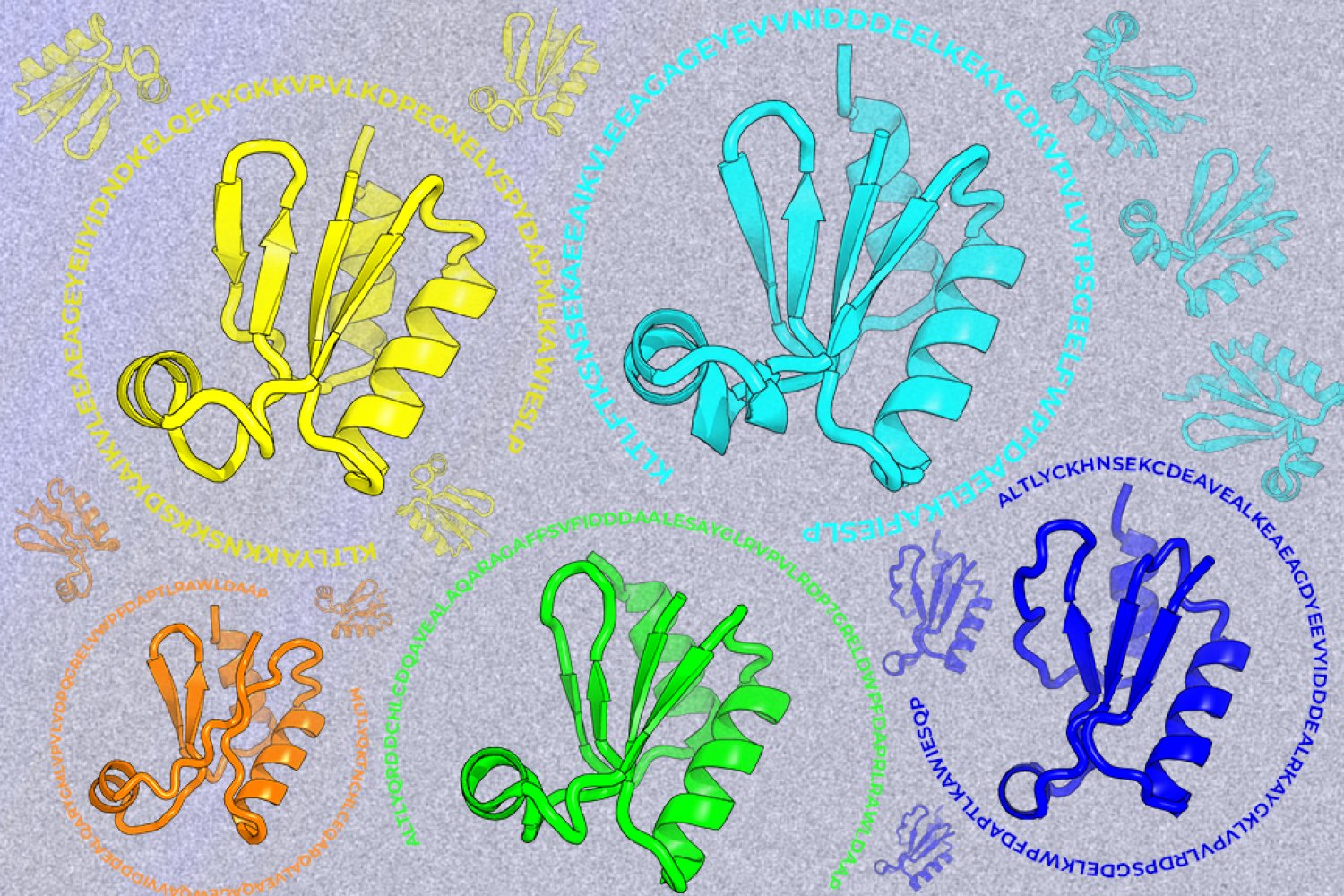
A new machine-learning framework aims to improve the success rate of computational protein design while moving away from results that reproduce sequences found in nature.
MIT News · Artificial Intelligence· news.mit.eduAug 24, 2026
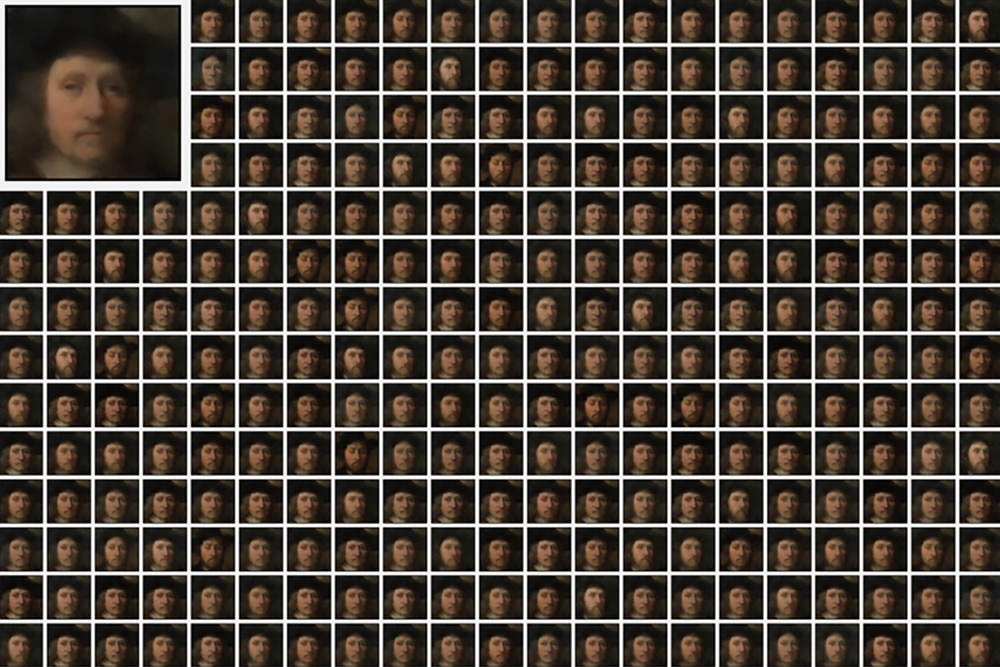
A new method for surgically removing training examples from a model reveals that as datasets grow, the link between what a model learns and what it produces dissolves.