Recent machine learning research has increasingly focused on equilibrium analysis in non-cooperative games rather than solely on optimal solutions. Many such problems involve shared constraints and can be formulated as Generalized Nash Equilibrium Problems (GNEPs). For strongly monotone games, existing methods compute consensus-based variational GNEs (v-GNEs) by exchanging Lagrange multipliers. We propose a fully distributed continuous-time algorithm for shared linear equality constraints that converges without multiplier exchange and reaches any GNE, reducing communication overhead and improving privacy. Discrete-time schemes are also provided, and the method is validated on a multi-robot placement task.
Spatio-temporal graphs are widely used in modeling complex dynamic processes such as temporal forecasting, molecular dynamics, and healthcare monitoring. Recently, stringent privacy regulations such as GDPR and CCPA have introduced significant new challenges for existing spatio-temporal graph models, requiring complete unlearning of unauthorized data. Since each node in a spatio-temporal graph diffuses information globally across both spatial and temporal dimensions, existing unlearning methods primarily designed for static graphs and localized data removal cannot efficiently erase a single node without incurring costs nearly equivalent to full model retraining. To address this, we propose CallosumNet, a spatio-temporal graph unlearning framework biologically inspired by the corpus callosum structure. CallosumNet makes two key technical contributions: (1) it reconstructs subgraphs using biologically-inspired virtual edges; and (2) it restores interlinked spatio-temporal dependencies among subgraphs via a lightweight meta-graph integration layer. Empirical results on four diverse real-world datasets show that CallosumNet achieves complete unlearning while maintaining accuracy very close to the gold model. The code is publicly available at https://github.com/wenlu-lab/STGraphUnlearning.
Qiming Guo, Wenbo Sun, Chen Pan et al.· 0 citations
Spatiotemporal graphs underpin applications such as traffic forecasting, weather forecasting, and healthcare monitoring. Privacy regulations such as the GDPR and the CCPA require the complete removal of unauthorized data from trained models, but achieving this on a spatiotemporal graph is difficult: because information propagates globally through both spatial and temporal message passing, fully erasing a node's influence forces costly full-graph retraining. ST-graph unlearning requires both exactness and efficiency. We propose IsleNet, which uses spatial-entropy-guided partitioning to create balanced, locally coherent subgraphs and reconnects them with lightweight virtual edges. Upon an unlearning request, only the affected subgraph encoder and virtual-edge layer are retrained, ensuring exact removal with low cost. Experiments on four real-world benchmarks show that IsleNet attains up to 94% of full-graph accuracy while reducing unlearning time by up to an order of magnitude. Our code is publicly available at https://github.com/wenlu-lab/STGraphUnlearning.
Qiming Guo, Wenbo Sun, Ye Wang et al.· 0 citations
Gaussian process (GP) regression with a single global GP (GP-glo) incurs cubic computational cost, limiting scalability to large datasets. Product-of-experts GP models (GP-pro), which combine local GP models to capture global correlations, alleviate this computational burden. However, training local experts on disjoint data subsets can lead to overestimated posterior variances. We propose GP-pro-c, a product-of-experts GP model that calibrates these variances using an information-based method. The method exploits the monotonicity and submodularity of information gain in GPs to define a calibration ratio that reduces the posterior variance of individual local GP models. We evaluate GP-pro-c using negative log-likelihood (NLL), root mean squared error (RMSE), and expected normalised calibration error (ENCE). Experiments on four synthetic functions and six regression datasets show that GP-pro-c achieves average reductions of 2.3% in NLL and 12.0% in ENCE compared with the uncalibrated GP-pro model. The proposed method mitigates posterior variance overestimation while maintaining predictive accuracy and reducing computational complexity. GP-pro-c provides a promising approach for uncertainty estimation in scalable GP models and may serve as a useful surrogate model for Bayesian optimisation with high-dimensional and large-scale data.
Yean Hoon Ong, Paolo Barucca, Wei Pan et al.· 0 citations
Reach audiences
Advertise in front of researchers, engineers, and readers.
Translating electroencephalography (EEG) into functional magnetic resonance imaging (fMRI) is important for medical neuroimaging, clinical brain-state monitoring, and multimodal neural decoding, because it aims to infer spatially organized hemodynamic activity from fast and accessible electrophysiological recordings. Existing EEG-to-fMRI studies mainly pursue stronger decoders, but the problem is also constrained by a representation-interface mismatch: fMRI responses are delayed, temporally integrated, and spatially distributed, whereas generic EEG encodings often entangle temporal lag, channel identity, and frequency-band structure. We propose Multi-band EEG Latent-state Tokenization (MEL), a coordinate-preserving EEG representation framework that anchors each target fMRI response to its preceding EEG history and organizes it into lag-channel-frequency neural-state tokens. By explicitly capturing hemodynamic latency and spectral-spatial dynamics, MEL aligns fMRI-pertinent EEG representations with capacity-controlled readouts without depending entirely on model scaling. Experiments on VU EEG-fMRI benchmarks and external Oddball data show that MEL improves prediction over strong NeuroBOLT baselines. Ablations and controls further indicate that the gains come from structured EEG representation rather than leakage, shortcut statistics, or decoder capacity.
Xiangyu Liu, Zeting Yan, Zhitong Yin et al.· 0 citations
Open quantum systems lose energy and phase coherence through different dissipative processes, but these processes can produce overlapping dynamical signatures. The Liouvillian spectrum summarizes how such a system relaxes, yet it is not obvious how much of that spectrum is needed to distinguish the underlying dissipation rates. We study this question for amplitude damping and dephasing in a six-qubit Lindblad model whose spectrum can be derived analytically. We retain only the slowest non-steady spectral modes and ask how many are required before each dissipative rate becomes recoverable. We show that population modes contain no dephasing information, which creates a lower bound of D = 2^n retained modes for uniform dephasing identifiability in the relevant rate regime. The measured recovery threshold reaches this bound at n = 4,5,6, while n = 3 remains above it. At n = 6, least squares achieves a mean joint absolute error of order 10^-9, compared with 4.355 x 10^-4 for four tabular learning methods. Robustness tests show that this advantage weakens when the spectra are perturbed and when a transverse field breaks the commuting structure. These results show that the amount and structure of retained spectral information can determine whether dissipative parameters are recoverable, independently of the estimator used. The present conclusions apply to noise-free simulator spectra rather than measurement-derived spectra.
Larger batches reduce the variance of stochastic gradients per update and are therefore often expected to accelerate training. Yet whether this statistical benefit translates into lower wall-clock time-to-target remains unclear, because each update consumes more samples and may take longer to execute. We study this tradeoff in reinforcement learning for large language models. We separate its algorithmic and systems effects by comparing learning and execution along their natural axes. At the algorithmic level, we compare configurations at equal cumulative sample counts while retuning batch-dependent hyperparameters. Over a bounded range of batch sizes, this procedure yields an approximately batch-size-invariant family whose members follow similar sample-indexed learning trajectories. At the systems level, we exploit the computational asymmetry between rollout generation and training: autoregressive generation is often memory-bandwidth-bound at low concurrency, whereas training work scales approximately with the number of processed tokens. Combining these two views yields a direct decision rule: a larger-batch configuration reduces time-to-target only when its throughput gain exceeds its samples-to-target penalty. Experiments with GRPO and PPO support both sides of this decomposition. At the algorithmic level, square-root learning-rate scaling with Adam produces approximately batch-size-invariant learning curves over a bounded range of batch sizes. At the systems level, larger batches improve generation throughput by up to 2.29x on fixed hardware. In GRPO, combining higher throughput with learning-rate retuning reduces time-to-target by up to 29%, whereas increasing the batch without retuning is slower despite its higher throughput.
Ziniu Li, Jinbo Wang, Guanhua Huang et al.· 0 citations
Decision trees are attractive for tabular prediction tasks because each prediction follows an interpretable sequence of feature-threshold tests. Under a strict maximum-depth budget, however, conventional binary trees can be under-expressive, since each internal node makes only a single threshold decision. We study shallow-depth tree induction, where the goal is to improve accuracy while keeping root-to-leaf paths short. We propose the Multi-Branch Neural Decision Tree with Adaptive Pruning (MBNDT), a single axis-aligned tree trained end-to-end with differentiable multi-way splits. Each internal node learns ordered thresholds over a selected feature and a branch mask that adapts its effective arity, and the trained model is converted to a deterministic single-path tree for inference. Across 21 OpenML binary-classification benchmarks, MBNDT achieves the best average rank and mean balanced accuracy among depth-constrained single-tree baselines; a controlled ablation isolates multi-way splitting as the source of the gain. These gains come with an explicit trade-off: MBNDT realizes more leaves than the other single-tree baselines, making it best suited when accuracy under short, bounded decision paths is prioritized over minimal global tree size.
Hanul Park, Jeonghoon Choi, Juseong Kim et al.· 0 citations
Deep neural networks remain highly vulnerable to adversarial perturbations, and adversarial training (AT) has become a widely used approach for improving robustness. However, improvements in average robust accuracy often mask substantial class-wise disparities: while some classes become more robust, others may remain disproportionately vulnerable under attack. This imbalance raises an important adversarial fairness concern, particularly in vision tasks where reliable robustness is expected across all categories. To address this challenge, we propose \textbf{RL-FAT}, a reinforcement-learning-inspired fair adversarial training framework that uses policy-gradient based feedback from adversarial predictions. RL-FAT interprets the prediction distribution as a policy and combines correctness-based prediction rewards with class-wise value estimates to compute class-specific advantages for policy-gradient optimization. This enables the model to adaptively focus on class-wise misclassification. Furthermore, we introduce a fairness-emphasis adversarial loss that assigns stronger training pressure to classes with high adversarial loss, thereby mitigating class-wise robustness disparity. By combining reinforcement-driven adaptation with fairness-emphasis regularization, RL-FAT improves adversarial robustness while promoting a more balanced robustness distribution across classes. Extensive experiments demonstrate that our method achieves competitive robust accuracy and substantially reduces class-wise robustness imbalance compared with standard adversarial training baselines.
Decision-time equilibrium search carried poker to superhuman play, but it has so far relied on tractable subgames: a handful of actions per decision, chance confined to card deals, one player moving at a time. Competitive Pok\'emon in its official doubles format (VGC) breaks all three assumptions at once. Both players act simultaneously from joint menus in the hundreds, each joint action resolves to hundreds of stochastic outcomes, and the opponent's reserves and stat allocations are hidden. We set out to build a strong VGC agent and report what that took. PokaiEngine, our Rust battle engine, enumerates a joint action's full weighted outcome distribution in one pass, at ${\sim}99\%$ parity with Pok\'emon Showdown and a fraction of the cost of sampling it. On top of the engine, PokaiTrainer adapts Student of Games to this scale, solving every decision as a Bayesian matrix game over public belief states and growing subgames under an explicit compute budget. On the live Showdown best-of-three ladder, the agent wins 59% of 150 sets against a human field averaging ${\sim}1320$ Elo. It settles into a 1350-1400 Elo band, and at its peak briefly entered the format's top 500.
Multimodal Large Language Models (MLLMs) can assign similar confidence to answers that fail for different reasons. We propose HalluPrism, a behavioral diagnostic that re-runs an answer after visual degradation, blank-image replacement, and grounding or relation checks. These targeted probes yield a signature over visual-perturbation sensitivity (V ), image-removal confidence retention (L), and grounding/relation-probe instability (A). Across 58K+ examples from four benchmarks and four MLLMs, image-removal confidence retention is most prevalent, while grounding/relation-probe instability better separates failure families. Only 18 of 48 source-target checks are diagonally aligned, so the coordinates should be interpreted jointly rather than as independent causal sources. With the dataset fixed, the joint signature improves failure-family AUROC from 0.634 to 0.769 on HallusionBench and from 0.707 to 0.817 on VizWiz, with smaller gains on POPE and VSR. In pooled XGBoost analysis, AUROC rises from 0.78 with scalar confidence to 0.95 with (V, L, A) and 0.97 when confidence is added. The same signature does not automatically improve correctness ranking. The three tested direct scalarizations can harm it. These results separate failure diagnosis from abstention scoring: multimodal uncertainty should characterize failure structure before it is used to decide whether to abstain or correct.
Aman Prakash, Sourish Dasgupta, Tanmoy Chakraborty· 0 citations
Reinforcement learning with verifiable rewards (RLVR) substantially improves single-sample accuracy (pass@1) but causes the policy's solution space to contract, diminishing the returns of test-time scaling. In this work, we investigate where inside a reasoning trajectory this breadth is lost: does the policy fail to access a valid solution family, or does it fail to execute computation once initiated? To disentangle access from execution, we analyze the Countdown task, whose solution space can be exhaustively enumerated into discrete entrance families defined by the first operand and operator, across PPO on Qwen2.5-3B and GRPO on Qwen2.5-3B-Instruct. Across both training setups, solution coverage falls by up to 67%, halving even on problems solved across all checkpoints. We show that this contraction is heavily concentrated at the entrance: per-token likelihood shifts are 11x--16x larger prior to the first arithmetic operation than during downstream reasoning. Supplying only an unselected entrance prefix restores completion rates in low-access families by over an order of magnitude (0.018 -> 0.212 under PPO), demonstrating that alternative solutions remain executable but are no longer initiated. Guided by this localization, we find that while surface prompting fails to recover diversity, entrance-targeted interventions succeed: late-layer parameter interpolation with early checkpoints increases solution coverage by 37% at no loss in pass@1. Finally, we show that early-step entropy collapse recurs across six math benchmarks with 7B and 14B models, but is not an inevitable byproduct of reasoning optimization: an SFT baseline preserves more than double the coverage, and staged SFT--DPO--RLVR pipelines retain early-step entropy. In summary, reasoning breadth is lost at the door, not inside the room. Code: https://github.com/ershiyidian/early-branch-locking.
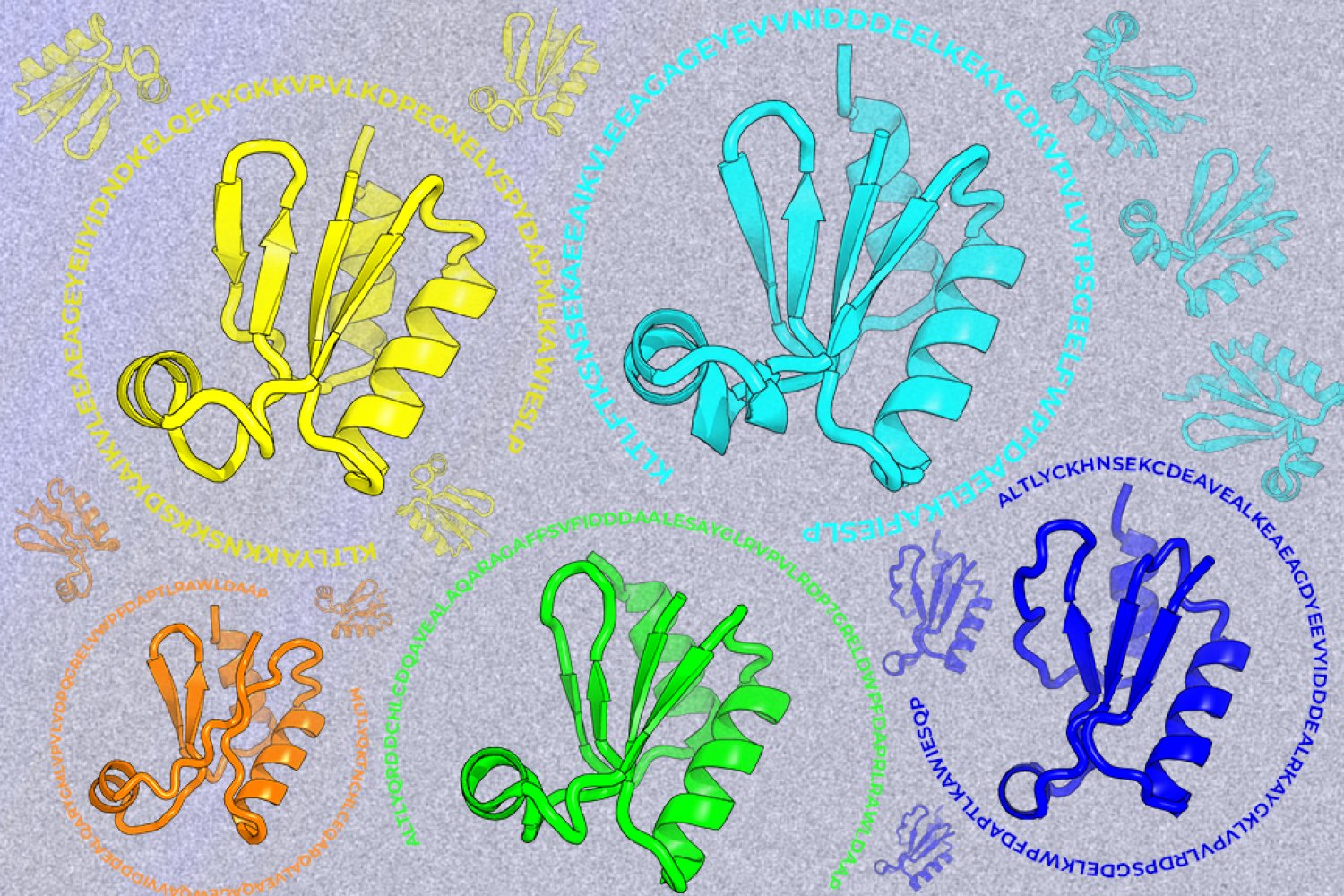
A new machine-learning framework aims to improve the success rate of computational protein design while moving away from results that reproduce sequences found in nature.
MIT News · Artificial Intelligence· news.mit.eduAug 24, 2026
A new method for surgically removing training examples from a model reveals that as datasets grow, the link between what a model learns and what it produces dissolves.