Public health forecasts must respond to abrupt changes in surveillance data without over-extrapolating noise, reporting artifacts, or temporary trends. We evaluated autoregressive integrated moving average (ARIMA), random forest, and extreme gradient boosting (XGBoost) models using 190 weekly observations of publicly available Ontario COVID-19 case counts from January 2020 to October 2023. Rolling-origin time-series cross-validation preserved temporal order during model tuning and evaluation. Performance was assessed across three operating dimensions: responsiveness following selected turning points, forecast horizons of one to six weeks, and the amount of historical training data. We also developed Machine Learning and ARIMA Model Averaging (MLAMA), a non-negative performance-weighted ensemble with weights that vary by forecast horizon and responsiveness setting. Retrospective comparisons showed that ARIMA adapted rapidly after turning points but its normalized error increased at longer horizons. Random forest and XGBoost were less responsive initially but maintained more stable normalized error over longer horizons. For two-week forecasts at the end of the study period, training on the most recent data outperformed using longer historical periods, particularly for XGBoost. MLAMA achieved the lowest normalized mean absolute percentage error across most forecast horizons and ranked among the best-performing methods across responsiveness settings. These findings support selecting forecasting models according to operating conditions rather than relying on a single universally preferred approach. MLAMA provides a practical framework for combining complementary statistical and machine-learning forecasts. The accompanying Python package is currently maintained in a private repository while software validation and reproducibility testing are completed.
Vision-language models (VLMs) provide a unified representation space for textual and visual information, yet their potential as general-purpose backbones for graph-structured data remains largely unexplored. In practice, attributed graphs exhibit substantial modality heterogeneity: some graphs contain only textual node attributes, others only visual attributes, while still others provide both. Existing graph learning approaches are typically designed for fixed modality schemas, requiring separate models for different settings and limiting scalability and cross-graph generalization. To bridge this gap, we present OMG-VLM (One Model, Many Graphs with Vision-Language Models), a unified framework for learning over attributed graphs across heterogeneous modality schemas. OMG-VLM leverages a pretrained VLM as a shared backbone and introduces structure-aware graph adapters that integrate neighborhood information while remaining compatible with the VLM's native embedding space. This design enables effective learning over text-attributed, image-attributed, and multi-attributed graphs within a single model. Extensive experiments across diverse domains show that OMG-VLM consistently outperforms state-of-the-art GNN- and LLM-based baselines on attributed graph learning tasks such as node classification and link prediction, while exhibiting strong generalization to unseen graphs and varying modality schemas. The source code is available at https://github.com/Jo-eyang/OMG-VLM.
Jiayi Yang, Yifang Chen, Yuanfu Sun et al.· 0 citations
Continuous-time Markov chains (CTMCs) provide the backbone for modeling discrete stochastic dynamics across applied, physical, and biological sciences. Their integration with modern gradient-based machine learning, however, is limited by the hard categorical event selection intrinsic to Gillespie-type simulation algorithms. We exploit the affine state update to obtain the exact one-step conditional-mean sensitivity by differentiating normalized reaction propensities. We pair this backward rule with exact forward trajectories to define the propensity straight-through (PST) estimator. At the trajectory level, we show that one-step sensitivities composed across events can depart from the exact multistep sensitivity. We derive the resulting per-step discrepancy in closed form and prove that it vanishes identically for affine downstream dependence. PST matches the accuracy of Gumbel-Softmax straight-through across all benchmarks: reversible dimerization (0.06% error), a genetic oscillator (1.7% error), a 50-task repressilator suite (0.17% median error), and patch-clamp ion-channel recordings ($R^2$ = 0.988). Under matched settings, PST converges 3.0-fold faster on the oscillator and 2.1-fold faster on the ion channel. At deep-learning scale, PST trains a 203,796-parameter stochastic reaction network with hard sampling, reaching 98.22% MNIST digit classification accuracy. By differentiating an exact conditional mean rather than a relaxed sample, PST offers a temperature- and Gumbel-free path to scalable gradient-based learning through exact stochastic trajectories.
A unified framework, KENDO (Kernel ENsemble Disagreement-aware Operator), is proposed that integrates Ensemble Gaussian Processes (EGP) with disagreement-aware acquisition strategies and extends the approach to multi-objective optimization via random scalarization that preserves the single-optimizer conditioning structure.
Heng Zhang, Haotian Xiang, Qin Lu et al.· 0 citations
Reach audiences
Advertise in front of researchers, engineers, and readers.
A no-go theorem is used to separate four versions of neural network field theory, according to whether the defining object is the finite width ensemble or its infinite width limit, and whether the target the authors want to compute is a quantum or an effective field theory.
A novel formulation of a Wasserstein-2 metric that uses the Bures-Wasserstein (BW) metric over probability measures with finite second moments is developed, which allows the worst-case distribution to endogenously determine both how many mixture components receive mass and where their means and covariances lie within a continuous support.
Sampling from discrete Markov random fields (MRFs) is a hard problem. We study amplitude-encoded i.i.d. sampling for small MRFs where $2^n$ target probabilities are precomputed classically. This removes quantum exponential speedup but allows a clean comparison against classical MCMC based on independent circuit samples ($\tau \approx 1$). Across 60 instances spanning five graph families (1k-step burn-in, 3k retained samples), the mean ESS ratios of Quantum to Single-Site Gibbs, Block Gibbs, Tuned-Block, and Parallel Tempering are $16.35$, $7.29$, $1.82$, and $1.79$, showing modern classical samplers substantially close this gap. Amortizing $O(2^n)$ preprocessing into wall-clock time, exact inverse-CDF sampling yields $17.7\text{M}$ ESS/s versus $488\text{K}$ ESS/s for the quantum sampler ($36\times$ mean rate, $153\times$ per-instance), confirming no wall-clock advantage. We characterize MCMC autocorrelation costs and benchmark amplitude-encoded state preparation at $n \in \{8,10,12\}$. An MPS scaling study ($n \le 40$) shows bond dimension $\chi=32$ achieves $F=0.721\pm0.059$ at $n=40$. Finally, a matched-budget VQC vs. MPS comparison at $n \in \{8,10,12\}$ shows VQC fidelities fall far below MPS: $(F_{\mathrm{VQC}}, F_{\mathrm{MPS}}) = (0.31, 0.99), (0.21, 0.96), (0.17, 0.88)$ at compressions $10.7\times$, $34.1\times$, and $113.8\times$.
Semantic caching cuts LLM inference costs by serving a cached response to semantically similar queries. Standard practice evaluates these systems using PR-AUC, a metric that only measures how well scores rank and ignores whether they are usable at a fixed threshold. We show this mismatch leads to systematically poor deployment choices, as models with the highest PR-AUC are often the worst in operation. We introduce Precision--Cache Hit Ratio (P-CHR) AUC, a cache-aware metric that measures precision across cache utilization levels, and Operational Retention Rate (ORR), which captures how much offline ranking quality survives at deployment. We decompose the operational gap between offline and deployed quality into a recoverable threshold-utility component and an irreducible structural component fixed by the dataset's positive rate. Our experiments show that the threshold-utility gap is governed by the training objective rather than data scale, and yields only to re-normalizing scores over the candidate pool or changing the training objective. Ultimately, model selection for semantic caching is a threshold-utility problem, not a ranking one, and measuring it is the first step to closing the gap.
We propose a Weak-form Physics-Informed Neural Operator (WINO), a data-free framework that combines the efficiency of neural operators with the geometric flexibility of the $\varphi$-finite element method ($\varphi$-FEM). $\varphi$-FEM is an unfitted method that accommodates geometric variations without body-fitted meshes, where the domain geometry is represented by the level-set function $\varphi$. To impose the boundary conditions, Dirichlet problems adopt the $\varphi$-FEM lifting so only the homogeneous displacement contribution is learned, whereas traction-driven Neumann problems additionally predict the auxiliary fields necessary for the unfitted weak formulation. Parameters are trained by minimizing squared weak-form residuals aligned with $\varphi$-FEM together with squared penalties on the cut-cell auxiliary equations, which removes the need for large paired datasets of converged reference solutions. When labeled reference data are available, an optional data-augmented variant (WINO+data) can further combine this physics-informed loss with a supervised term. After training, WINO outputs can seed the nonlinear $\varphi$-FEM solvers as neural operator warm starts (NOWS), which reduce iteration counts relative to traditional cold-started solvers. Numerical benchmarks show substantial accuracy of WINO together with total training times of about 15%-70% of those of supervised $\varphi$-FEM-FNO across all cases, without requiring reference-solution generation.
Bokai Zhu, Yizheng Wang, Qinghui Zhang et al.· 0 citations
Learning-to-Defer (L2D) methods route each query either to a predictive model or to external experts. Real-world deployments require handling streaming data, changing expert availability, shifting expert reliability, and feedback observed only for the selected action. We introduce an online multiclass L2D algorithm that combines queried-action bandit feedback with a dynamically varying pool of experts. Let $N=n+n_e$, let $B$ bound the Frobenius norm of the linear score matrix, and let $\rho$ bound the augmented input norm. Assuming linear calibration and zero surrogate minimizability gap for the projected comparator class, our method achieves expected true-deferral regret $O((BN^{3/2}\rho+1)T^{2/3})$, improving to $O(BN^{3/2}\rho\sqrt T+B^2N^3\rho^2)$ under a concentrated-score condition. The analysis combines an online $\mathcal H$-consistency transfer bound with projected online convex optimization. Experiments on synthetic and real-world datasets demonstrate selective routing under varying expert availability and reliability.
Dang Hoang Duy, Yannis Montreuil, Maxime Meyer et al.· 0 citations
DiffAnon is proposed, a diffusion-based anonymization method with classifier-free guidance (CFG) that provides explicit, continuous inference-time control over prosody preservation, and is the first voice anonymization framework to provide structured, interpolatable inference-time prosody control.
Ismail Rasim Ulgen, Zexin Cai, Nicholas Andrews et al.· arXiv.org· 0 citations
Nonlinear Partial Differential Equations (PDEs) are ubiquitous in mathematical physics and engineering. Although Physics-Informed Neural Networks (PINNs) have emerged as a powerful tool for solving PDE problems, they typically struggle to identify multiple distinct solutions, since they are designed to find one solution at a time. To address this limitation, we introduce Deflation-PINNs, a novel framework that integrates a deflation loss with an architecture based on PINNs and Deep Operator Networks (DeepONets). By incorporating a deflation term into the loss function, our method systematically forces the Deflation-PINN to seek and converge upon distinct finitely many solution branches. We provide theoretical results on the approximation capabilities of our model and demonstrate the efficacy of Deflation-PINNs through numerical experiments on the Landau-de Gennes model of liquid crystals, a system renowned for its complex energy landscape and multiple equilibrium states, and on an Allen--Cahn benchmark whose solution set is provably known. Our results show that Deflation-PINNs can successfully identify and characterize multiple distinct crystal structures: a single unsupervised run recovers all six stable states of the benchmark, each branch certified to lie in the basin of attraction of a different equilibrium, and the discovered branches are refined to percent-level accuracy by a purely neural Deflation--Deep-Ritz stage and to the accuracy of a mesh-converged reference by a classical solver that they initialize.
Sean Disar\`o, Ruma Rani Maity, Aras Bacho· 0 citations
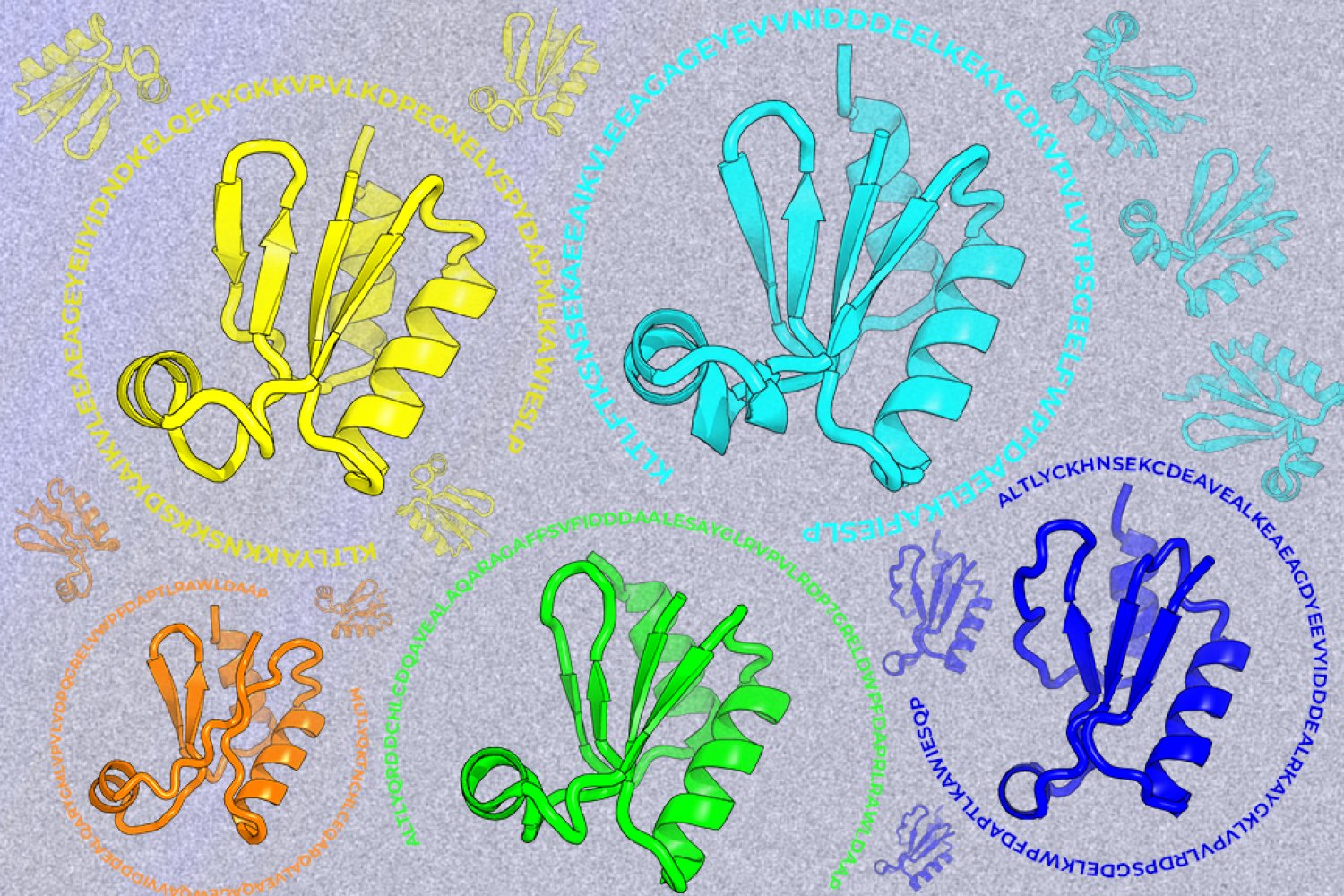
A new machine-learning framework aims to improve the success rate of computational protein design while moving away from results that reproduce sequences found in nature.
MIT News · Artificial Intelligence· news.mit.eduAug 24, 2026
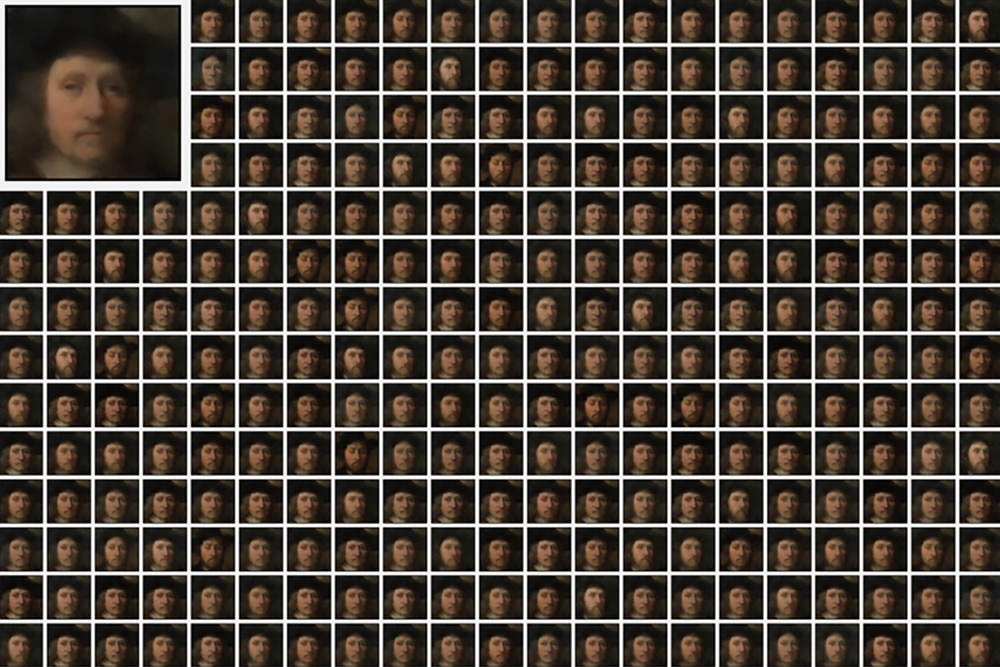
A new method for surgically removing training examples from a model reveals that as datasets grow, the link between what a model learns and what it produces dissolves.