Retrieval plays a central role in multi-hop question answering (QA), where answering complex questions requires gathering multiple pieces of evidence. We propose PRISM, an agentic retrieval framework that leverages large language models (LLMs) in a structured loop to retrieve relevant evidence with high precision and recall. PRISM decomposes retrieval into three specialized agents: a Question Analyzer that breaks complex queries into sub-questions, a Selector that identifies the most relevant context for each sub-question (focusing on precision), and an Adder that brings in any missing evidence (focusing on recall). The iterative interaction between the Selector and Adder produces a compact yet comprehensive evidence set, avoiding both brittle error propagation and noisy context accumulation. It achieves higher retrieval accuracy while filtering out distracting content, enabling downstream QA models to surpass full-context answer accuracy while relying on significantly less irrelevant information. Experiments on four challenging multi-hop QA benchmarks, including HotpotQA, 2WikiMultiHopQA, MuSiQue, and MultiHopRAG, demonstrate that our approach consistently outperforms strong baselines.
OceanGym is introduced, the first comprehensive benchmark for ocean underwater embodied agents, designed to advance AI in one of the most demanding real-world environments, and reveals substantial gaps between state-of-the-art MLLM-driven agents and human experts.
Yida Xue, Mingjun Mao, Xiangyuan Ru et al.· 0 citations
Safety-aware Contrastive Decoding (SafeCoDe) is introduced, a lightweight and model-agnostic decoding framework that dynamically adjusts token generation based on multimodal context that consistently improves context-sensitive refusal behaviors while preserving model helpfulness.
This work introduces a 98% automated pipeline to produce high-quality Quranic datasets and presents a novel ASR-based approach for pronunciation error detection utilizing the authors' custom Quran Phonetic Script (QPS) to encode Tajweed rules (unlike the IPA standard for Modern Standard Arabic).
Abdullah Abdelfattah, Mahmoud I. Khalil, Hazem M. Abbas· arXiv.org· 1 citation
Reach audiences
Advertise in front of researchers, engineers, and readers.
Large language models (LLMs) struggle with cross-lingual knowledge transfer: they sometimes hallucinate when asked in one language about facts expressed in a different language during training. This work introduces a controlled setting to study the causes and training dynamics of this phenomenon by training small Transformer models from scratch on synthetic multilingual datasets. Depending on (1) the correlation between facts and the language they were learned in (informativeness), and (2) the ease of language identification (extractability), models either develop unified representations across languages or separate representations; only when representations are unified do facts transfer across languages. Based on these insights, we propose a unifying perspective which explains a range of prior observations concerning cross-lingual transfer in multilingual LLMs. Our work shows controlled settings can shed light on pre-training dynamics and suggests methods to encourage representational unification as part of training that would improve LLMs' cross-lingual transfer.
Carter Blum, Katja Filippova, Ann Yuan et al.· 0 citations
Cognitive Chain-of-Thought (CoCoT) is introduced, a reasoning framework that structures vision-language-model reasoning through three cognitively inspired stages: Perception, Situation, and Norm, showing that structuring model reasoning through cognitively grounded stages enhances interpretability and social alignment, laying the groundwork for more reliable multimodal systems.
Eunkyu Park, Wesley Hanwen Deng, Gunhee Kim et al.· 3 citations
Visual instruction tuning adapts pre-trained Multimodal Large Language Models (MLLMs) to follow human instructions for real-world applications. However, the rapid growth of these datasets introduces significant redundancy, leading to increased computational costs. Existing methods for selecting instruction data aim to prune this redundancy, but predominantly rely on computationally demanding techniques such as proxy-based inference or training-based metrics. Consequently, the substantial computational costs incurred by these selection processes often exacerbate the very efficiency bottlenecks they are intended to resolve, posing a significant challenge to the scalable and effective tuning of MLLMs. To address this challenge, we first identify a critical, yet previously overlooked, factor: the anisotropy inherent in visual feature distributions. We find that this anisotropy induces a \textit{Global Semantic Drift}, and overlooking this phenomenon is a key factor limiting the efficiency of current data selection methods. Motivated by this insight, we devise \textbf{PRISM}, the first training-free framework for efficient visual instruction selection. PRISM surgically removes the corrupting influence of global background features by modeling the intrinsic visual semantics via implicit re-centering. Empirically, PRISM reduces the end-to-end time for data selection and model tuning to just 30\% of conventional pipelines. More remarkably, it achieves this efficiency while simultaneously enhancing performance, surpassing models fine-tuned on the full dataset across eight multimodal and three language understanding benchmarks, culminating in a 101.7\% relative improvement over the baseline. The code is available for access via \href{https://github.com/bibisbar/PRISM}{this repository}.
This work proposes Short-Films 20K (SF20K), the largest publicly available movie dataset, and accompanies this dataset with SF20K-Test, a manual, open-ended question answering benchmark, showing that instruction tuning on the large-scale dataset substantially improves model performance.
Ridouane Ghermi, Xi Wang, Vicky Kalogeiton et al.· International Journal of Com...· 11 citations· ⚡1
GAOKAO-Bench is introduced, an intuitive benchmark that employs questions from the Chinese GAOKAO examination as test samples, including both subjective and objective questions that contribute a robust evaluation benchmark for future large language models and offers valuable insights into the advantages and limitations of such models.
Xiaotian Zhang, Chun-yan Li, Yi Zong et al.· arXiv.org· 216 citations· ⚡17
This work borrows the notion of set-shifting from cognitive psychology to study how well LLM agents adapt to hidden reliability shifts, and introduces a suite of measures to quantify agent behavior after reliability shifts.
Recent advances in large language models (LLMs) have demonstrated strong capabilities in natural language understanding and mathematical reasoning. However, their ability to translate informal mathematical problems into formal representations remains underexplored. This limitation is particularly important for neuro-symbolic geometry systems such as AlphaGeometry, whose theorem-proving engine requires inputs in a specialized domain-specific language (DSL). Although AlphaGeometry achieves near-IMO gold-medalist performance, manually converting natural-language problems into its formal syntax remains a significant usability bottleneck. To address this challenge, we introduce the Natural Language to AlphaGeometry Benchmark (NL2AGBench), which evaluates LLMs in translating English geometry problems into AlphaGeometry-compatible formal representations. NL2AGBench uses execution-based verification within AlphaGeometry to assess translation quality rather than relying solely on textual similarity. We evaluate ten state-of-the-art open- and closed-source LLMs across multiple parameter scales and analyze executable translation accuracy, syntactic correctness, and error characteristics. Our experiments reveal a substantial performance gap between closed- and open-source models: leading closed-source models achieve executable translation rates above 80%, while even the largest open-source models struggle to consistently preserve geometric constraints and produce valid formalizations. We introduce an error taxonomy distinguishing syntax and logic errors and investigate mitigation strategies, including few-shot prompting, fine-tuning, and human-guided hinting, which yield measurable improvements across multiple model families.
Samuel Xiao, Judy Song, Rory Hu et al.· 0 citations
One model passed our fidelity check without ever opening the datasheet. We found it while qualifying models for an internal extraction service: a structured-output constraint had silently disabled tool use, and the model answered anyway, with fabricated source text. Only the per-tool trace exposed it. Fidelity -- whether an extracted value matches the source -- is the standard measure for agentic document extraction, and it scores that run a success. We therefore log every tool call in an agentic benchmark of 25 hand-curated claims over three components, with 12 more on a fourth, 37 in all. From that dispatch record we build two instruments: a rule-based failure-attribution classifier, and a silent-failure detector whose two rules check only which tools were called, never the extracted value. The detector raises no flag on 207 clean fidelity-passing extractions across three model families, and recovers all 50 planted faults that withhold exactly the tools its rules check. The two results are not symmetric: the first bounds the false-positive rate, the second is recall by construction, and detection power against runs that call their tools and still answer wrongly is unmeasured. A second, independent oracle, a causal chamber that tests whether the datasheet's claims hold under physical measurement, is intentionally partial: it confirms only what the apparatus can exercise, a verifiable envelope of 2 of those 37 claims, and we give a taxonomy of why the rest are not physically gradable. Under a controlled perturbation, fidelity passes throughout while the chamber verdict flips exactly at the measurement uncertainty. Across three deployed model stacks (one destabilised by its serving stack, not by any capability gap) the tool layer buys portability and observability rather than accuracy, and earns its premium only once a document outgrows the context window.
A new method, called CW-Net, translates the reasoning process of an autonomous vehicle’s AI system into understandable concepts that explain its behavior.
MIT News · Artificial Intelligence· news.mit.eduAug 31, 2026
With millions of users across the world, Julia has been used to conduct cutting-edge research and to design new drugs, jet engines, heat pumps, and more.
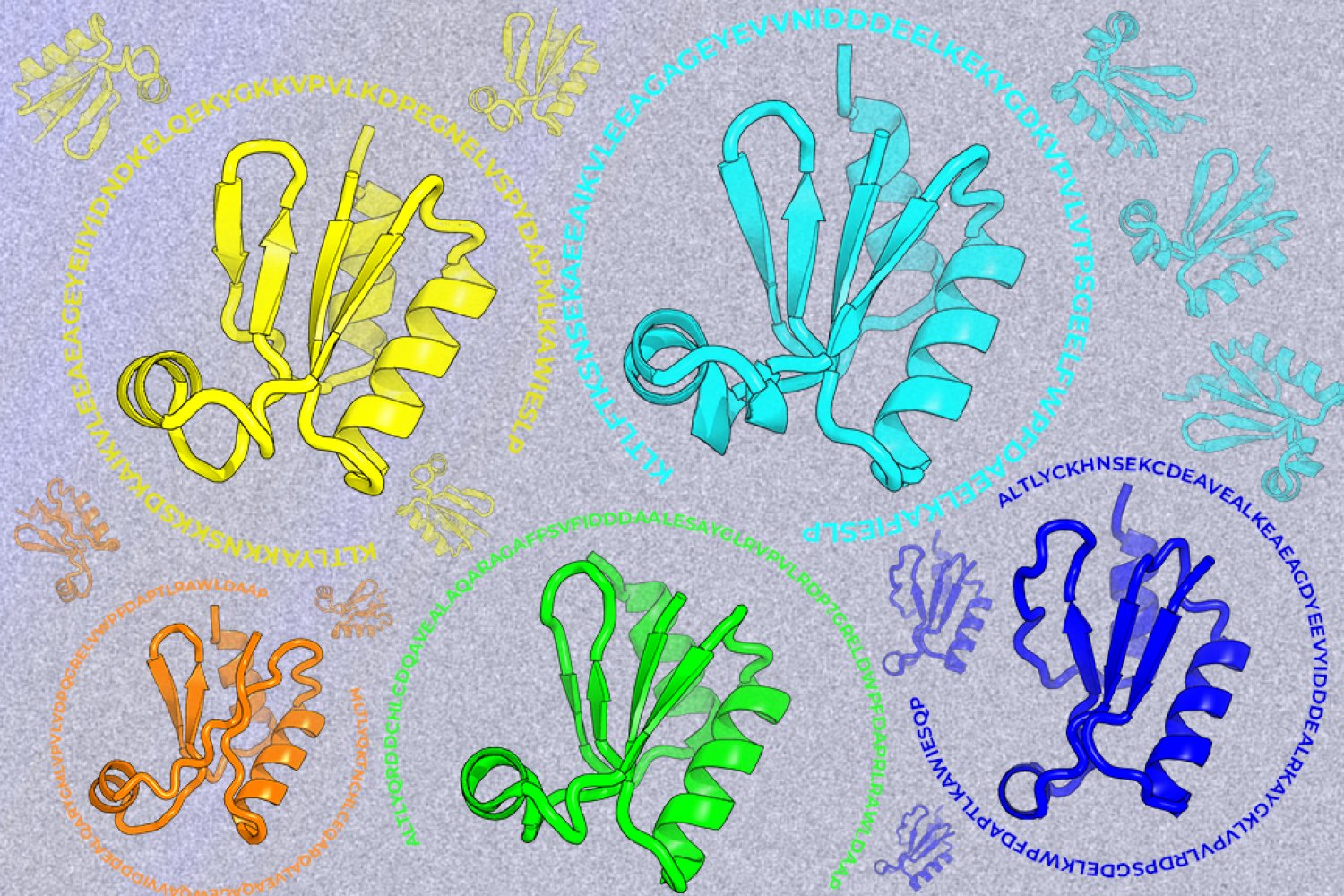
A new machine-learning framework aims to improve the success rate of computational protein design while moving away from results that reproduce sequences found in nature.
New MIT research could lead to better materials for a fossil-fuel-free process for making the chemical that's essential to fertilizer and other products.