This work instantiates 17 paradigm-level configurations across five recurring modules of the ICL text-to-SQL pipeline under a single controlled implementation, and reveals that execution-feedback refinement is the only paradigm whose benefit holds universally at consistently low cost, while most other modules help only under backbone-dependent conditions.
Jia-Yan Lin, Yu-Jia Liu, Zi-Jin Hong et al.· 0 citations
Regression analyses show that distributional properties of confidence scores explain much of the observed alignment pattern, with model metadata playing a smaller role after controls, and support a lossy-channel view of linguistic confidence.
Hefan Zhang, Bing-Quan Zhang, Ming Cheng et al.· 0 citations
BanglaMed-QA, a robust QA system specifically designed for the Bangla medical domain, is introduced and supervised machine learning models in which SVM is found to be the best model to categorize questions are adopted.
Rowzatul Zannat, Abdullah Al Shafi, K. M. Azharul Hasan et al.· 0 citations
Practitioners defend large language models (LLMs) by stacking defenses, assuming the layers compound. A stack is an ensemble, and ensembles compound only under a condition the LLM security literature recommends but never measures: the members must fail on different inputs.
Two instruments make that measurable. The Adversary Access-Tier Model (AATM) grades an adversary by the access it holds, from system-only (A0) to influence over training data (A4). A cost model sorts defenses into five classes of inference-time overhead; because two classes require training weights or reading activations, they tier the defender as AATM tiers the adversary. From these we derive how a stack behaves, and the quantities a defender cares about diverge: coverage saturates within a tier, cost rises by class, false refusals accumulate as a union, and residual attack success falls multiplicatively only under independence.
We measure that independence. Running one adaptive adversary against a seven-layer stack, failure correlation is positive in all fifteen measurable pairs ($\phi$ from $0.30$ to $0.75$), and the joint residual exceeds the multiplicative prediction by up to $0.172$. Stratifying on behavior difficulty dissolves most of the association, so the dependence is predominantly common-cause, but it survives permutation inference, majority-vote grader labels, and externally calibrated thresholds. The same stack refuses four in five benign prompts while remaining statistically indistinguishable from its strongest single layer.
The dependence is architectural rather than sampling-based: members correlate through the model they all wrap, so no wider member pool weakens it. Diversity therefore selects stack members but does not predict what an assembled stack delivers, which has to be measured end to end.
Abrar Alotaibi, Muhammad Shahid Jabbar, Sadam Al-Azani et al.· 0 citations
Reach audiences
Advertise in front of researchers, engineers, and readers.
Verifier-Informed Student-to-Teacher Adaptation (VISTA), which preserves the standard OPSD student update while using outcome-verified rollouts to adapt the teacher toward the student distribution and demonstrates the value of student supervision from outcome-verified rollouts.
Ze-Wen Ding, Ze-Zhong Wu, Zhou Tao et al.· 0 citations
The premise and promise of KV (cache) eviction is simple: higher throughput can be achieved by evicting some entries from the KV cache, at a negligible cost to quality. This holds empirically for many existing methods, though most rely on creative heuristics for selecting which entries to drop. Despite recent advances, the problem of KV eviction has remained informal in the literature. This paper aims to properly formalize this problem through the lens of probabilistic reasoning and reveal what can be learned from this perspective. Concretely, we (1) formalize the problem of KV eviction and, unfortunately, prove that it is computationally hard, (2) show that by framing it probabilistically, KV eviction reduces to the problem of expectation estimation, which can be approximated through sampling, (3) show that through this probabilistic interpretation, correcting for evicted entries during decoding---a previously ignored problem---becomes feasible, and (4) reveal that existing methods in the literature are zero-variance biased estimators that can be easily adapted in order to enable decode time correction. In practice, we show that this probabilistic version of KV eviction coupled with decode time correction is more robust to different tasks compared to existing eviction methods and achieves competitive performance at the same compression budget.
Renato Geh, Alex Chen, Daniel Israel et al.· 0 citations
This paper introduces diagnostic word-ablation metrics to quantify this phenomenon and proposes a data-centric solution that can alleviate the observed overcorrection in stance-aware argument retrieval and demonstrates that, for sufficiently powerful models, this approach can alleviate the observed overcorrection.
Angelo Sparacino, Francesca Toni, Adam Dejl· 0 citations
Purpose - This study investigates the feasibility of restoring missing text caused by physical lacunae in damaged ancient manuscripts using language models.
Methodology - The study proposes different scenarios to replicate real-world conditions. Language models of different architectures are applied according to their suitability to each scenario. We also propose several decoding strategies that further enhance performance and address the discrepancy between lacuna boundaries and the models' tokenization schemes.
Findings - The results reveal that text restoration of these documents cannot be fully automated, but it can serve as a useful tool to assist paleographers in their work. Model performance varies greatly depending on which structural part of the document needs to be restored and whether the character length of missing text is available.
Originality - This is the first study and to analyze model performance on formulaic and non-formulaic content and the impact of lacuna length awareness in manuscript restoration. Both are recurring challenges in paleographers' manual restoration work. Through systematic comparison and both qualitative and quantitative analysis of different models' performance under varying settings, this study offers a guideline for developing assistive tools to support paleographers.
Shibingfeng Zhang, Edoardo Caraffa, Annafelicia Zuffrano et al.· 0 citations
Slicing a byte-level BPE tokenizer allows one language model to operate at several vocabulary sizes, use a control token to indicate the active size, and be deployed at any trained size by slicing its embedding and output head, yielding a falsifiable prediction for future work.
Knowledge-intensive reasoning requires Large Language Models (LLMs) to ground answers in provided evidence. When evidence is insufficient, it is desirable that models abstain rather than confidently generating unsupported answers. Existing abstention methods rely on uncertainty estimation or evidence sufficiency checks, but neither tests whether the reasoning process for generation, driven by the interaction of provided evidence and the model's internal memory parameters, is actually grounded in the evidence. A key contributing factor is that entity mentions in context activate memorised associations, causing models to generate plausible responses ungrounded in evidence. We propose Twin Worlds (TW), a framework for improving reliability in knowledge-intensive reasoning through equivariance-based abstention: unlike invariance, which requires outputs to remain unchanged, equivariance requires outputs to transform correspondingly under entity substitutions. A model grounded in the evidence should produce answers that shift consistently when entities are substituted while their relations are preserved. TW constructs multiple worlds via typed substitutions of the original input that preserve relational structure while reducing parametric priors, and uses equivariance violations as an abstention signal. Across four benchmarks and three model backbones, TW identifies when answers are not reliably grounded in the provided evidence and outperforms uncertainty- and sufficiency-based baselines.
Vy Nguyen, Ziqi Xu, Jeffrey Chan et al.· 0 citations
Landing pages are goal-oriented web interfaces that must communicate a target-specific value proposition while organizing information flow, visual hierarchy, and calls to action (CTA). Although large language models can generate plausible webpage code from natural-language prompts, direct generation often yields generic templates and unsupported persuasive claims. We study target-grounded, reference-guided landing-page generation, where a system must create an executable page for a new target by adapting reusable patterns from real pages without copying them. We introduce LandingBench, a reference-profile dataset that abstracts real landing pages into section sequences, layout patterns, tone descriptors, visual emphasis, and CTA structure. Building on LandingBench, we propose LandingAgent, a three-phase agentic framework that profiles the target, constructs a reference-guided wireframe, and refines the page through critique-guided polishing. We evaluate LandingAgent against direct prompting on faithfulness, conciseness, readability, aesthetics, and structural diversity. Experiments show improved target grounding, presentation quality, and layout diversity. Code is available at https://github.com/IAURAI/LandingAgent.
Injun Baek, HyeongSeok Lee, Yearim Kim et al.· 0 citations
With the growing prevalence of large language model (LLM) generated content, watermarking is considered a promising approach for attributing text to LLMs and distinguishing it from human-written content. A prominent class of techniques embeds subtle but detectable signals in generated text by modifying token sampling probabilities. However, such methods are unsuitable for open-source models, where users have white-box access and can easily disable watermarking during inference. In this work, we introduce OpenStamp, a watermarking technique that encodes the watermarking logic directly into the model weights by modifying only the final projection, or unembedding, layer. Through experiments across two models, we show that OpenStamp achieves superior detection performance, with minimal degradation in model capabilities compared to prior methods. The implanted watermark is explicitly designed, and empirically confirmed, to be more robust to paraphrasing attacks and harder to scrub off through post-hoc fine-tuning than prior open-source watermarks. To enable developers to watermark their models, we release our code alongside watermarked versions of 4 popular open-source models.
A new method, called CW-Net, translates the reasoning process of an autonomous vehicle’s AI system into understandable concepts that explain its behavior.
MIT News · Artificial Intelligence· news.mit.eduAug 31, 2026
With millions of users across the world, Julia has been used to conduct cutting-edge research and to design new drugs, jet engines, heat pumps, and more.
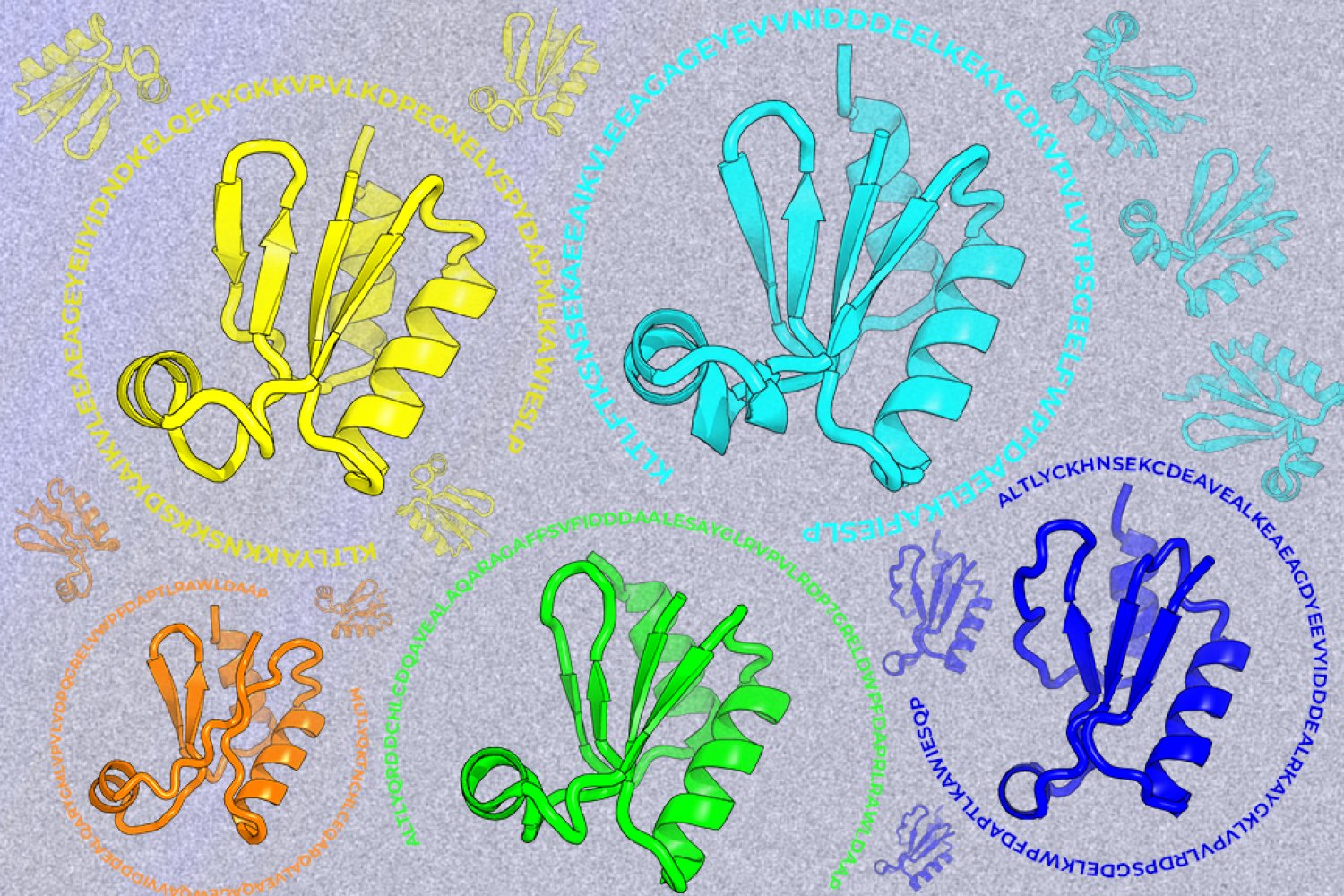
A new machine-learning framework aims to improve the success rate of computational protein design while moving away from results that reproduce sequences found in nature.
New MIT research could lead to better materials for a fossil-fuel-free process for making the chemical that's essential to fertilizer and other products.