Human ratings are the gold standard in NLG evaluation. The standard protocol is to collect ratings of generated text, average across annotators, and rank NLG systems by their average scores. However, little consideration has been given as to whether this approach faithfully captures human preferences. Analyzing this standard protocol through the lens of utility theory in economics, we identify the implicit assumptions it makes about annotators. These assumptions are often violated in practice, in which case annotator ratings cease to reflect their preferences. The most egregious violations come from using Likert scales, which provably reverse the direction of the true preference in certain cases. We suggest improvements to the standard protocol to make it more theoretically sound, but even in its improved form, it cannot be used to evaluate open-ended tasks like story generation. For the latter, we propose a new human evaluation protocol called $\textit{system-level probabilistic assessment}$ (SPA). When human evaluation of stories is done with SPA, we can recover the ordering of GPT-3 models by size, with statistically significant results. However, when human evaluation is done with the standard protocol, less than half of the expected preferences can be recovered (e.g., there is no significant difference between $\texttt{curie}$ and $\texttt{davinci}$, despite using a highly powered test).
Trained transformer models develop privileged bases: coordinate axes whose statistics differ from the rest of the residual stream. But what kind of direction does such a basis select? We investigate the prediction direction, the unembedding direction of the token a model currently predicts, and find that it functions as a content-defined privileged anchor. Measured with respect to this anchor, residual-stream variation is geometrically and behaviorally stratified by proximity to the prediction.
The stratification holds in all eighteen models tested (dense and mixture-of-experts, 7B-120B, base and instruction-tuned). A narrow, scale-invariant prediction interface concentrates readout-relevant structure, while the vast prediction-distal complement expands with model scale. Because the prediction direction sits nearly orthogonal to the principal variance axes, variance-based analyses recover this organization only partly, and the shortfall grows with prompt heterogeneity.
Anchoring reveals a steep geometric gradient: prediction-proximal regions are highly structured and cluster related prompts, while the complement is flatter and anti-discriminates among prompt groups. The interface is a narrow slice but functionally decisive. Disrupting the variance directions closest to the prediction causes immediate divergence and frequent task-frame shifts; disrupting the next level down delays divergence and preserves framing. The complement is weakly readout-aligned per direction yet causally and temporally load-bearing, and behavior is driven by direction rather than magnitude.
These results establish the prediction direction as a privileged anchor distinct from previously described coordinate axes, and give a geometric account of how high-dimensional computation coexists with linear readout.
Activation steering has emerged as a lightweight approach for modifying language model behavior without parameter updates, yet existing methods remain brittle: unstable across layers and prone to disturbing behavior unrelated to the target concept. We trace these failures to a hidden assumption shared by widely-used methods such as CAA, ActAdd, and ITI: that the intermediate activation space is Euclidean. We show this assumption is fundamentally flawed. The metric that actually governs how a hidden-state perturbation changes the output is the Fisher information metric of the softmax layer, pulled back to the intermediate layer through the Jacobian of the intervening layers. From it we derive a closed-form steering direction, applied to a hidden state at an intermediate layer, that reaches a target concept change with the least non-target distortion. The framework is sharpest in the early and middle intermediate layers, where the metric is strongly non-Euclidean and geometric correction matters most. We evaluate it on three verb-morphology concepts: third-person-singular, progressive, and past-tense inflection, following standard counterfactual-concept evaluation. On GPT-2 Small, this non-Euclidean geometry is borne out empirically, and our method lowers off-target KL divergence by median factors of 1.4--6.5x against individual steering baselines. On Llama-3-8B and Qwen3-8B, it lowers off-target KL by median factors of 1.8--3.6x against individual baselines at the early and middle layers. These results show that geometric correction retains its advantage on larger models with more complex internal structure.
Sihan Wang, Jiayi Zhao, Qingyan Cao et al.· 0 citations
A performance recovery framework based on Self-Distillation Fine-Tuning (SDFT) that effectively restores model capabilities and offers new insights into the internal mechanisms of self-distillation is introduced.
A comprehensive re-evaluation of two memory-based methods for self-improving agents is conducted, broadening the scope of evaluation along two axes and hypothesizing that task and environment underspecification contribute to this fragility.
Qinyuan Ye, Yu Li, Yada Pruksachatkun et al.· 1 citation
Language model tokenizers are typically selected with minimal evaluation, despite the fact that their design choices directly impact model capabilities. This can be partly attributed to a limited understanding of which tokenizer properties affect which aspects of downstream performance. We introduce TokEval, a framework of tokenizer evaluation metrics that goes beyond standard measures like fertility and compression rate to capture linguistically and structurally meaningful properties, e.g., UTF-8 character boundary integrity and digit place-value boundary alignment for mathematics. To validate whether these metrics are predictive of downstream model performance, we conduct controlled language model pretraining experiments, varying solely the tokenizers'training data mixture, pretokenization strategy, and training algorithm. We evaluate the resulting models on bits-per-byte (a tokenizer-agnostic version of perplexity) and several benchmarks, spanning linguistic understanding, mathematical reasoning, and code generation. Our experiments suggest that different intrinsic properties have different impacts on model abilities: information-theoretic metrics predict language modeling abilities (Spearman rho up to 0.80), while structure-sensitive metrics, such as those measuring digit and line-break handling, correlate with task accuracy. We hope TokEval enables more principled tokenizer evaluation, replacing pretraining sweeps with intrinsic measurement wherever the two agree.
TSN4PI, a unified framework for tracking the evolution of political ideologies on social media, includes two core modules: the PIDN and the PIPN, which employs temporal graph neural networks to predict future ideological shifts, enabling comprehensive analysis of ideology presence, intensity, and evolution.
Take three frontier mixture-of-experts models (Alibaba, OpenAI, NVIDIA; 3.6-4.0B active parameters each) and fine-tune them to reason in a low-resource language. On accuracy benchmarks almost nothing happens, and the benchmark itself is noise at this scale: changing only the random seed moves the score by 7.7 points, more than every data and recipe effect we measured. That null is our first result. The real changes live where accuracy cannot see. Base models never think in Greek: 0 of 1,000 reasoning traces, even when the question is Greek, so the model answers correctly while reasoning in a form its user cannot read, audit, or correct. After supervised fine-tuning (SFT), every released checkpoint reasons in the language of the question on ~98% of items, one family at 3x fewer tokens, with judged grammaticality improving on all four models and general ability within a few points of each base: nothing was forgotten, and fluency was gained. We propose six behavioural dimensions that make such changes measurable, each gated to reject any metric that correlates with output length, and we report how our own instruments lied: six failures, each caught by a control. What SFT cannot do is fix its own defects: a quarter of answers skip the requested format, answers leak into the reasoning channel, and an explicit"think in English"is obeyed under half the time. Reinforcement learning with verifiable rewards, pre-registered before training, fixes the first two outright (fallback 24% to 2.5%, leak 3.5% to 0.0%, both against a flat random-reward control) and moves the third (+9.1pp), while the Greek reasoning habit survives an accuracy-only gradient untouched. We release five checkpoints. The instruments, the controls and the pre-registration travel to any low-resource language; Greek is the case that let us measure them.
MoNe is a lightweight modular neural memory that attaches to any frozen pretrained Transformer to enable long-context inference without retraining, achieving strong performance on needle-in-a-haystack and word extraction benchmarks from RULER, where ICL degrades sharply.
Won-Yong Cho, Kyubyung Chae, Tribhuvanesh Orekondy et al.· 0 citations
Reflex-Guard is introduced, a lightweight guardrail that runs locally that uses jailbreak-aware preprocessing, compact sentence-transformer embeddings, and seven fast binary classifiers that enable high-accuracy prompt safety filtering with much lower latency than existing solutions.
Istiaque Ahmed, Afia Anjum Borsha, Ranat Das Prangon et al.· 0 citations
This work audits financial-news direction prediction dependence on a 49,799-article corpus across 16 feature-model combinations spanning TF-IDF, MiniLM, FinBERT, and fine-tuned RoBERTa-large / DeBERTa-v3-large, plus separate zero/few-shot and LoRA probes of Llama-3 and Qwen2.
Chenhao Xue, Raslen Guesmi, Siwei Feng et al.· 0 citations
This work proposes a margin-regularized structured semantic alignment framework that directly aligns brain embeddings with text embeddings in a shared semantic space, enabling retrieval-based decoding and enables explicit modeling of the correspondence between neural representations and language semantics.
A new method, called CW-Net, translates the reasoning process of an autonomous vehicle’s AI system into understandable concepts that explain its behavior.
MIT News · Artificial Intelligence· news.mit.eduAug 31, 2026
With millions of users across the world, Julia has been used to conduct cutting-edge research and to design new drugs, jet engines, heat pumps, and more.
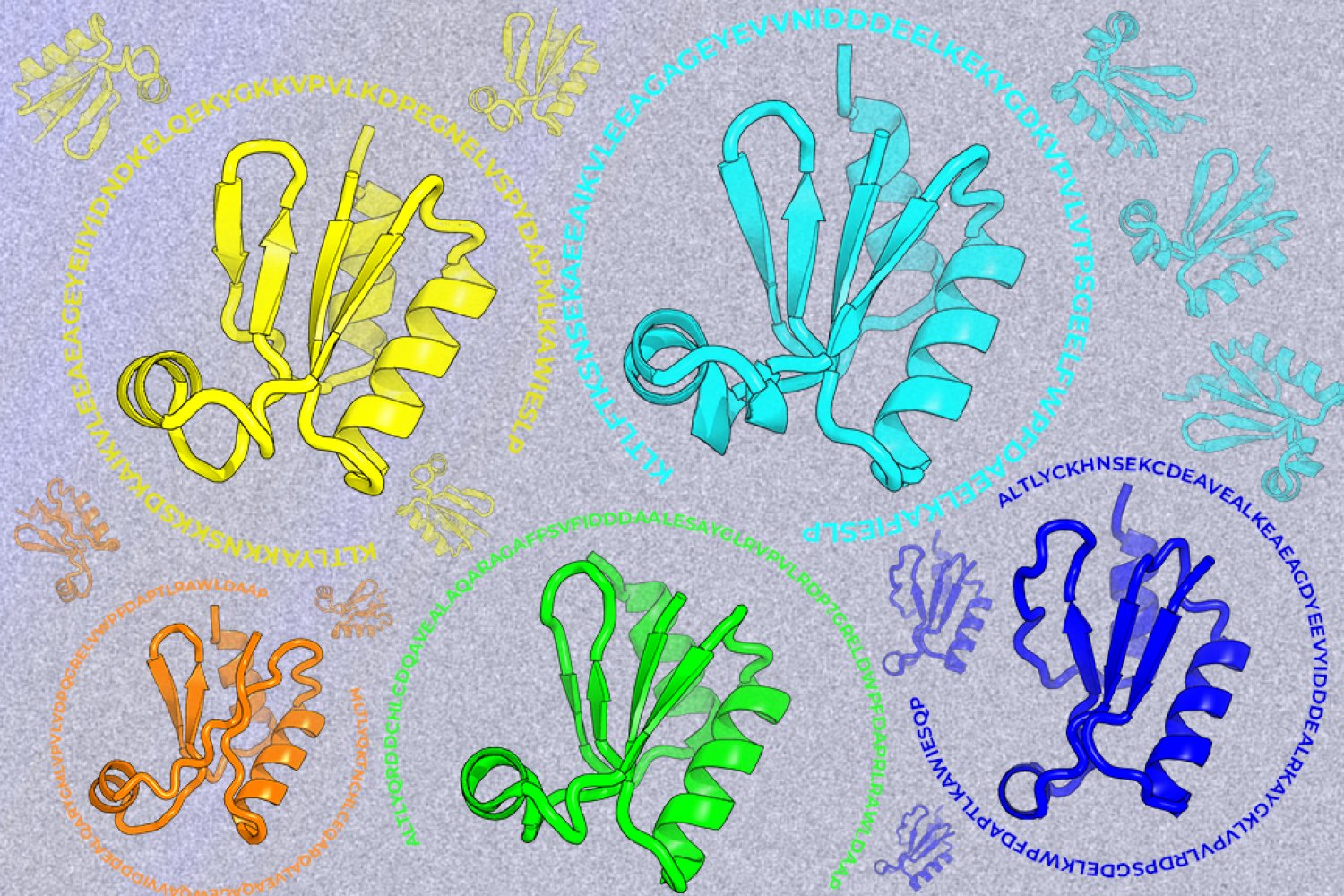
A new machine-learning framework aims to improve the success rate of computational protein design while moving away from results that reproduce sequences found in nature.
New MIT research could lead to better materials for a fossil-fuel-free process for making the chemical that's essential to fertilizer and other products.