A benchmark built on the Speech Accessibility Project (SAP) dataset is introduced that tests whether diagnosis labels, clinician-derived speech ratings, and progressively richer clinical descriptions improve transcription accuracy for dysarthric speech, finding that current models do not meaningfully use this context.
P. Moure, Niclas Pokel, Bilal Bounajma et al.· arXiv.org· 2 citations
Current AI agents can flexibly invoke tools and execute complex tasks, yet their long-term advancement is hindered by the lack of systematic accumulation and transfer of skills. Without a unified mechanism for skill consolidation, agents frequently ``reinvent the wheel'', rediscovering solutions in isolated contexts without leveraging prior strategies. To address this challenge, we introduce SkillNet, an open infrastructure for creating, evaluating, and organizing AI skills at scale. SkillNet structures skills within a unified ontology that supports creating skills from heterogeneous sources, establishing rich relational connections, and performing multi-dimensional evaluation across Safety, Completeness, Executability, Maintainability, and Cost-awareness. Our infrastructure integrates a repository of over 600,000 skills, an interactive platform, and a versatile Python toolkit. Experiments on ALFWorld, WebShop, and ScienceWorld show 40% higher average rewards and 30% fewer execution steps across multiple backbone models. Furthermore, SkillNet-Gym benchmarks skill retrieval, utilization, and composition, while SkillNet-Fabric enables task-specific skill routing through lightweight Wikis. By formalizing skills as evolving, composable assets, SkillNet provides a robust foundation for agents to move from transient experience to durable mastery.
Yuan Liang, Ruobin Zhong, Haoming Xu et al.· 0 citations
SPADE (Self-Play in Adaptive Synthetic Executable Executable Environments), a self-play RL framework in which a single LLM plays two roles: an Environment Designer that writes complete, long-horizon training environments as executable code with an OpenAI Gym-style reset()/step() interface, and a Reasoning Agent that learns to act in them.
Group-relative residual calibration can incorporate verifier outcomes without discarding dense token-level guidance, and demonstrates that group-relative residual calibration can incorporate verifier outcomes without discarding dense token-level guidance.
Zhu Zhang, Jixun Wang, Xiaoan Xu et al.· 0 citations
Reach audiences
Advertise in front of researchers, engineers, and readers.
Astrolinguistics -- communication with minds that categorize reality differently from ours -- has been purely speculative since Freudenthal's Lincos (1960). We make it experimental. Two language models with deliberately incompatible constructed lexicons (one encoding shape, color, and motion; the other fusing color with motion, encoding parity, and lacking shape) serve as informants with complete ground truth, while a fully scripted orchestrator translates between the two category systems. The central failure mode is the kangaroo effect: the silent attachment of a word to the wrong referent -- Quine's indeterminacy of translation, operationalized. Across 400+ simulated and live runs, a protocol combining cross-situational elimination, pre-registered predictive probes, active scene selection, a stricter recovery round, and quarantine produced no undetected mistranslations under the tested conditions and exceeded a passive baseline's coverage (d = 0.62). Injected kangaroo traps defeated naive ostension and pure statistical learning in 100% of runs, while the full protocol intercepted every decoy and, where discriminating evidence is ontologically unavailable, declared Quinean equivalence classes instead of guessing. Under informant noise it degrades gracefully: zero kangaroos persist up to 2% per-word noise; at 10% the protocol predominantly abstains rather than errs. Finally, words outside the scripted hypothesis space (a history-dependent relational term and an XOR contextual homonym) are recovered by a generate-and-test loop in which an LLM proposes rules and the script verifies them: coverage scales with proposer capability (0% ->18% ->72% ->100%) while undetected mistranslations stayed at zero throughout. In the tested conditions, correctness is a property of the protocol; coverage is a property of the instruments.
Open-MOPD, a principled framework incorporating token-share balancing, gap-aware dynamic budget allocation, and student reward refresh, systematically restore cross-domain balance, elevating headroom recovery from 35.6% to 83.4% in a single deployable student.
Huan Gao, Haohan Chi, Yong Yan et al.· 0 citations
ReWEIGH is a training-free decoding intervention that aggregates vocabulary ranks across visual positions and compares each candidate with a token-specific reference estimated from unlabeled images and applies a bounded penalty only to candidates that fall below their reference.
DeepWeaver is a novel framework that weaves noisy retrieved evidence into comprehensive answers by maintaining Thought Block Chains (TBCs), a structured representation that groups claims, salient information, keywords, and supporting evidence.
Xujia Wang, Yizheng Zhang, Bin Xu et al.· 0 citations
Large language models can improve recommendation quality by reasoning explicitly over user history and candidate items - for example, extracting a user's preferences or explaining why one item fits better than another - rather than mapping history directly to a ranked list. This reasoning, however, is expensive to repeat on every ranking request and, once produced, is typically consumed once and discarded, leaving it neither reusable across future requests nor easy to inspect or correct as user tastes drift. Our insight is that reasoning does not need to be regenerated at every call if it can instead be compressed once into a compact, structured memory that a lightweight model retrieves from. We propose rEDMRec, which distills a teacher LLM's reasoning into four typed, editable experience channels - long-term preference, short-term context, item-perception, and counterfactual hard-negative comparisons - maintained by an LLM memory controller that performs Add/Delete/Modify/Keep operations and refines entries via K-agent debate. A lightweight student LLM then ranks candidates purely by retrieving from this memory, without invoking the teacher again, decoupling online inference cost from reasoning depth. Across ML-1M, Amazon Beauty, and Steam and ten student backbones, rEDMRec improves HR@1 over zero-shot, few-shot, and RAG on every backbone, and over GraphRAG on most backbones, with Impv up to 13.3% vs. the second-best baseline on ML-1M. Channel ablations show that short-term context is the only channel that helps consistently across capacity tiers, whereas long-term, item-perception, and counterfactual contributions are capacity-dependent (and can reverse on the strongest students); debate-based memory optimization lowers bank duplication by 7.4 percentage points while raising downstream HR@1 by up to +0.029 over six optimization epochs.
Minh Hoang Nguyen, Tung Le, Huy-Tien Nguyen· 0 citations
This work introduces Top-K prompting as a robust training and inference paradigm to better capture diverse, plausible reaction predictions and establishes Top-K, plausibility-aware training as a practical new direction for robust future LLM-based synthesis planning.
B. Zagribelnyy, Ivan D. Ilin, N. Bondarev et al.· 0 citations
This work develops MedUAG, an end-to-end trained unified medical model that achieves strong performance across a wide array of understanding and generation tasks, establishing a competitive baseline and paving the way for next-generation medical multimodal systems.
Zijie Meng, Yuncheng Zhang, Hualiang Wang et al.· 0 citations
The first compute-normalised comparison of five TTS families across five open-ended generation benchmarks spanning medicine, law, finance, general chat, and creative writing is conducted - grounded in a unified framework that decomposes the effectiveness of each method's token budget into exploration and exploitation.
Davide Romano, Kanak Raj, Jerrod Parker et al.· 0 citations
A new method, called CW-Net, translates the reasoning process of an autonomous vehicle’s AI system into understandable concepts that explain its behavior.
MIT News · Artificial Intelligence· news.mit.eduAug 31, 2026
With millions of users across the world, Julia has been used to conduct cutting-edge research and to design new drugs, jet engines, heat pumps, and more.
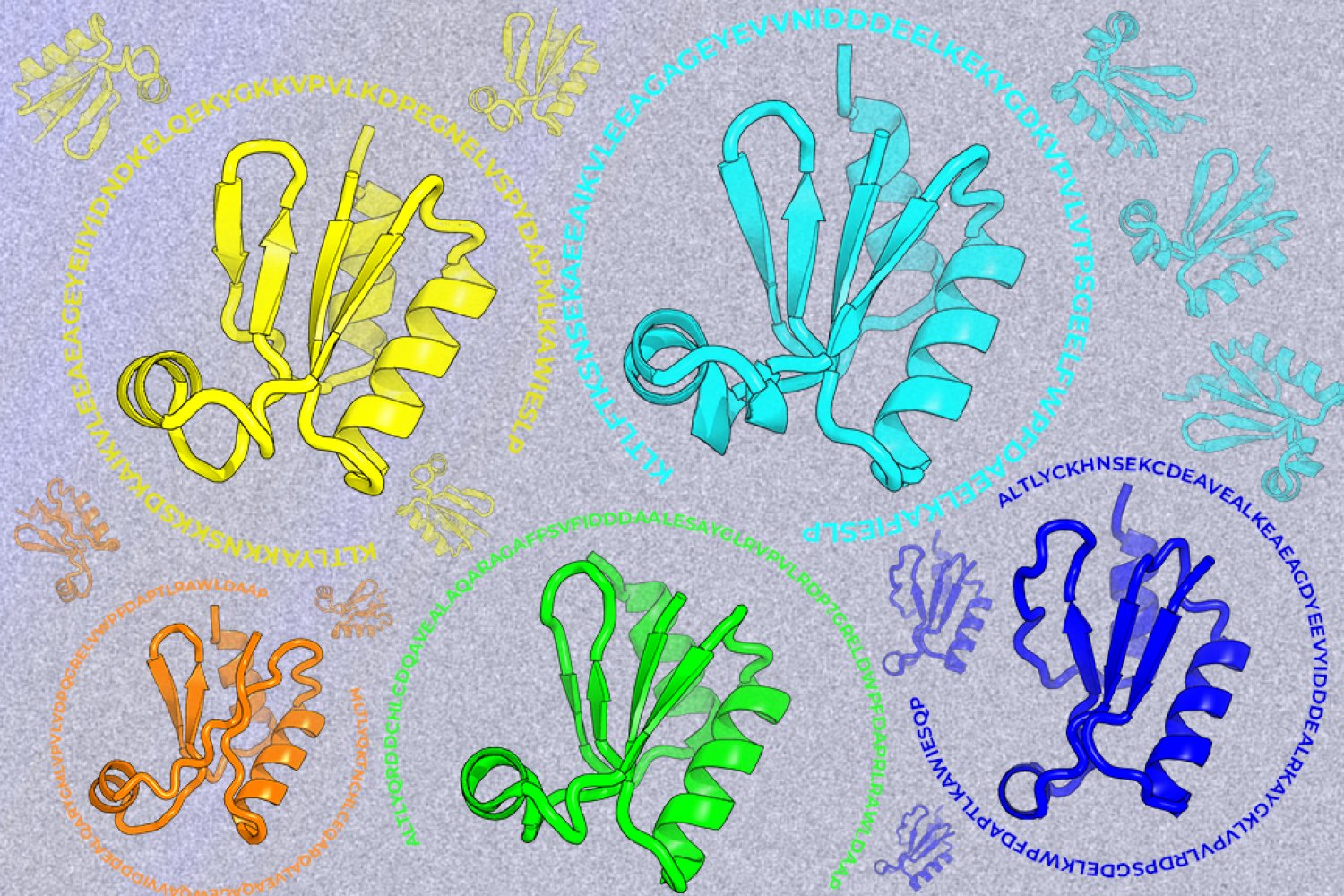
A new machine-learning framework aims to improve the success rate of computational protein design while moving away from results that reproduce sequences found in nature.
New MIT research could lead to better materials for a fossil-fuel-free process for making the chemical that's essential to fertilizer and other products.