A novel, model-feedback-free LRM-DoS paradigm that employs the conflict count derived from an Satisfiability Modulo Theories (SMT) solver as a low-cost external signal to guide the synthesis of inference-heavy Constraint Satisfaction Problem (CSP) instances.
Jian Yang, Zhenqi Feng, Zhaoyang Yu et al.· 0 citations
The proposed Module Level Reward Evolution Framework integrates three mechanisms: reflection-based refinement, hybrid credit assignment, and a merge strategy with rollback, which together improve the effectiveness and robustness of reward optimization.
Chenglin Liu, Xun Wang, Ruishuo Chen et al.· 0 citations
This paper investigates how multilingual medical adaptation reshapes the internal representations of Whisper models through layer-wise encoder analysis, and shows that English medical fine-tuning produces the dominant encoder shift, whereas multilingual continuation largely preserves the adapted representation space.
Souranil Kahali, Rituparna Bose, Abner Hernandez et al.· 0 citations
A neuro-symbolic pipeline is proposed that uses large language models to generate intermediate implicit premises that are translated into logical formulae and used with logical formulae representing explicit premises and explicit claims to show the logical relationships between them (entailment, contradiction, or neutrality).
Xuyao Feng, Anthony Hunter· 0 citations
Reach audiences
Advertise in front of researchers, engineers, and readers.
This paper explores the intersection of AI hallucinations and the question of AI consciousness, examining whether the erroneous outputs generated by large language models (LLMs) could be mistaken for signs of emergent intelligence. AI hallucinations, which are false or unverifiable
statements produced by LLMs, raise significant philosophical and ethical concerns. While these hallucinations may appear as data anomalies, they challenge our ability to discern whether LLMs are merely sophisticated simulators of intelligence or could develop genuine cognitive processes. By
analysing the causes of AI hallucinations, their impact on the perception of AI cognition, and the potential implications for AI consciousness, this paper contributes to the ongoing discourse on the nature of artificial intelligence and its future evolution.
Kristina Šekrst· Journal of Consciousness Stu...· 1 citation
A quantitative account of the failure of majority voting over multiple LLM samples to raise answer accuracy, yet its gain varies erratically: on hard questions it can even backfire.
Lizhuo Zhang, Mengmeng Tang, Chenfeng Long et al.· 0 citations
This paper proposes BFTR (Budget-First Tariff Recommendation), a complete algorithmic framework integrating eight Budget-First strategies, including two original hybrid approaches: Recursive Hybrid (conditional interpolation) and Knapsack-First Hybrid (priority knapsack).
Experiments on MemFuseBench show that MemFuse achieves the best overall performance among the evaluated memory systems under all three LLM settings and consistently improves performance on questions requiring cross-source evidence fusion.
This work evaluates four omni LLMs in a zero-shot setting and shows that fine-tuning consistently outperforms zero-shot inference, and explores synthetic data augmentation by using an LLM to generate culturally grounded Tunisian Derja utterances, followed by voice cloning to generate synthetic speech.
Tajwaar Shafiq, Hunzalah Hassan Bhatti, S. Chowdhury et al.· 0 citations
VAKE (Verifiable Activation of Parametric KnowledgE), a two-stage reinforcement-learning framework that externalizes latent parametric knowledge through explicit Priming and transfers the acquired elicitation capability to implicit Reasoning, is proposed.
Zuocheng Ying, Yang Yang, Yumou Wu et al.· 0 citations
Interactions are introduced as a fine-grained tool to analyze prompt sensitivity of LLMs and it is discovered that subtle changes to prompts can trigger severe instability in interactions, even when the outputs of the LLM remain the same.
Ruiyang Qin, Qingzhuo Wang, Tianhao Wang et al.· 2 citations· ⚡1
This work proposes DART-SD (Diamond-topology Aware Retrieval and Tuning for Self-Distillation), a novel framework that shifts the paradigm from global forcing to topology-guided localized correction, and significantly outperforms traditional full-trajectory baselines.
Hangrui Xu, Jiarui Wang, Yang Yang et al.· 0 citations
A new method, called CW-Net, translates the reasoning process of an autonomous vehicle’s AI system into understandable concepts that explain its behavior.
MIT News · Artificial Intelligence· news.mit.eduAug 31, 2026
With millions of users across the world, Julia has been used to conduct cutting-edge research and to design new drugs, jet engines, heat pumps, and more.
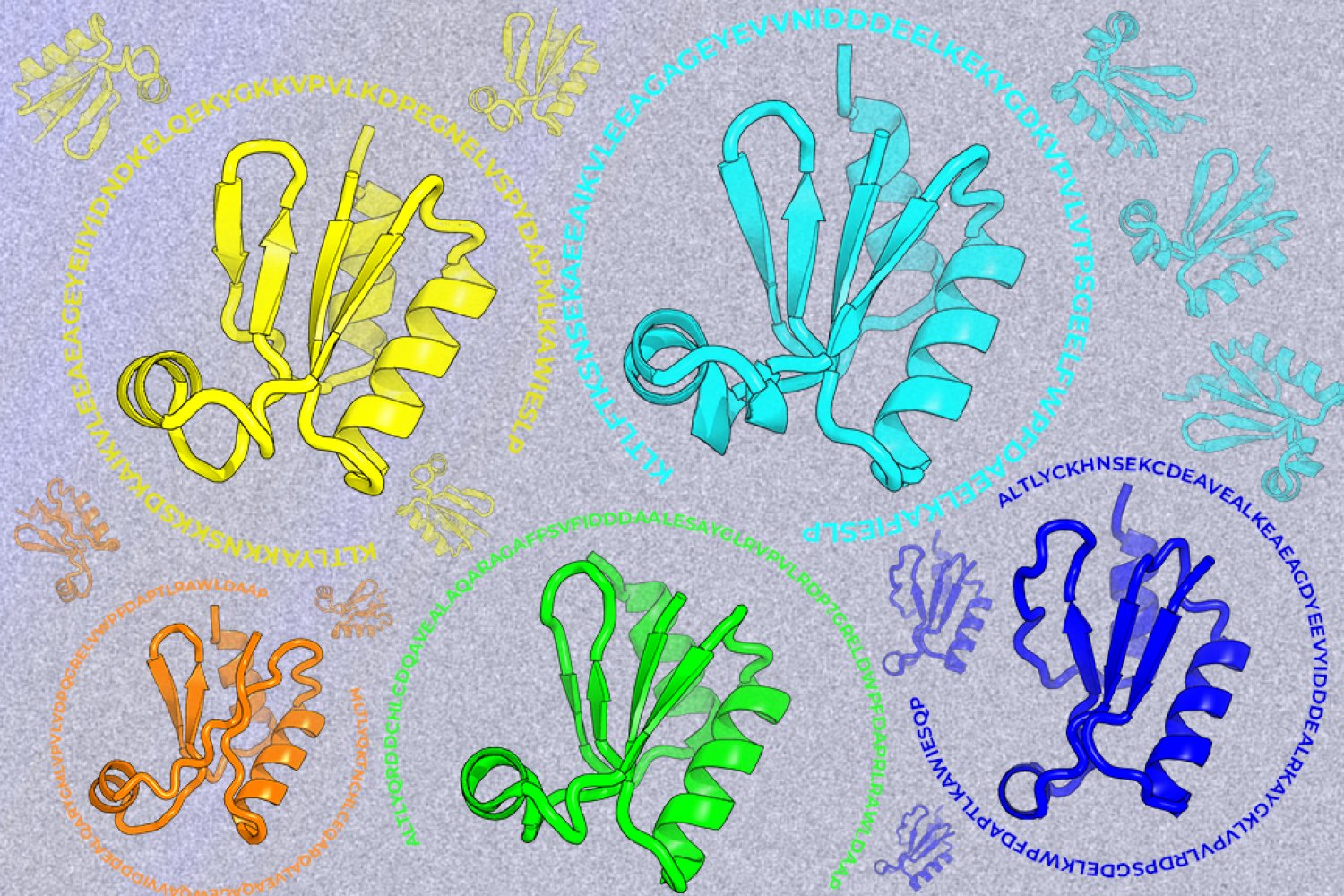
A new machine-learning framework aims to improve the success rate of computational protein design while moving away from results that reproduce sequences found in nature.
New MIT research could lead to better materials for a fossil-fuel-free process for making the chemical that's essential to fertilizer and other products.