Large language models are increasingly deployed in Arabic-speaking markets, yet standard benchmarks overwhelmingly reward Modern Standard Arabic (MSA) fluency while leaving dialectal and culturally grounded competence unmeasured. This gap is consequential: everyday Arabic is largely dialectal, and dialect encodes social meaning that MSA-centric evaluation cannot capture. We present a rubric-based benchmark for the Saudi dialect, comprising 31 expert-authored prompts spanning idiomatic, pragmatic, lexical, and culturally-embedded phenomena, each paired with an expert-established ground truth. Our methodology separates evaluation into a model-agnostic phase, in which atomic, MECE positive criteria are derived solely from the ground truth, and a model-specific phase, in which four state-of-the-art systems -- Claude Opus 5, Gemini 3.7, GPT-5.6, and Kimi K3 -- are scored against those criteria and penalised for errors they actively introduce. Across 124 model-prompt evaluations we catalogue 466 error instances under a nine-category taxonomy. The four systems cluster within a narrow macro-average band (42.7%-53.1%), with no model exceeding 55% and every model recording at least one negative-scoring prompt, confirming that Saudi dialectal competence remains broadly unsolved. Notably, Ambiguous Framing is the dominant failure mode (37.3% of errors) while outright Hallucination accounts for only 11.2%, indicating that models fail less by stating falsehoods than by distorting register and flattening pragmatic nuance. We further observe a consistency-versus-ceiling trade-off and model-distinctive error signatures. We release the full prompt set, ground truths, and scored rubrics to support reproducible dialectal evaluation.
Ghassan Al-Sumaidaee, Sajjad Abdoli, Ahmed Rashad et al.· 0 citations
Domain adaptation of large language models increasingly depends on constructing high-quality training data, yet existing data-preparation pipelines typically address quality only after generation through post-hoc filtering. This creates a fundamental mismatch: data-quality issues often originate from the construction process itself, while quality control is applied only to its outputs. We introduce \textsc{DataFoundry}, a framework for \textbf{evolving data preparators through recursive self-improvement} before large-scale data production. \textsc{DataFoundry} represents a data preparator as an evolvable runtime specification and instantiates its evolution with a \textsc{Skills-as-Modules} architecture, in which a central \textsc{Controller} orchestrates modular skills to compile executable runtimes, diagnose deficiencies on small pilot sets using domain-appropriate criteria, and translate diagnostic feedback into adapters that revise individual preparation components while preserving stable interfaces. We evaluate \textsc{DataFoundry} on DataPrep-Bench across mathematics, finance, law, and medicine, and find that recursively evolved preparators produce training data with higher downstream utility than baselines. Experiments across different backbones further demonstrate that these improvements are not tied to a particular model, while analyses and case studies further reveal the framework's optimization dynamics and illustrate how its evolution unfolds in practice.
Cehao Yang, Xiaojun Wu, Xueyuan Lin et al.· 0 citations
Language is humanity's most consequential technology, yet for over a billion speakers across India's twenty-two constitutionally recognised languages, its digital layer remains structurally incomplete. Named Entity Recognition (NER), the foundational step in transforming raw text into machine-interpretable knowledge, has been studied exhaustively for English but remains largely unsolved across most Indic languages. This paper presents a rigorous comparative study of generative and encoder-based neural architectures for NER on all eleven languages of the Naamapadam benchmark. We evaluate five classic model families spanning sequence-to-sequence transformers and multilingual encoders; four decoder-only large language models (LLMs) fine-tuned with LoRA and 4-bit NF4 quantisation; and nine generative models in zero-to-5-shot inference. Under strict CoNLL span-level evaluation, encoder-based models (mBERT and XLM-R, both F1=0.675 on Hindi) substantially outperform every generative architecture in ten of eleven languages, with gaps of 7.5-40 percentage points against the strongest competitor (Gemma-2-2B: avg F1=0.427). The best few-shot result reaches only 28% of the encoder baseline. We identify three language clusters--encoder-dominant, partial-coverage, and failure-zone; and provide actionable deployment guidelines grounded in transfer learning and low-resource NLP principles.
Large language models often answer complex reasoning questions without revealing intermediate steps, raising whether they reason latently or complete patterns. We propose the Hidden CoT Detection Score (HCDS), a comparative behavioral and mechanistic signal measuring whether neutral-prompt behavior aligns more closely with explicit CoT or explicit no- CoT. Here, hidden CoT operationally denotes this neutral-prompt CoT-like alignment; HCDS does not directly observe or prove an unexposed reasoning trace. On GSM8K, HCDS is significantly positive for both Qwen3-4B variants (Thinking $+1.87$, $p = 1.2 \times 10^{-7}$; Instruct $+1.41$, $p = 1.9 \times 10^{-4}$), replicates across a different inference stack and quantization within $0.08$ ($+1.80$ and $+1.45$), and is not significantly positive in seven of eight length-adjusted calibration-control cells. The unadjusted score produces large positive scores on single-step arithmetic and numeric factual lookup. The variants also respond differently to no-CoT instructions: Instruct complies from the prompt alone, whereas Thinking continues reasoning and requires intervention. These findings show stronger, less prompt-conditional CoT-like behavior in the reasoning-tuned model, consistent with but not proof of latent reasoning. HCDS thus investigates latent reasoning without relying on models' self-reported traces.
Armaan Singh, Ryan Trinh Le, Jasmine Kaur et al.· 0 citations
Reach audiences
Advertise in front of researchers, engineers, and readers.
The current paper draws on self-presentation theory and warranting theory to evaluate how the language patterns in an online marketplace reflect seller status (i.e., a prolific seller versus an everyday seller). Using 1.6 million musical instrument listings from Reverb.com in search of content, style, and structural differences in seller product descriptions, the evidence suggested prolific sellers tend to focus more on objective and functional aspects of a product (e.g., its features and specifications) and less on subjective characteristics like tone, relative to everyday sellers. Prolific sellers also communicated in a more narrative-like style, which was driven by an elevated use of personal pronouns, and they used longer descriptions than everyday sellers. Therefore, what prolific sellers focus on tends to be quite technical, but how they communicate this information is typical of a story that is told to potential buyers. Implications for self-presentation theory and warranting theory are discussed.
Evaluating data-text alignment remains challenging: existing metrics often provide limited explanations for the scores, while prompt-based LLM-as-Judge methods can be expensive and unreliable. We present an end-to-end explainable evaluation metric that fine-tunes a language model to identify omitted, extra, incorrect, and correct data units in a data-text pair. These local judgements are aggregated into precision, recall, and F1 scores, providing both fine-grained diagnostic feedback and an interpretable measure of alignment quality. Across benchmarks, our fine-tuned models outperform LLM-as-Judge methods in error prediction and achieve competitive precision, recall, and F1 scores, while maintaining strong correlation with human judgements. Beyond evaluation, our verifier outputs also provide useful feedback signals for downstream correction and refinement, supporting alignment-oriented improvement of data-to-text and text-to-data. Code and resources are available at https://github.com/guihuzhang/xqdt.
Kun Efimov-Zhang, Yifei Song, Claire Gardent· 0 citations
Black-box model attribution is increasingly relevant when large language models (LLMs) are served through relay and reseller APIs. A tempting low-cost signal is the prompt-token count returned by an OpenAI-compatible endpoint: two models that share a tokenizer and chat template may produce the same count sequence up to a fixed offset. Yet the validity of this signal for broader \emph{model-family} attribution has received little direct holdout testing. We conduct a frozen-threshold study over 24 labeled endpoint pairs, split evenly into a development set and an untouched holdout set, with three temporal repeats and 30 controlled texts per pair. We introduce a validity-gated result contract that distinguishes an observed dissimilarity from an uninformative measurement caused by missing usage data, rate limits, or endpoint policy. The resulting shift-invariant exact-match score perfectly separates the 12 development pairs, yielding a frozen threshold of 0.725. On holdout, however, only 6 of 12 pairs are eligible under the pre-specified three-repeat rule. Among eligible pairs, balanced accuracy is 0.75, sensitivity is 0.50 (95\% Wilson interval 0.15--0.85), and specificity is 1.00 (0.342--1.00). Two same-family pairs---Qwen 3.8 and DeepSeek V4 variants---fall below the frozen threshold. Across 4,320 formal API calls, every log is replayable, while holdout contains 189 non-200 responses and 157 successful responses without prompt-token usage. The study therefore validates token-count consistency as a fingerprint of a shared \emph{tokenization stack}, but rejects its use as a standalone necessary test for model-family lineage.
The output of a Language Model can be tampered with \emph{while} the model is writing it. A simple test can thus be constructed by evaluating the model's perception of this external perturbation. In this spirit, a simple benchmark is built in which a single word is consistently substituted with another in the generation process. We call this method \emph{Sleight of Word}. Two distinct axes are measured: metrics that relate to the model's surprise, as well as an evaluation of the textual reaction for 19 different open-weight language models.
The rapid proliferation of LLMs has further heightened the need to develop dependable AI-generated text detection, especially beyond English. Nevertheless, current benchmarks pay little attention to Indic languages and test detectors in idealized settings that do not represent the real world. We present a generalized benchmark for AI-generated text detection in Hindi, Telugu, and Tamil, which we call IndicDetect, designed to assess the robustness of detectors under realistic distribution shifts. IndicDetect comprises highly curated human-written texts matched with LLM-generated counterparts across various domains and generators, and systematically evaluates detectors in the presence of domain shift, generator shift, and adversarial perturbation. Using a single and repeatable evaluation scheme, we evaluate a wide range of statistical and neural detectors. We find substantial robustness failures: supervised neural detectors perform well in-distribution, while training-free methods degrade considerably under unseen generators and adversarial attacks. The severity of these failures varies across languages, with Hindi exhibiting the largest overall degradation under adversarial perturbations. These results highlight that the primary weakness of existing detectors in Indic settings lies in their robustness, not in their peak accuracy. IndicDetect provides standard data splits, an evaluation protocol, and baselines to establish a robust, language-aware foundation for AI-generated text detection in Indic scripts.
The rapid advancement of large language models (LLMs) has made AI-generated text detection increasingly critical. Existing zero-shot detectors assume that more token-level evidence leads to more reliable detection. However, our empirical study challenges this consensus: fewer tokens sometimes work better, retaining only 40% can yield optimal performance, yet this benefit is not universal. Using the Entropy Gap Score (EGS), we introduce top-$k$ cumulative probability filtering as a diagnostic probe. Across three representative settings, filtering exhibits strikingly different behaviors. We analyze EGS via typical set theory and quantify its dynamics through entropy calibration and distribution analysis. We find that filtering helps for weak source LMs, where low-entropy tokens are harmful, but fails for strong source LMs, where they are not notably harmful. Our work provides the first systematic analysis showing that some tokens are not merely uninformative but systematically harmful due to entropy miscalibration, revealing a two-sided trade-off in token-level detection.
Dense retrieval over long documents is expensive. Token-level encoders scale quadratically in sequence length, and most long-context embedding models reach 32K tokens only through architectural workarounds or by stretching billion-parameter LLMs. We propose REIGN (Refurbished Embeddings with Integrated Guidance Networks), a contrastively trained bi-encoder that operates on sequences of contextualised chunk embeddings from a frozen Guidance Network (GN) rather than on raw tokens. REIGN targets multi-chunk inputs, primarily for document-to-document retrieval; single-chunk inputs stay with the GN. Decoupling token-level processing from document-level reasoning, and caching the GN embeddings to disk, cuts per-document training cost by roughly four orders of magnitude relative to chunked Transformer fine-tuning. We also release a synthetic long-document retrieval benchmark for contrastive training and evaluation at long context lengths. Across an in-distribution Wikipedia benchmark, the LoCo out-of-distribution suite, and a real-world patent retrieval case study, REIGN matches dense long-context retrievers at smaller parameter budgets in each regime. A paired significance test puts it on par with models 1.6-4.3x larger on the patent task, and it stays within 0.65 nDCG@10 of a 20x-larger model on LoCo.
Long-horizon agents need a context manager to compress growing interaction histories into a bounded working context, via passive strategies or active strategies that decide how memory is accessed and reorganized. Meanwhile, prior optical-memory work mainly treats pixels as a dense codec for textualized histories, often presupposing that rendering context into optical memory incurs a significant performance drop relative to text, thus coupling this representation with SFT, self-distillation, or reinforcement learning to close this gap, leaving unresolved (i) how visual rendering performs as a context manager under a fair, controlled comparison, and (ii) whether this carrier offers a native advantage when history is inherently multimodal. In this paper, we formulate context management as a budget-constrained history transformation and introduce Visual Rendering (VR) as a representational context manager. Under a shared harness, policy model, trigger, and task domain, we evaluate VR on four text-centric and three multimodal benchmarks against four baselines (No Compression, Discard-All, Sliding Window, Summarization), finding visual memory is a natural carrier of native visual evidence. Building on this finding, we propose VERA (Visual Evidence-Retaining strategy for long-horizon Agents), a training-free context manager built on deterministic rendering with no exposed memory operations: on text-centric benchmarks it renders textual history as VR does, while on multimodal benchmarks it retains native visual observations instead of translating them into text. Across nearly all benchmarks, VERA cuts cumulative non-cache tokens by 31.5%-63.1% versus No Compression, matches existing managers on text-centric tasks, and achieves the highest accuracy among all baselines on multimodal tasks, supporting a modality-preserving view of long-horizon context management.
Jiaqi Su, Cong Pang, Jiawei Hong et al.· 0 citations
With millions of users across the world, Julia has been used to conduct cutting-edge research and to design new drugs, jet engines, heat pumps, and more.
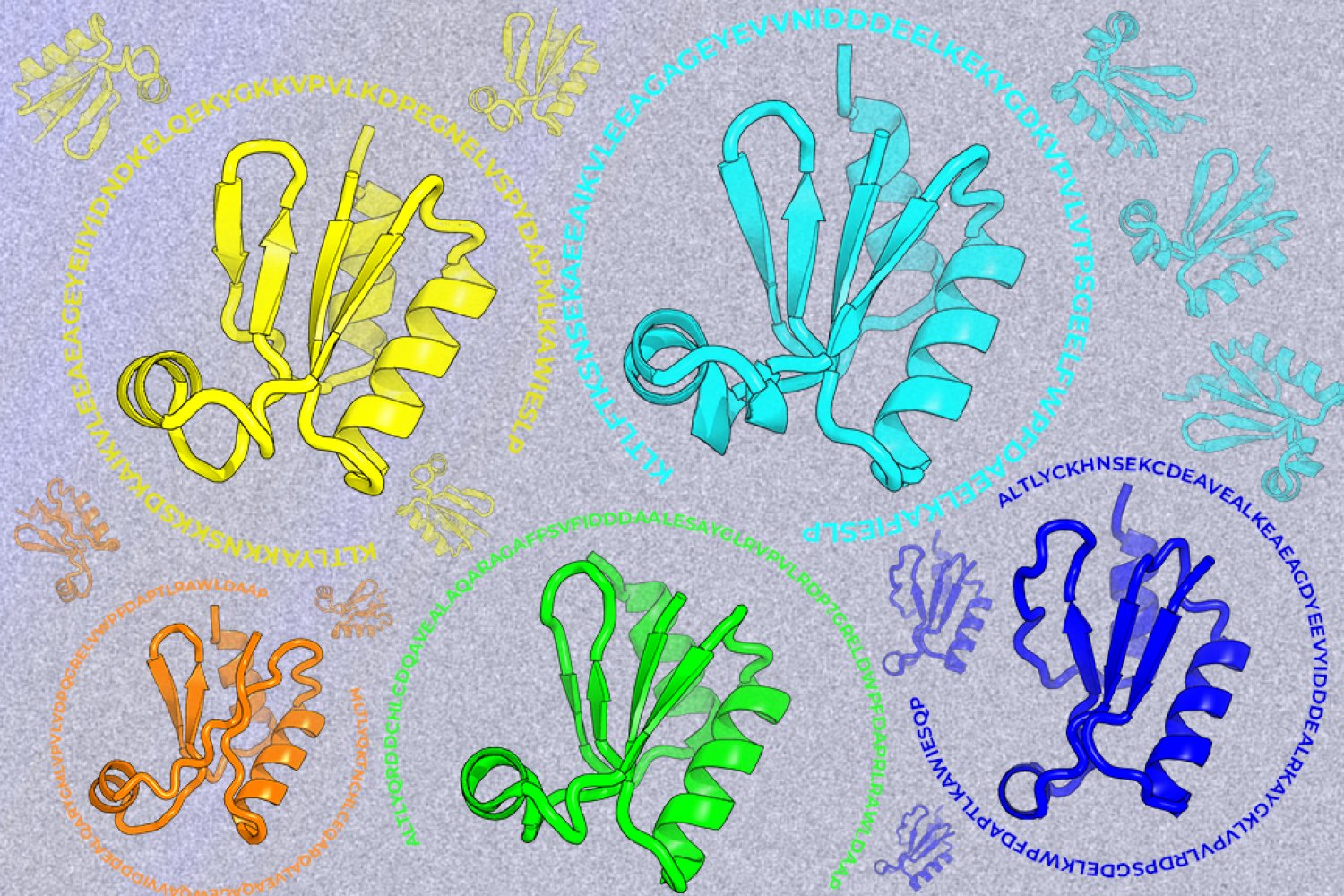
A new machine-learning framework aims to improve the success rate of computational protein design while moving away from results that reproduce sequences found in nature.
New MIT research could lead to better materials for a fossil-fuel-free process for making the chemical that's essential to fertilizer and other products.