Large language models (LLMs) have shown impressive performance on diverse reasoning tasks, yet their capacity for structural reasoning in graphs remains unclear. We investigate whether LLMs can genuinely understand graph isomorphism -a fundamental problem in graph theory. While LLMs achieve near-perfect accuracy on iso...
PriFT (Prior-support guided Fine-Tuning), which derives token weights from a frozen pretrained reference to obtain a stable reweighting signal unaffected by fine-tuning, achieves state-of-the-art results among SFT baselines, while also providing a stronger initialization for subsequent RL.
Ke Wang, Shuang-Qi Li, Mathieu Salzmann et al.· 2 citations· ⚡2
Large language models (LLMs) can serve as helpful assistants, yet they can equally function as harm amplifiers that enable malicious users to achieve harmful outcomes beyond their capabilities through extended interactions. This risk manifests along two axes, i.e., democratizing domain expertise that allows novices to...
LLM-based agents can solve multi-step interactive tasks by combining reasoning with environment feedback, yet each episode starts from the same fixed context and any useful strategy discovered along the way is lost once the task ends. Existing approaches either limit learning to the current task or pool all experience...
Zixuan Zhu, Yitong Hu, Yong Dai et al.· 0 citations
Reach audiences
Advertise in front of researchers, engineers, and readers.
Large language models (LLMs) are increasingly deployed in conversational settings where user phrasing ranges from polite to casual to toxic, yet less is known about whether such lexical variation in otherwise semantically equivalent prompts can degrade factual reliability. We study how lexical and tone-based prompt per...
Chain-of-Thought (CoT) reasoning has significantly enhanced the reasoning capabilities of large language models (LLMs). However, existing reinforcement learning methods primarily optimize outcome-level rewards, providing limited supervision over the reasoning process. As a result, models may produce shortcut-prone or u...
Weijiang Lv, Wentong Zhao, Jiayu Wang et al.· 0 citations
Communication protocol design is a central challenge in large language model-based multi-agent systems. Existing single-channel approaches face an inherent communication trilemma: text-based methods are interpretable but verbose, while latent-space methods are efficient but opaque and limited to unidirectional workflow...
Xinyi Mou, Siyuan Wang, Zejun Li et al.· 0 citations
Deep research agents extend the role of search engines from retrieving keyword-matched pages to synthesizing knowledge, fundamentally changing how humans interact with information. However, frontier systems remain proprietary, while existing open agents often generalize poorly across different task types, leaving uncle...
Jian Xie, Tianhe Lin, Zilu Wang et al.· 0 citations
Social norms reflect shared expectations on acceptable behavior. Measuring social norms alignment remains challenging, with existing approaches typically relying on artificial closed-form evaluations such as multiple-choice questionnaires or measuring agreement with predefined statements. In the context of this work, s...
Yevhen Kostiuk, Kenneth Enevoldsen, Peter Bjerregaard Vahlstrup et al.· 0 citations
Large language model-driven multi-agent systems (LLM-MAS) excel at complex tasks, yet unreliable agents remain a key bottleneck to system-level reliability. Automatic failure attribution is therefore critical, but existing approaches, such as direct prediction of agent-error pairs and agent-first failure attribution, r...
Hezhe Qiao, Hanghang Tong, Ee-Peng Lim et al.· 0 citations
Computer-use agents (CUAs) rely on visual observations of graphical user interfaces, where each screenshot is encoded into a large number of visual tokens. As interaction trajectories grow, the token cost increases rapidly, limiting the amount of history that can be incorporated under fixed context and compute budgets....
Amirhossein Abaskohi, Yuhang He, Peter West et al.· 0 citations
Single-step retrieval-augmented generation (RAG) provides an efficient way to incorporate external information for simple question answering tasks but struggles with complex questions. Agentic RAG extends this paradigm by replacing single-step retrieval with a multi-step process, in which the large language model (LLM)...
Flint-interactive gives AI agents a language for creating interactive visualizations. Click a chart, filter data, highlight related content, and explore beyond the view the author originally chose. The post Flint-interactive: A language for creating interactive data visualizations appeared first on Microsoft Research.
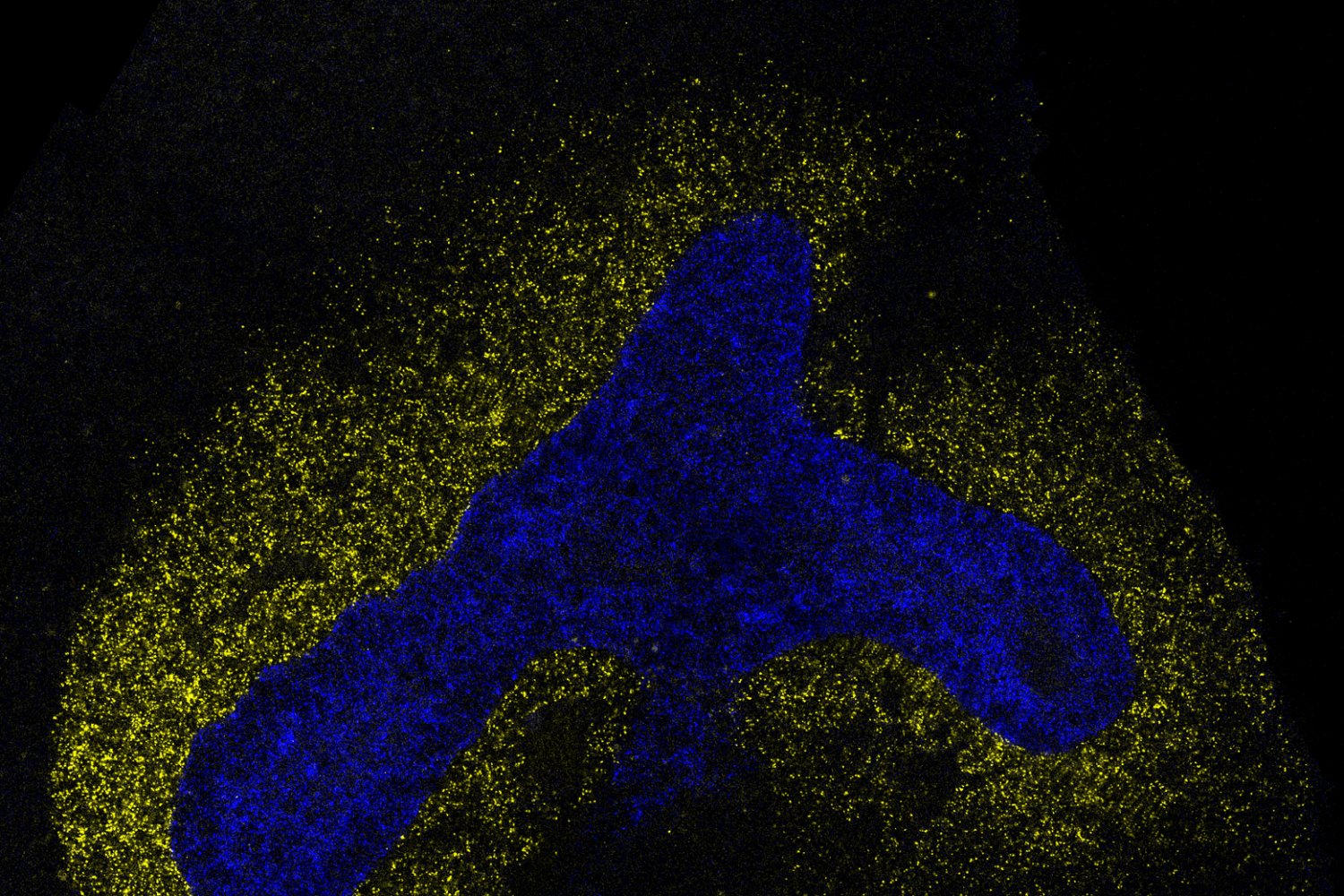
A new computational approach reveals how cells communicate to assemble into tissues. This could accelerate stem cell engineering, improve disease models, and inform therapies.
Microsoft Research Blog· microsoft.comOct 15, 2026
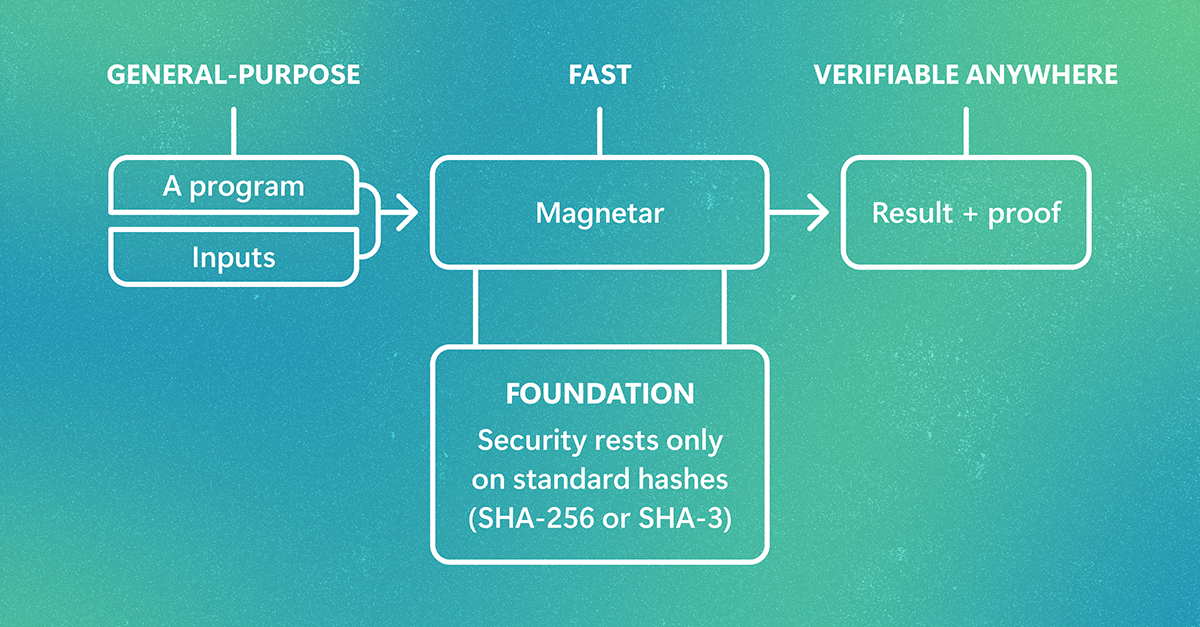
Zero-knowledge proofs can verify computing results without rerunning workloads or exposing sensitive data. Magnetar helps bring them into the mainstream with support for standard programming languages, major speed gains, and quantum-resistant security. The post Proof-based general-purpose computing with Magnetar appeared first on Microsoft Research.
We use cookies to run the site and, with your consent, for analytics and to show ads.
See our Cookie Policy.