Answering questions over heterogeneous data means combining evidence from files, databases, documents and the web. Data agents automate this, but their success depends on context. Three context-engineering techniques (CETs) help by shaping it: semantic layers describe the data, orchestration splits work among agents, a...
Zhivar Sourati, Marianne Menglin Liu, Zheng Wang et al.· 0 citations
Mechanistic interpretability aims to uncover how neural networks use their parameters to implement their impressive neural algorithms. Although previous work has uncovered substantial structure in the intermediate representations that networks use, little progress has been made to understand how the parameters and nonl...
Lucius Bushnaq, Dan Braun, Oliver Clive-Griffin et al.· 4 citations· ⚡1
Stronger language models may increasingly construct useful procedures for themselves, reducing the advantage of developer-supplied scaffolding. We investigate why this advantage persists and whether an environment-agnostic agent can be improved without environment-specific engineering. We evaluate a Codex-based agent i...
Small language models are increasingly deployed on edge devices and robotic systems to meet cost and latency constraints, yet their limited capabilities can make reliable deployment challenging. Stronger models can provide assistance when needed, but deciding when to route a weak-model response to a stronger model ofte...
Sima Noorani, Shayan Kiyani, George Pappas et al.· 0 citations
Reach audiences
Advertise in front of researchers, engineers, and readers.
Modern agentic systems extend language models with external tools, enabling them to complete complex tasks through multi-turn interactions. As these agents are deployed in consequential settings, they are often constrained by policies governing pricing, privacy, confirmation, safety, and other requirements. However, ex...
Kshitij Mishra, Abhijith Sharma, Nils Lukas et al.· 0 citations
Ontologies are widely used to represent and organize complex knowledge in domains such as biomedicine and healthcare. However, constructing reliable ontologies remains challenging, as class hierarchies, whether manually or automatically constructed, may contain subtle subsumption errors that require careful refinement....
Learning from interaction experience is essential for enabling large language models to continually improve during deployment. Context distillation offers a promising path: privileged information extracted from experience is provided to a teacher, whose behavior is then distilled into a student model that has no access...
Zhe-Zheng Hao, Yong-Kang Yang, Xia-Ling-Zhang-Yu-Xin Xia et al.· 0 citations
Multimodal long-document question answering requires models to seek sparse evidence across pages and modalities, understand heterogeneous document content, and reason over the collected evidence. Even advanced vision-language models (VLMs) can overlook sparse evidence and struggle with cross-modal reasoning in a single...
Zhuo-Wen Liang, Xiao-Tian Lin, Yu-Yu Luo et al.· 0 citations
A self-improving agent has to decide which new skills to keep, and in practice it keeps whatever earns a high reward, convinces a judge model, or compresses its library, even when the skill is wrong. That is fine until the answers have to be exactly right: over a table of transactions, a total is either right or wrong....
Yun-Shiuan Chuang, Yi-Rou Ge, Yi-Xi Li et al.· 0 citations
Objective Autonomous vehicle (AV) crashes continue to occur, indicating the need for a comprehensive understanding of their characteristics to support safety management in future mixed-traffic environments. Previous studies employing text mining or rule extraction have faced limitations in generalizing findings due to...
Song-Ha Lee, Nuri Park, Hojae Kim et al.· Traffic Injury Prevention· 0 citations
Low-altitude unmanned aerial vehicles (UAVs) require compact multimodal inference for perception, environment understanding, and planning-oriented reasoning. Vision-language models (VLMs) provide a shared interface for these tasks, but long visual-token sequences increase language-model prefill computation, sequence-de...
Background Structured exercise may benefit executive function across childhood, adolescence, and later life, but whether effects vary by executive-function domain, developmental stage, or qualitative exercise characteristics remains uncertain. Methods We conducted a systematic review and three-level meta-analysis of ra...
A new computational approach reveals how cells communicate to assemble into tissues. This could accelerate stem cell engineering, improve disease models, and inform therapies.
Microsoft Research Blog· microsoft.comOct 15, 2026
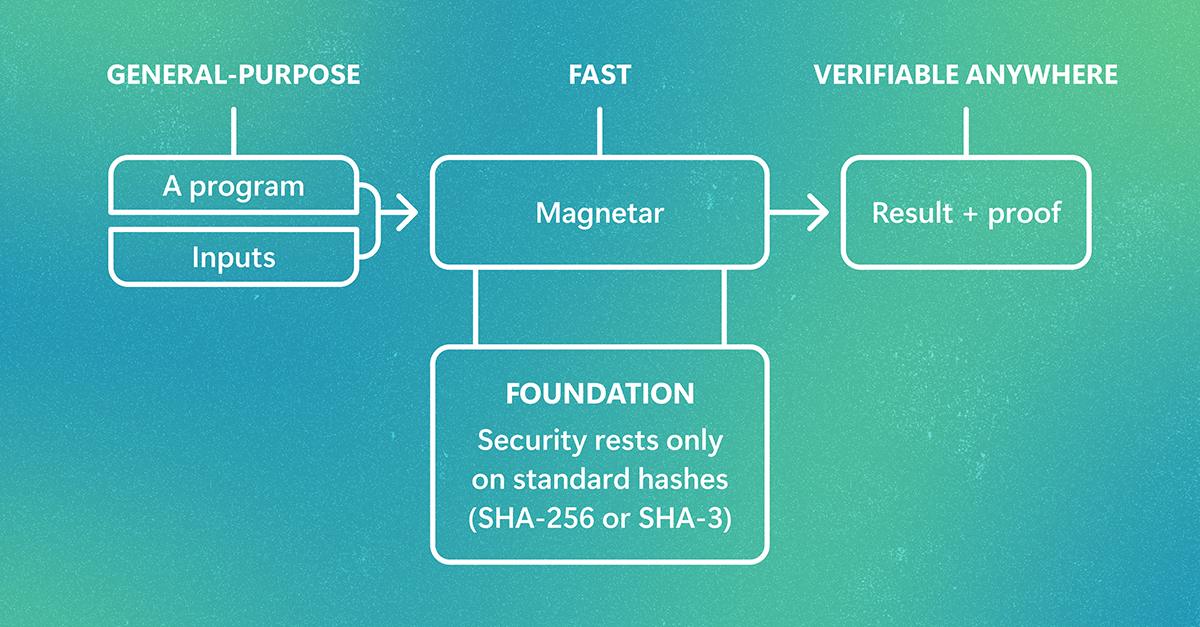
Zero-knowledge proofs can verify computing results without rerunning workloads or exposing sensitive data. Magnetar helps bring them into the mainstream with support for standard programming languages, major speed gains, and quantum-resistant security. The post Proof-based general-purpose computing with Magnetar appeared first on Microsoft Research.
Learn how Google DeepMind and GovTech Singapore uses lightweight on-device Gemma models to intercept conversational scams in private chats with zero cloud data egress.