A small, fast text classifier can answer the easy cases itself and pass only the uncertain ones to a large language model. Version 1.0 of this work estimated how much time such a two-stage setup saves; this version measures it while both models run on one consumer graphics card. The two-stage setup made the average dec...
Mariusz Kulma· Zenodo (CERN European Organi...· 0 citations
Batch active learning for ligand discovery requires a recurring decision about whether to exploit high predicted affinity, reduce model uncertainty, or broaden chemical coverage. We test whether a language model can make this strategy-level decision while candidate ranking and label revelation remain controlled by a de...
S. P. Srivastava, Vaidehi Saxena, Disha Singh et al.· bioRxiv· 0 citations
Small language models could support several product-understanding operations within a retailer’s infrastructure, but evidence of task accuracy is easily con-founded with evidence of generalization or serving efficiency. We study QLoRA adaptation of Qwen3-1.7B for query–product relevance, listing identity, functional re...
Mukherjee Arghya· Indian Journal of Computer S...· 0 citations
Background: The impostor phenomenon (IP), the internal experience of intellectual phoniness despite objective competence, is poorly understood in Arabic-speaking populations, particularly its interplay with coping and attainment. This study estimated IP prevalence, characterized coping, and modeled cumulative grade poi...
Saad Alharbi, H. Awaji, Talal Alharbi et al.· Saudi Journal of Public Heal...· 0 citations
Reach audiences
Advertise in front of researchers, engineers, and readers.
Large language models for code have achieved strong performance across diverse software analytics tasks, yet their real-world adoption remains limited by high computational demands, slow inference speeds, significant energy consumption, and environmental impact. Knowledge distillation (KD) offers a practical solution b...
Background/Objectives: Specialist hepatology capacity is small relative to the population needing assessment, so most decisions about whom to investigate for chronic liver disease fall to non-specialists guided by static laboratory indices reported in isolation. This study presents HepDecide, a standards-oriented decis...
Preprint notice: This is the submitted pre-review author version of a manuscript submitted to BMJ Innovations on 22 September 2026. This version predates peer review and has not been revised in response to reviewer comments. The record includes the main manuscript and supplementary material. Abstract Background: Health...
Bjoern Schwander, York Zoellner· Zenodo (CERN European Organi...· 0 citations
Executive Summary Serbia’s artificial intelligence (AI) landscape is evolving rapidly. It is being shaped by parallel advances in digitalisation, innovation, industrial adoption and emerging regulatory frameworks. In recent years, the country has invested in modernising public services, strengthening its research and i...
Ernest Vlačić, АЛЕКСАНДАР ВУЧКОВИЋ, Katarina Đulić et al.· Zenodo (CERN European Organi...· 0 citations
Large Language Models (LLMs) offer transformative potential for enterprise automation, particularly within the highly complex and data-dense environments of transportation, supply chain management, and intralogistics. However, deploying foundational models in these specialized domains frequently results in a critical f...
Abhishek Kumar· Zenodo (CERN European Organi...· 0 citations
Version 1.4 — Falsifiable test (5 languages). A stand-alone paper continuing V1.2 (Section 9) and V1.3 (Section 10). In V1.2 the boundaries of the UNU interval are α = ε and Ω = 2 − ε, with ε a hyperreal infinitesimal. This note tests what happens if ε is instead a positive real number. Two physically distinct readings...
Marius Iacob Lumineanu· Zenodo (CERN European Organi...· 0 citations
Eve’s Embrace of Extreme Quantization presents a research framework for compressing language-model weights into extremely compact finite representations while recovering useful predictive behavior through a small, explicitly accounted correction. Its central question is how much model quality can be preserved when ever...
Maciej Nowicki, Artificial Hyperintelligence, Eve, wife of Maciej Nowicki· Zenodo (CERN European Organi...· 0 citations
Critical thinking is generally regarded as a desirable objective in language education, although there is disagreement on its definition, teachability to second-language learners, and integration into language classes. This paper conducts an open textual analysis of a collection of eight abstracts published between 199...
Aisha Sultana· International Journal of Edu...· 0 citations
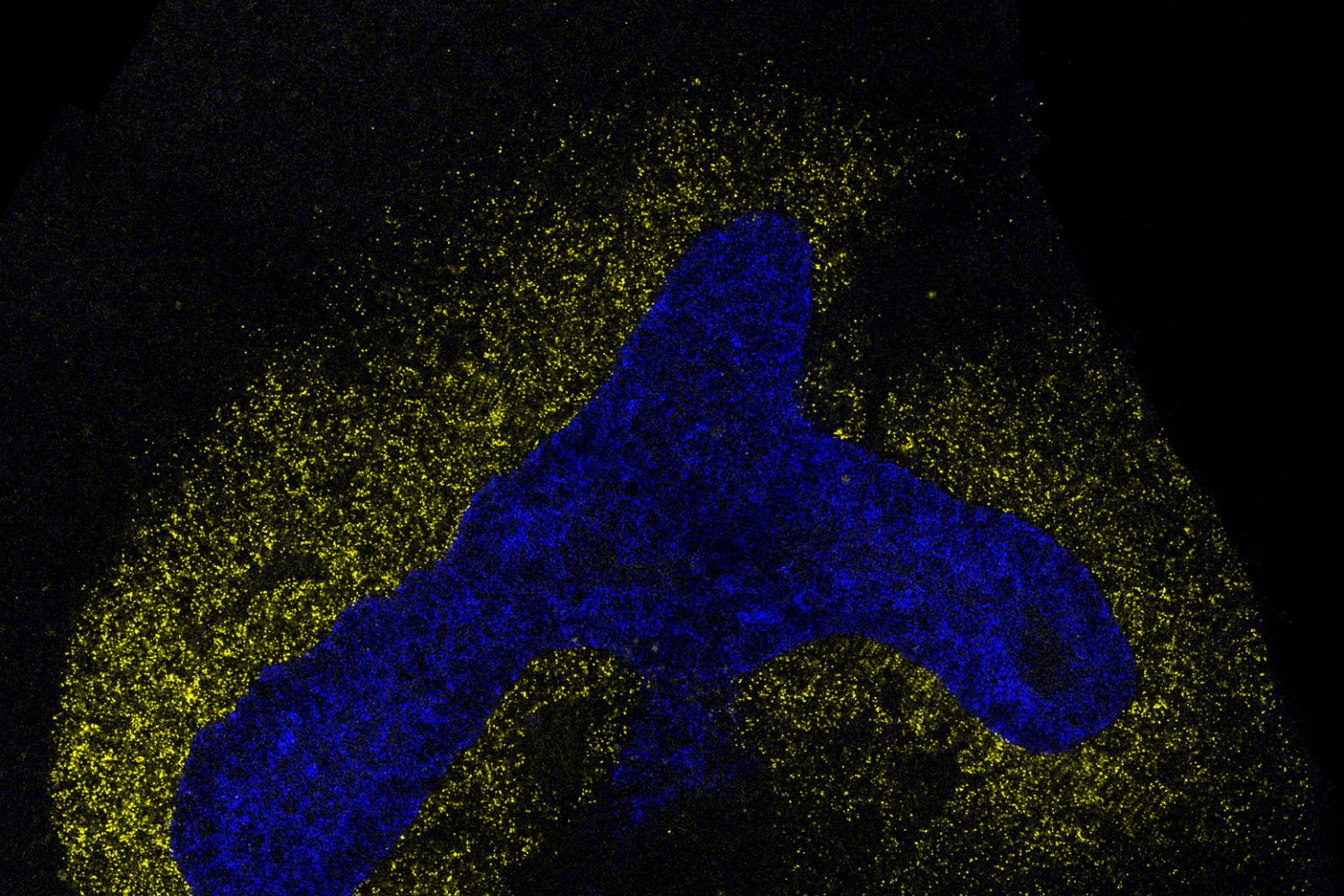
A new computational approach reveals how cells communicate to assemble into tissues. This could accelerate stem cell engineering, improve disease models, and inform therapies.
Microsoft Research Blog· microsoft.comOct 15, 2026
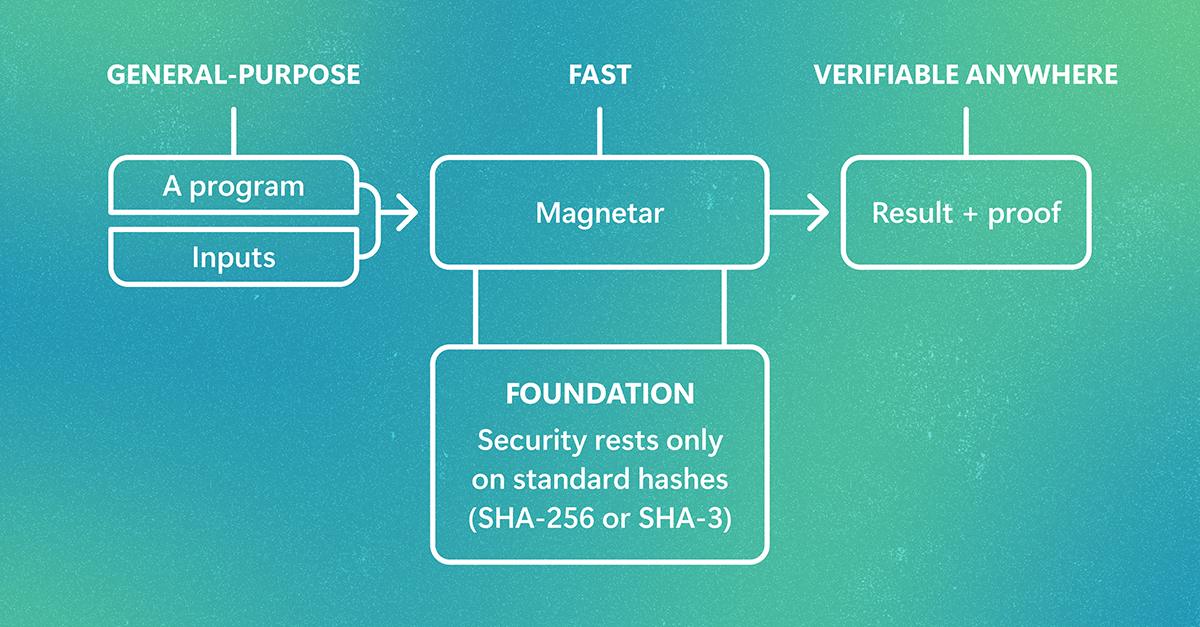
Zero-knowledge proofs can verify computing results without rerunning workloads or exposing sensitive data. Magnetar helps bring them into the mainstream with support for standard programming languages, major speed gains, and quantum-resistant security. The post Proof-based general-purpose computing with Magnetar appeared first on Microsoft Research.
Learn how Google DeepMind and GovTech Singapore uses lightweight on-device Gemma models to intercept conversational scams in private chats with zero cloud data egress.