A measured study and reproducible toolkit. On 4,500 crowdsourced requests routed to 10 departments, a text classifier trained on 15,000 labelled past requests answers 95.9% correctly, against 86.6% for a 7.6B-parameter local language model; cascades of models alone cost more than the large model; the language model ear...
Giovanni Simonetti· Zenodo (CERN European Organi...· 0 citations
Collected model traces, analysis harness, collection scripts and article source behind every number, table and figure in the article. Running reproduce.sh regenerates them offline. Version 2 accompanies the Journal of Cloud Computing submission and corrects the savings ceiling (Proposition 2) and the answer grader; ver...
Yash Rajeshbhai Parikh· Zenodo (CERN European Organi...· 0 citations
Preparing engineers for rapidly changing sociotechnical environments requires a clear account of the competencies that undergraduate engineering programs should foster. This study used the term future outstanding engineers to refer to engineering undergraduates being prepared for engineering excellence and examined the...
Clinically, AI-assisted interventions were associated with higher depression remission and better anxiety outcomes than treatment-as-usual in individual trials and key challenges included limited external validation, demographic homogeneity, and insufficient reporting on ethical safeguards.
M. Alharbi, Abdulaziz Alrahili, M. Alharbi et al.· Saudi Journal of Public Heal...· 0 citations
Reach audiences
Advertise in front of researchers, engineers, and readers.
This paper studies the Gribov–Zwanziger formulation of Yang–Mills theory as a metric-measure problem and separates what is proved from what is assumed. It does not solve the Yang–Mills existence and mass gap problem. The mass-gap result is conditional only: it holds if (i) regularized ground-state measures on the Gribo...
Reinaldo M. Silva-Filho· Zenodo (CERN European Organi...· 0 citations
Companion material for the article Ontology-Constrained Decoding for Small Open Language Models: Structural Gains, Content Trade-offs, and Silent Omission in Clinical Nutrition Abstract Extraction (submitted to IEEE Access, 2026). Six open small language models (Granite-4.0-1B, Qwen3-1.7B, Qwen3-4B-Instruct-2507, Phi-4...
Dongwook Han· Zenodo (CERN European Organi...· 0 citations
This study aims to develop Blooket-assisted domino card learning media for abbreviations and acronyms and to examine its feasibility, practicality, and effectiveness in improving the learning outcomes of fifth-grade elementary school students. Previous studies have examined domino cards and Blooket as learning media in...
Muhamad Abdul Faqih, Y. E. Patras, Dita Destiana· Jurnal Ilmu Pendidikan dan S...· 0 citations
A small, fast text classifier can answer the easy cases itself and pass only the uncertain ones to a large language model. Version 1.0 of this work estimated how much time such a two-stage setup saves; this version measures it while both models run on one consumer graphics card. The two-stage setup made the average dec...
Mariusz Kulma· Zenodo (CERN European Organi...· 0 citations
Text that reaches a language model, a survey database or a training corpus is not always text. Keyboard mashing, random strings and placeholder answers are common, and the usual detectors for them are either trained classifiers with model downloads or hand-written rules that are rarely measured. pygarble is a Python li...
Small language models (<= 3B parameters) are severely constrained by parameter capacity, autoregressive order bias, and catastrophic forgetting during continuous adaptation. While existing System-2 approaches rely on expensive external scaffolding (e.g., tree-search verifiers and multi-agent coordination), they introdu...
Matthew Chen· Zenodo (CERN European Organi...· 0 citations
Despite showing great skills in working with unstructured data and generating appropriate answers, large language models (LLMs) cannot be applied in critical settings due to their lack of transparency and susceptibility to hallucination. The paper describes an approach to creating explainable LLM-based decision support...
Dr.P.Jayalakshmi· Zenodo (CERN European Organi...· 0 citations
Materials of a controlled study of nine open-weight language models of 2 to 7 billion parameters and seven CWE weakness classes: 56 code-generation tasks with executable functional tests, attack tests and secure and insecure reference solutions; the knowledge battery; Semgrep rules; the frozen retrieval corpus and retr...
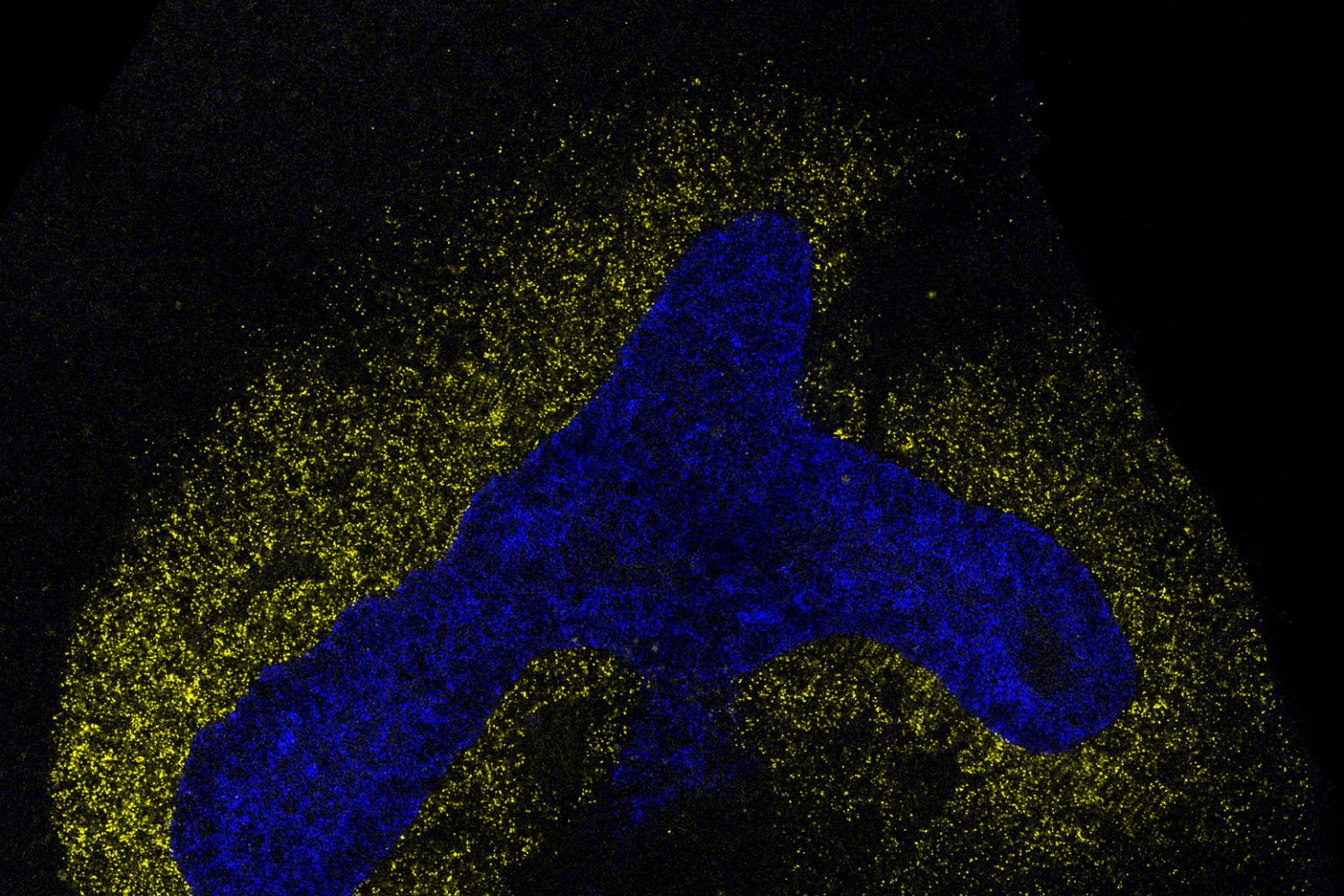
A new computational approach reveals how cells communicate to assemble into tissues. This could accelerate stem cell engineering, improve disease models, and inform therapies.
Microsoft Research Blog· microsoft.comOct 15, 2026
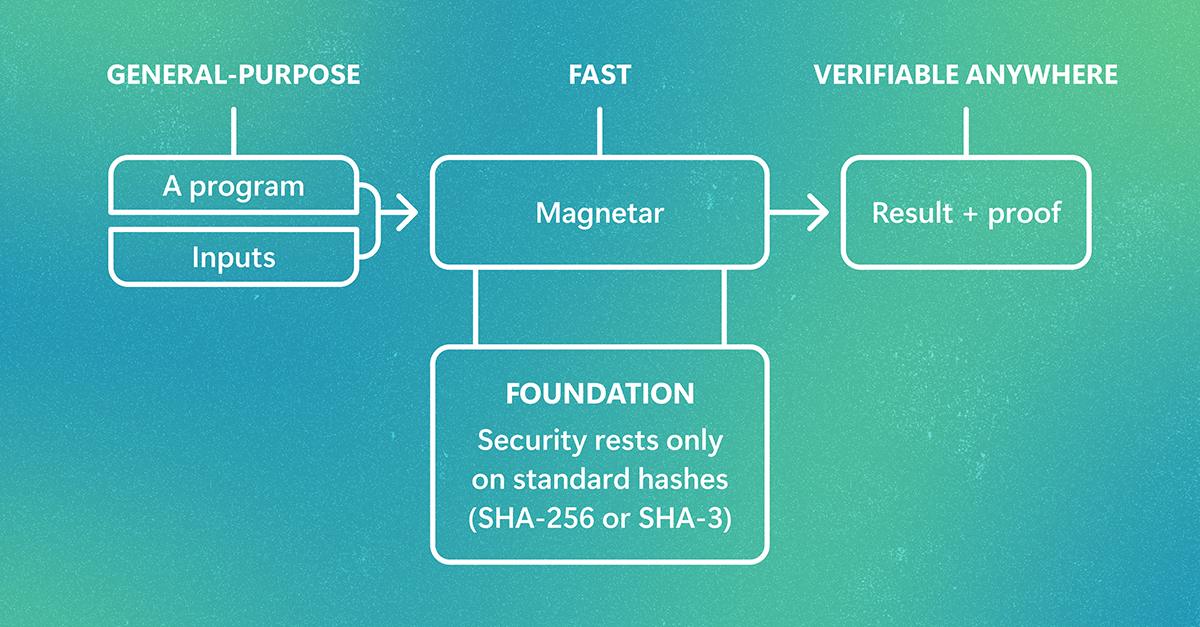
Zero-knowledge proofs can verify computing results without rerunning workloads or exposing sensitive data. Magnetar helps bring them into the mainstream with support for standard programming languages, major speed gains, and quantum-resistant security. The post Proof-based general-purpose computing with Magnetar appeared first on Microsoft Research.
Learn how Google DeepMind and GovTech Singapore uses lightweight on-device Gemma models to intercept conversational scams in private chats with zero cloud data egress.