LLMs (Large Language Models) are increasingly integrated into medical workflows to provide decision-making support, for example as Question Answering (QA) systems. However, in medical context, privacy requirements and resource constraints require the use of local and small (1B-parameter) LLMs. 1B-parameter LLMs are hig...
S. Wielinga, C. Maathuis, Natasha Alechina· Proceedings of the AAAI/ACM...· 0 citations
Background: Credit risk modelling is fundamental in financial institutions, typically using credit history, repayment behaviour, income, and outstanding debt to estimate a borrower's probability of default. Although transactional data are sometimes incorporated through aggregated measures such as recency, frequency, an...
Dian Prinsloo, T. Verster, Neill Smit· 0 citations
Open audio-language models are used as judges of generated music: given a clip and its text prompt, the model rates the clip, and the judge is validated by how well its ratings correlate with expert ratings. The correlation does not show what the judge responds to: the music, the text prompt, or the way the question is...
Evaluating large language models (LLMs) on AMLworld's smallest test splits is costly because each of over a million targets requires a separate graph prompt. Sampling reduces this cost, but small balanced subsets change unweighted precision and F1. We introduce AMLworld-Compact, an evaluation set that retains every ill...
Natapong Nitarach, Phume Ngampornsukswadi, Pittawat Taveekitworachai et al.· 0 citations
Reach audiences
Advertise in front of researchers, engineers, and readers.
Agentic orchestration delegates tasks to sub-agents with independent contexts, providing a key path to extending the effective execution horizon of large language model agents. However, existing orchestration methods face two limitations: in execution, current methods fix sub-agents'goals and harnesses at creation time...
Xue-Yang Feng, Chao-Zhuo Li, Xiao-He Bo et al.· 0 citations
Web crawling is a major source of large language model (LLM) pretraining data, yet data-selection pipelines discard a large share of crawled pages. We investigate how a crawler should allocate its budget across and within hosts to collect more high-quality pretraining data. Combining document-level quality classifier s...
Broadcast archives offer scale and diversity for self-supervised learning (SSL) but contain substantial noisy, non-speech, and multilingual content. Prior work typically relies on voice activity detection or language identification (LID) to extract speech, ensuring presence rather than quality. Whether and how to filte...
Yaroslav Getman, Tamás Grósz, Tommi Lehtonen et al.· 0 citations
Recurrent-depth language models improve inference-time reasoning by repeatedly applying a shared network to refine internal representations, but the additional recurrent computation also increases inference cost. This overhead is particularly pronounced during long-context prefill, where the full input sequence is repe...
We investigate whether language models contain internal components that contribute to representing narrativity, the degree to which a text exhibits narrative properties. Across GPT-2-Small, Gemma-2-2B, and Llama-3.1-8B, we identify attention heads, MLP neurons, and sparse autoencoder features whose activations correlat...
David Liu, A. Joshi, Paul Dawson et al.· 0 citations
Mixture-of-Experts (MoE) models have become the standard architecture for frontier LLMs. The multiple parallel experts in each transformer block theoretically enable expert specialization according to categories such as domains, languages, or modalities during pretraining. However, when data is imbalanced across catego...
A. Tarun, Clara Meister, Antoine Bosselut· 0 citations
If a second text corpus were collected from the same population, how much would a predictor's outputs change? We study this question for masked-text reconstruction using a smoothed predictor built from nearby token-pair counts and evaluated over the full 50,257-token GPT-2 vocabulary. Treating each source document as o...
Basic mathematical tasks like modular addition have been a valuable tool for illuminating aspects of neural network behavior that are challenging to see in noisy, unverifiable, large-scale, real-world settings. These studies have typically focused on a single task. However, modern language models are exposed to a vast...
Emily Xia Meng, Xuan-Yu Yang, Junaid Hasan et al.· 0 citations
A new computational approach reveals how cells communicate to assemble into tissues. This could accelerate stem cell engineering, improve disease models, and inform therapies.
Microsoft Research Blog· microsoft.comOct 15, 2026
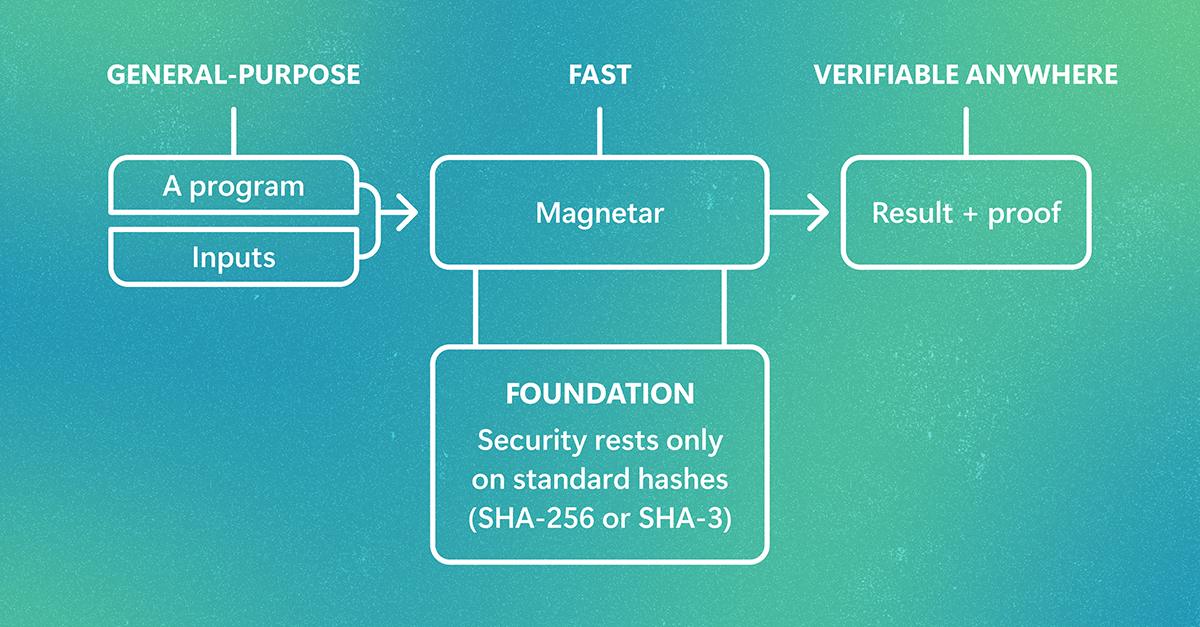
Zero-knowledge proofs can verify computing results without rerunning workloads or exposing sensitive data. Magnetar helps bring them into the mainstream with support for standard programming languages, major speed gains, and quantum-resistant security. The post Proof-based general-purpose computing with Magnetar appeared first on Microsoft Research.
Learn how Google DeepMind and GovTech Singapore uses lightweight on-device Gemma models to intercept conversational scams in private chats with zero cloud data egress.