Federated Direct Preference Optimization (FedDPO) enables privacy-preserving alignment of language models across distributed agents without centralizing sensitive preference data. However, existing FedDPO analysis assumes all clients converge to a single shared policy, which is fundamentally at odds with the heterogene...
Decoder hidden states from different layers of large language models (LLMs) often encode complementary information. However, existing speculative decoding methods typically rely on a small set of target-model layers chosen using fixed, position-based heuristics. Selecting an optimal subset of layers is inherently a com...
Raghavv Goel, Sudhanshu Agrawal, Mukul Gagrani et al.· 0 citations
AI systems are making rapid progress in mathematics, but this progress is hard to measure. Benchmarks of solved problems saturate, and in benchmarks of open problems each problem can be resolved for the first time only once. We present SqueezeBench, a benchmark that is resilient to saturation: a success raises the bar...
Pablo Manrique, Hai Xia, Stefan Szeider· 0 citations
Distilling long-chain reasoning trajectories from large teacher models provides an effective way to improve the reasoning ability of small language models. However, existing methods typically select a fixed training set before distillation, overlooking that the usefulness of a reasoning example changes as the student e...
Jia-Ming Su, Suorong Yang, Xu-Dong Li et al.· 0 citations
Reach audiences
Advertise in front of researchers, engineers, and readers.
Language-model agents are used for specialized work such as financial research, healthcare and law. Such agents are often capable enough for a task but still miss its details. In finance, for example, these details include which filing reports a figure or how a company discloses a metric. Retraining the agent to learn...
Large language models (LLMs) excel across diverse tasks, benefiting from knowledge priors, in-context reasoning, and test-time computation. Despite these strengths, single-model reasoning remains vulnerable to error propagation, as later steps depend on the model's earlier outputs, leaving reasoning blind spots difficu...
Yu-Heng Wang, Run-De Yang, Zhu-Han Bao et al.· 0 citations
Understanding and manipulating spatial relations is fundamental to AI systems that reason about physical environments and construct grounded world models. However, existing evaluations of multimodal large language models (MLLMs) for spatial reasoning rely predominantly on static question-answering (QA) over small-scale...
Zheng Ren, Yan-Ning Wang, Zi-Heng Huang et al.· 0 citations
Multi-agent systems are increasingly used to solve coding tasks by coordinating agents that share code and plans. These agents are often optimized with reinforcement learning (RL) using automated evaluators, but bypassing evaluation can earn reward without producing a genuine solution. Prior work has largely treated re...
Yue-Peng Hu, P. Ghahremani, Reza Aghajani et al.· 0 citations
Background: A new class of AI "decision models" returns a probability for every option in a single pass and is marketed as calibrated, which invites use in clinical triage. Whether those probabilities hold up on clinical diagnosis has not been independently tested. Objective: To test the diagnostic accuracy, calibratio...
A. Deobhakta, J. Chang, R.-W.-S. Chen et al.· medRxiv· 0 citations
VTAS-Hybrid (v2.0.0) – TECHNICAL RESEARCH REPORT AND SYSTEM SPECIFICATION 1. ABSTRACT Modern data centers face severe scaling and sustainability challenges regarding cold data archiving. Conventional magnetic tapes (LTO) and optical media suffer from signal degradation and physical wear over decades. This paper introdu...
Tommi Aronen· Zenodo (CERN European Organi...· 0 citations
This paper proposes the BT-PEC full-stack computing framework to address the challenge that traditional static resource scheduling and fixed error correction strategies fail to adapt to time-varying noise and dynamic decoherence of coherent resources in the NISQ era for open quantum systems. The framework includes a qu...
Lihua Lu· Zenodo (CERN European Organi...· 0 citations
Code, data and predictions for the paper. Includes the BUMP-derived dataset builder, log condensation, rule and learned baselines, retrieval, prompting and QLoRA fine-tuning code for five small language models and a 32B reference, evaluation and statistics scripts, a Google Colab notebook for the GPU experiments, and e...
Ramesh B. Paramkusham· Zenodo (CERN European Organi...· 0 citations
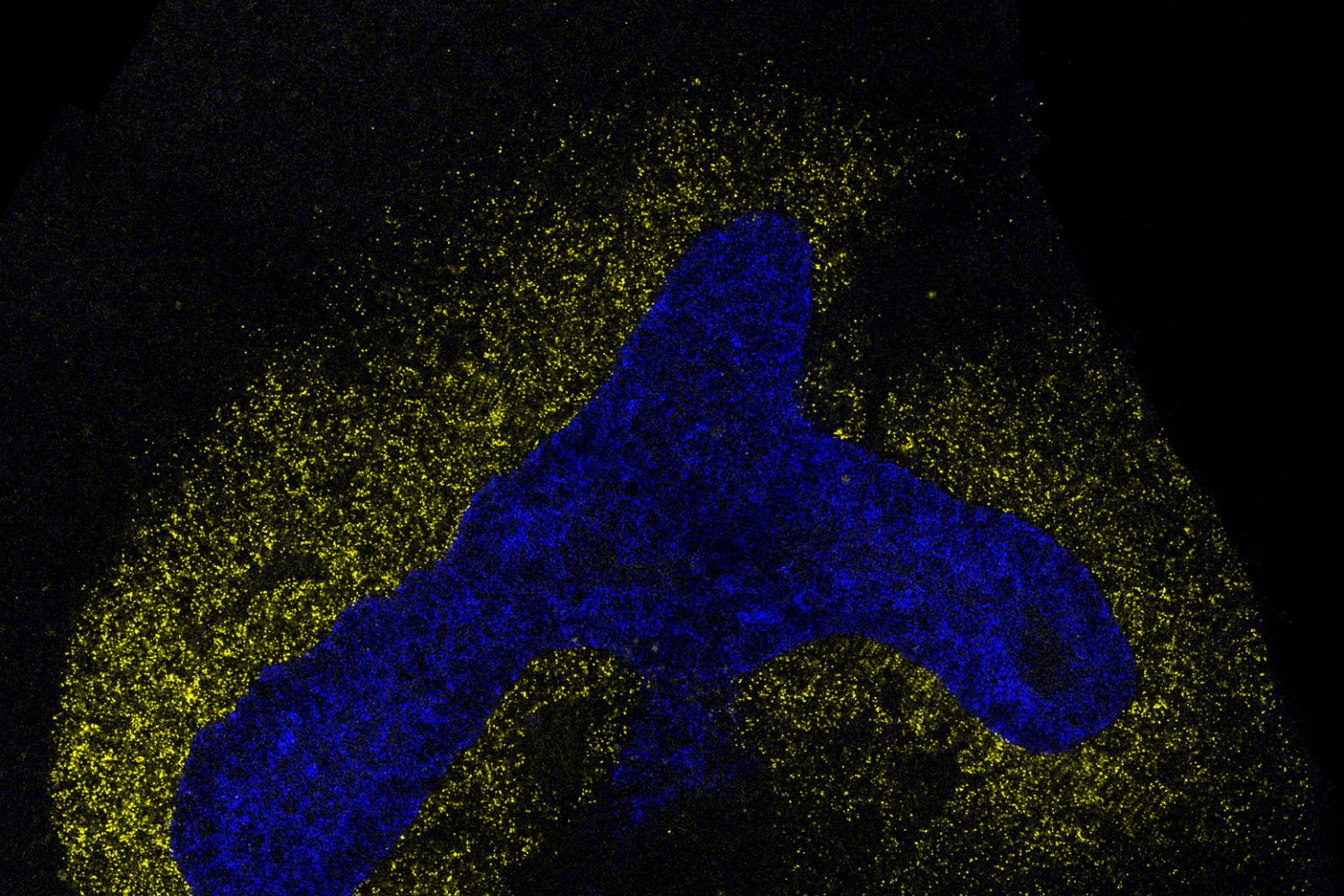
A new computational approach reveals how cells communicate to assemble into tissues. This could accelerate stem cell engineering, improve disease models, and inform therapies.
Microsoft Research Blog· microsoft.comOct 15, 2026
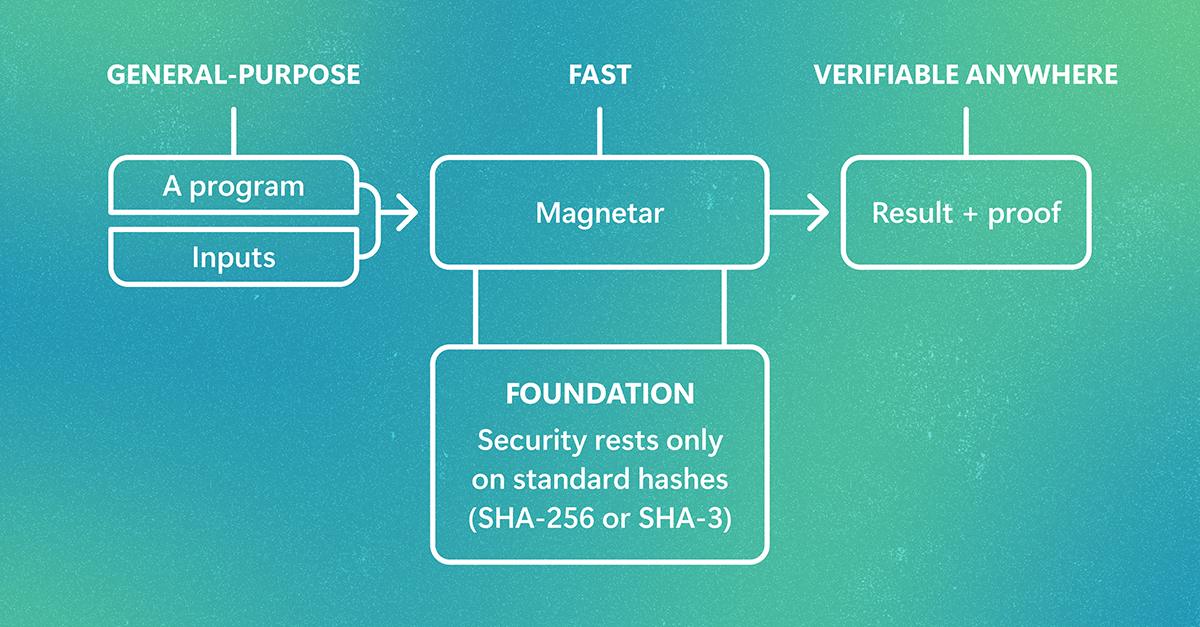
Zero-knowledge proofs can verify computing results without rerunning workloads or exposing sensitive data. Magnetar helps bring them into the mainstream with support for standard programming languages, major speed gains, and quantum-resistant security. The post Proof-based general-purpose computing with Magnetar appeared first on Microsoft Research.
Learn how Google DeepMind and GovTech Singapore uses lightweight on-device Gemma models to intercept conversational scams in private chats with zero cloud data egress.