Jul 2026· IEEE Power & Energy Society General Meeting· pp. 1-5· 0 citations· 20 references
Computer Science
Abstract
The rapid growth of Distributed Energy Resources (DERs) has significantly expanded the cyber-attack surface of modern power grids. Furthermore, increasing sophistication in attack techniques demands anomaly detection systems (ADS) that are accurate, interpretable, and reliable to support DER cybersecurity. While ML-based ADS provide strong detection capabilities, their "black-box" nature reduces operator trust and limits Security Operation Center’s (SOC) ability to effectively interpret alerts and respond, highlighting the need for explainable Artificial Intelligence (XAI) to ensure transparency and operational confidence. This paper presents an XAI-based anomaly detection framework tailored for DER networks (ExCYDER). The proposed framework uses a self-verifying mechanism that validates ADS alerts to ensure trustworthy decision-making. ExCYDER combines LightGBM with SHAP to check whether each model decision aligns with its feature-attribution evidence, allowing the system to confirm that its internal reasoning is consistent and reliable. Experiments on a realistic DNP3 dataset achieved over 98% detection accuracy, an average rule–SHAP consistency of 44.6%, a SHAP latency of 14.5 ms per alert, and a confidence deviation within ±5%, demonstrating stable verification behavior with minimal computational overhead. The framework distinguished between coherent and inconsistent alerts without compromising detection accuracy, demonstrating that integrated verification within XAI-based ADS enhances interpretability, auditability, and operational robustness for DER-focused SOCs.

The results indicate that software engineering work practices are chosen opportunistically, adapted and configured to provide value under the constrains imposed by the startup context.
Nicolò Paternoster, Carmine Giardino, M. Unterkalmsteiner et al.· Information and Software Tec...· 394 citations· ⚡54
The possibility of inferring high-dimensional data inference in a model that consists of a prior and an auxiliary differentiable constraint given some additional information is considered, thereby allowing a range of potential applications in adapting models to new domains and tasks.
Alexandros Graikos, Esmeralda S. Whitammer, N. Jojic et al.· Neural Information Processin...· 316 citations· ⚡15
It is proved that any global minimizer of the trajectory balance objective can define a policy that samples exactly from the target distribution, and empirically demonstrate the benefits of the trajectories balance objective for GFlowNet convergence, diversity of generated samples, and robustness to long action sequenc...
Esmeralda S. Whitammer, Moksh Jain, Emmanuel Bengio et al.· Neural Information Processin...· 302 citations· ⚡60
GAOKAO-Bench is introduced, an intuitive benchmark that employs questions from the Chinese GAOKAO examination as test samples, including both subjective and objective questions that contribute a robust evaluation benchmark for future large language models and offers valuable insights into the advantages and limitations...
Xiaotian Zhang, Chun-yan Li, Yi Zong et al.· arXiv.org· 216 citations· ⚡17
This state-of-practice investigation was performed using a literature review followed by a multiple-case study approach and presents how inconsistency between managerial strategies and execution can lead to failure by means of a behavioral framework.
Carmine Giardino, Xiaofeng Wang, P. Abrahamsson· International Conference on...· 175 citations· ⚡19
This work investigates the possibilities of using LLMs in a resume screening setting via a document retrieval framework that simulates job candidate selection and finds that the MTEs are biased, significantly favoring White-associated names in 85% of cases and female-associated names in only 11.1% of cases.
With $2.1 million funding from Google.org, the open-source Public Transit Intelligence Hub will unify public transit monitoring, operations, and passenger communication.
MIT News · Artificial Intelligence· news.mit.eduSep 29, 2026
Professor Sherry Turkle’s new book, “Artificial Intimacy,” offers a withering critique of chatbots and the antisocial dynamics she believes they encourage.
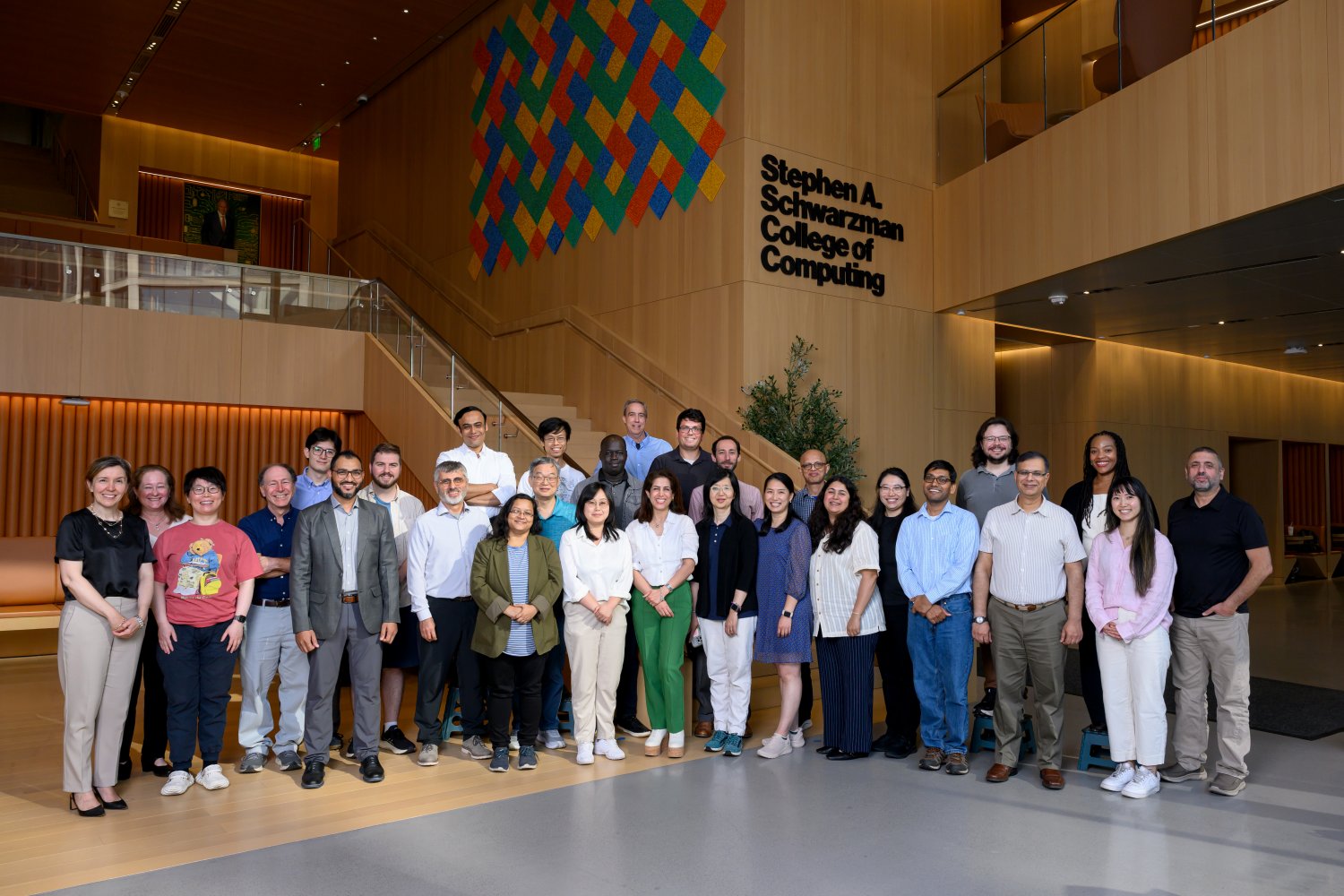
A weeklong summer workshop brought higher education faculty to campus to explore how AI and machine learning materials can be adapted for their classrooms.
We use cookies to run the site and, with your consent, for analytics and to show ads.
See our Cookie Policy.