Sep 2026· Journal of Adolescent & Adult Literacy· 0 citations· 35 references
Artificial Intelligence in Healthcare and Education
Abstract
Generative artificial intelligence (GenAI) is rapidly reconfiguring professional practice, everyday decision making, and adult learning across virtually every sector. This thematic literature review synthesizes research published between 2022 and 2026 on the skills and understandings adults need in order to work purposefully, critically, and ethically with GenAI, taking established scholarship on digital, information, media, and critical literacies as its grounding. The review adopts a sociocultural orientation in which literacy denotes situated practices of making and interrogating meaning with texts. The review argues that competence with GenAI is not a narrow technical capacity but a situated form of agency encompassing purposeful use, contextual judgment, critical evaluation, ethical awareness, adaptive learning, and the capacity to preserve human thinking alongside automated systems. It examines the prompt as a communicative competency, the scrutiny of outputs for bias, inaccuracy, hallucination, and intellectual appropriation, the critical AI literacy scholarship that questions the framing itself, the contested evidence on productivity, and the shifting skill demands of AI enabled workplaces, closing with a cross‐sector set of AI learning principles.
This integrated literature review examines how generative artificial intelligence is shaping human thinking, cognitive processes and writing practices, with a focus on education across schools, universities, adult learning and professional settings, and advances a hybrid account in which human and machine contributions...
Edwin Creely· International Journal of Cog...· 0 citations
The review finds that AI literacy should not be reduced to technical competence alone and is best understood as a context-sensitive form of literacy that combines foundational knowledge, practical engagement, critical evaluation, ethical awareness, and pedagogical judgment.
Generative Artificial Intelligence (GenAI) tools are widely reported to improve writing quality and efficiency, yet their implications for autonomy, defined here as volitional, informed, and self-endorsed decision-making, remain underexplored. Drawing on an integrated Self-Determination Theory (SDT) and Sociocultural T...
Liubov Darzhinova· International Journal of TES...· 0 citations
This study critically evaluates the representations of Artificial Intelligence (henceforth, AI) -
ideologically and linguistically, in educational discourse, addressing an important lacuna in the
literature. It interrogates how AI is framed by dominant global narratives as an unbiased and
liberal Educational Technol...
Brilliant Richard· International Journal of Eng...· 0 citations
As GenAI systems have moved from novelty to everyday use in research and learningpractices, higher education institutions are increasingly adopting them in the realms of“literacy”, “responsible use”, and “ethical awareness”. Such framings often assume strategicsimplifications: imagining ethics as a checklist of princip...
Enforcing physics-based constraints prevents AI models from generating unreliable predictions for complex nonlinear systems in weather, climate, and turbulent flows.
MIT News · Artificial Intelligence· news.mit.eduNov 20, 2026
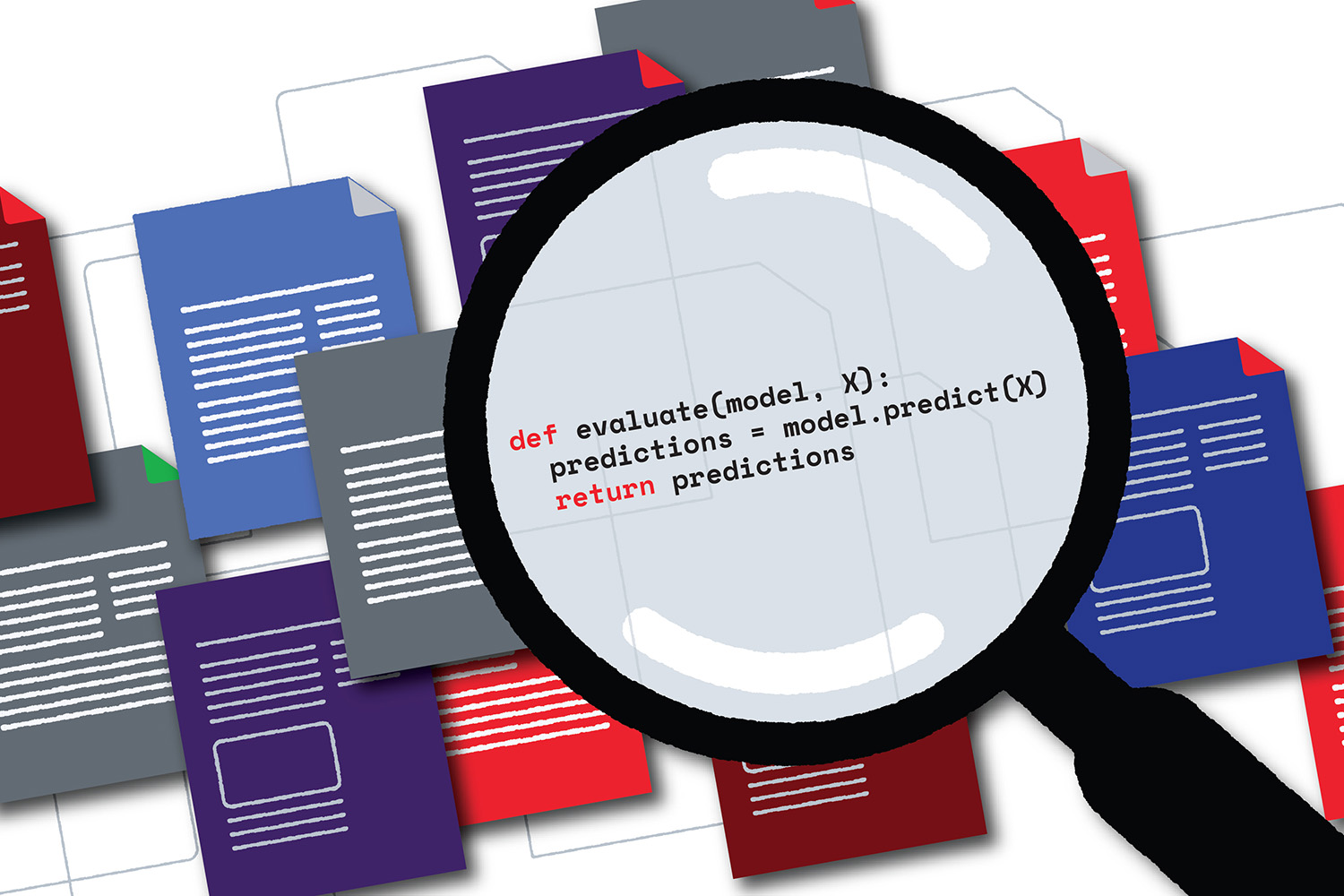
An MIT and Dana-Farber Institute-led team used large language models to examine nearly 4,000 studies and hundreds of code repositories, revealing gaps in the information needed to scrutinize and reuse published research.
We use cookies to run the site and, with your consent, for analytics and to show ads.
See our Cookie Policy.