Many engineering building blocks behave as multi-port linear time-invariant systems. RF cavities, photonic devices, and superconducting quantum chips, despite their different underlying physics, all share a common mathematical structure for their port-level response. Each entry of the response matrix is a sum of contributions from a small number of intrinsic resonant modes, the pole-residue form. A model capable of predicting such responses for arbitrary geometries and arbitrary port configurations, while simultaneously extracting the underlying eigenmode structure, would therefore establish a foundational design principle spanning all these domains. We propose a neural framework that learns this modal decomposition end-to-end, supervised only by system-level observables and without supervising the modal parameters themselves. The architecture decomposes into a port-independent pole predictor and two port-dependent coupling predictors whose outputs are combined entry-wise, separating intrinsic from port-dependent features. This factorization yields a single trained model that generalizes to port counts unseen during training, dissolving the $\mathcal{O}(N^2)$ scaling barrier of direct regression. Despite no modal supervision, the freely-parameterized poles converge to physically meaningful eigenmodes, verified by cross-validation against the AAA rational approximation algorithm. We instantiate the framework in radio-frequency electromagnetic surrogate modeling. A model trained only on 2-port data accurately predicts $N$-port responses unseen during training.
It is found that Llama 3 delivers comparable quality to leading language models such as GPT-4 on a plethora of tasks, and performs competitively with the state-of-the-art on image, video, and speech recognition tasks.
This paper investigates developing real-world perception for active agents, proposes Gibson Environment for this purpose, and showcases a set of perceptual tasks learned therein.
F. Xia, Amir Zamir, Zhi-Yang He et al.· 2018 IEEE/CVF Conference on...· 1,069 citations· ⚡112
The results indicate that software engineering work practices are chosen opportunistically, adapted and configured to provide value under the constrains imposed by the startup context.
Nicolò Paternoster, Carmine Giardino, M. Unterkalmsteiner et al.· Information and Software Tec...· 394 citations· ⚡54
The possibility of inferring high-dimensional data inference in a model that consists of a prior and an auxiliary differentiable constraint given some additional information is considered, thereby allowing a range of potential applications in adapting models to new domains and tasks.
Alexandros Graikos, Esmeralda S. Whitammer, N. Jojic et al.· Neural Information Processin...· 316 citations· ⚡15
It is proved that any global minimizer of the trajectory balance objective can define a policy that samples exactly from the target distribution, and empirically demonstrate the benefits of the trajectories balance objective for GFlowNet convergence, diversity of generated samples, and robustness to long action sequenc...
Esmeralda S. Whitammer, Moksh Jain, Emmanuel Bengio et al.· Neural Information Processin...· 302 citations· ⚡60
An algorithm is proposed which leverages disentangled semantic factors to generate adversarial perturbation by altering controlled semantic attributes to fool the learner towards various "adversarial" targets.
Haonan Qiu, Chaowei Xiao, Lei Yang et al.· arXiv.org· 208 citations· ⚡17
Related blog posts
MIT News · Artificial Intelligence· news.mit.eduNov 17, 2026
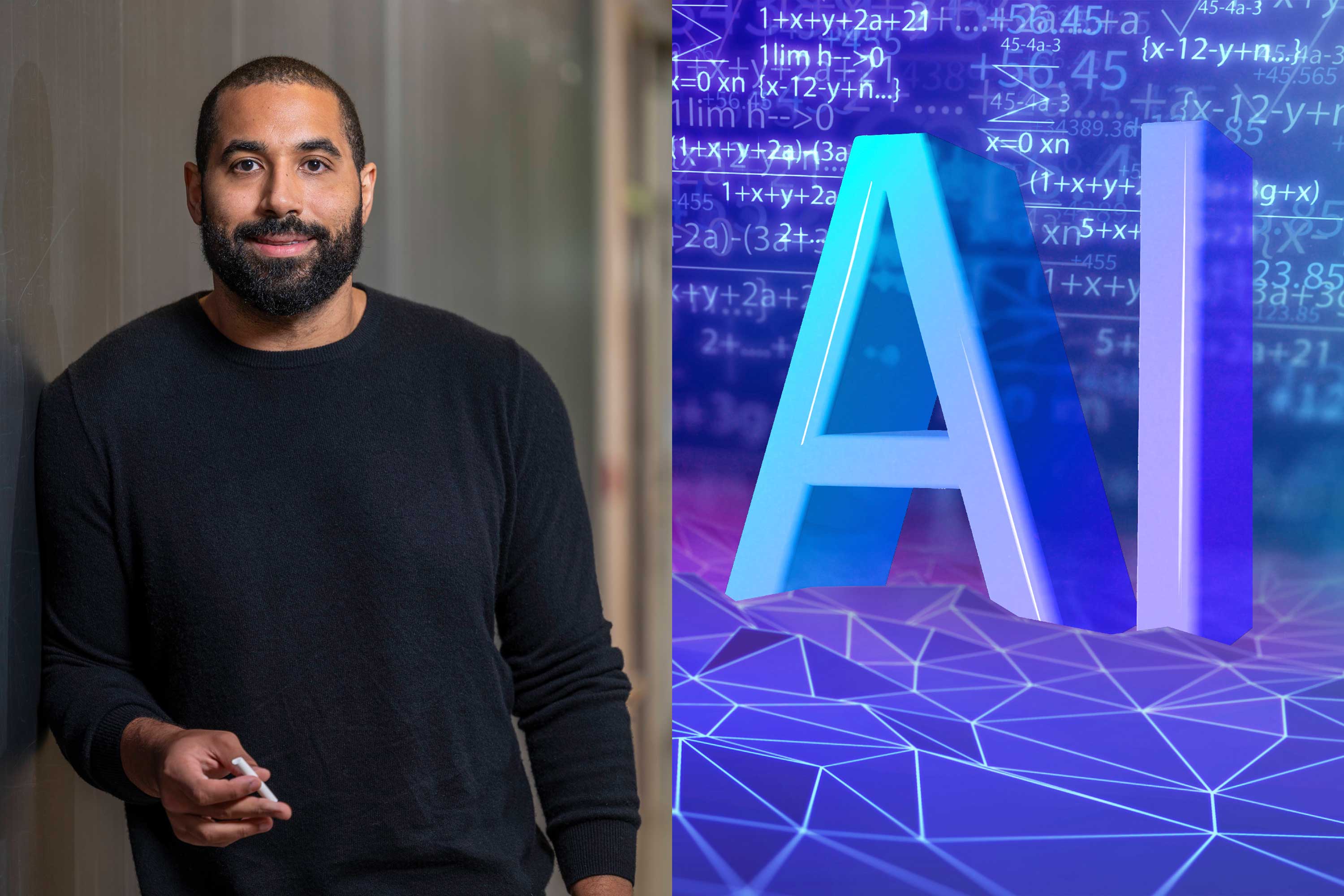
By studying the computational foundations of language learning, Associate Professor Jacob Andreas builds intelligent systems that can communicate effectively with humans.
Microsoft Research Blog· microsoft.comNov 16, 2026
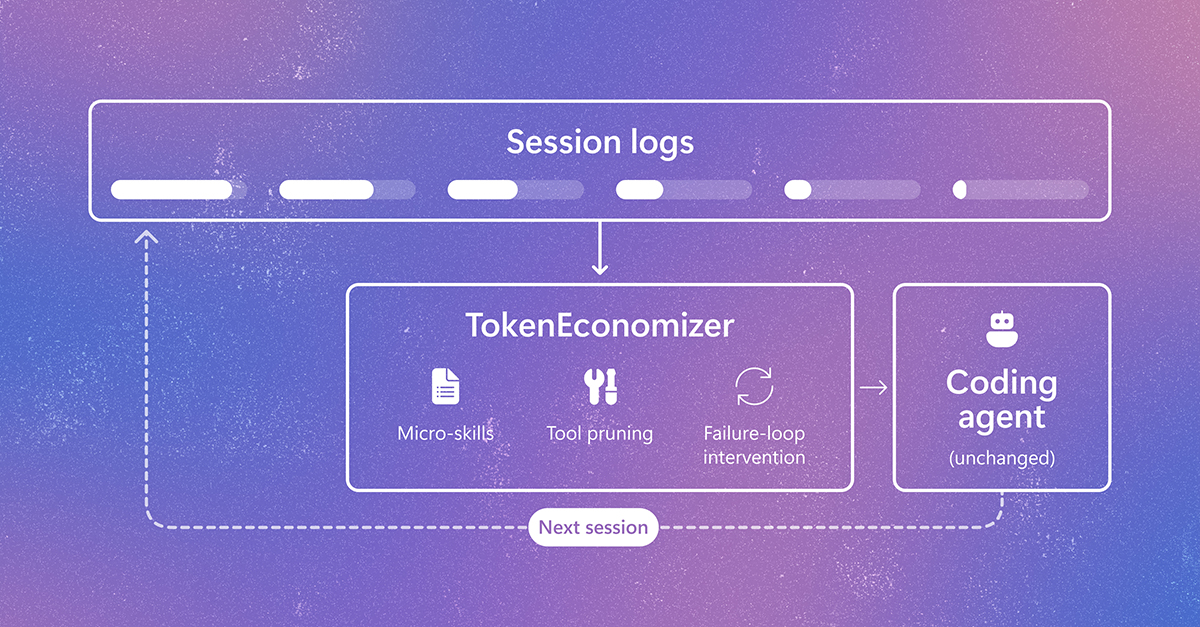
AI coding agents are increasingly help developers fix bugs and build features largely on their own, but every interaction with their models consumes tokens. In each session, an agent sends instructions, tool descriptions, and session history to its model. Most efforts to reduce this cost focus on individual tasks. Yet developers return to the same […] The post TokenEconomizer: Learning from Experience to Make AI Coding Agents More Efficient appeared first on Microsoft Research.
MIT News · Artificial Intelligence· news.mit.eduNov 13, 2026