Skip to content

Artificial Intelligence, Machine Learning, and Deep Learning Concepts, Methods, and Real-World Impact

Sep 2026 · International Journal of Computer Science and Artificial Intelligence · Vol 1, pp. 168-182 · 0 citations · 30 references

TL;DR

This chapter presents an accessible yet technically grounded overview of the relationship among AI, ML, and DL, tracing their historical development from early symbolic reasoning and theoretical foundations to modern neural networks and transformer-based systems.

Abstract

Artificial Intelligence (AI), Machine Learning (ML), and Deep Learning (DL) have evolved from rule-based symbolic systems into data-driven computational methods capable of perception, prediction, decision support, and content generation. This chapter presents an accessible yet technically grounded overview of the relationship among AI, ML, and DL, tracing their historical development from early symbolic reasoning and theoretical foundations to modern neural networks and transformer-based systems. It explains the principal ML paradigms supervised, unsupervised, reinforcement, semi-supervised, and self-supervised learning and introduces widely used algorithms including regression, decision trees, ensemble methods, support vector machines, k-nearest neighbors, Naive Bayes, gradient boosting, and k-means clustering. The chapter then examines deep-learning architectures such as Convolutional neural networks, recurrent and long short-term memory networks, transformers, generative adversarial networks, and diffusion models, together with training concepts including back propagation, gradient descent, regularization, transfer learning, and evaluation metrics. Applications across healthcare, finance, transportation, manufacturing, agriculture, education, cyber security, and creative work are discussed, alongside challenges involving bias, explainability, privacy, misinformation, employment, and computational and environmental costs. The chapter concludes by emphasizing human-centered deployment, responsible governance, interpretability, and continuous evaluation as AI systems become increasingly integrated into high-impact domains. Keywords: artificial intelligence; machine learning; deep learning; natural language processing; computer vision; generative AI; reinforcement learning; neural networks; Responsible AI; Transformers

Read PDF

Similar papers

Aug 2026

Advanced Machine Learning, AI, & Big Data Systems: Comprehensive MCQ Practice Guide

Machine Learning: 500 MCQs with Answers & Detailed Explanations is a comprehensive practice guide designed to help students, educators, and aspiring machine learning practitioners build a strong conceptual foundation across the full breadth of the discipline. The book presents 500 well-structured multiple-choice questi...

Shankar Prasad Mitra, Kaushik Paul, Debmalya Mukherjee et al. · 0 citations
Review Aug 2026

Artificial Intelligence Driven Healthcare - A Survey of Machine Learning, Deep Learning and Intelligent Predictive Methods

Artificial intelligence has moved from a promising research direction to a working component of modern clinical practice, supporting screening, diagnosis, prognosis, treatment planning and hospital operations. This survey reviews the principal families of methods that drive this transformation: classical machine learni...

R. L · 3 citations
Review Open access Aug 2026

Artificial Intelligence Thinking, Learning, and Generation: Cognitive and Neural-Inspired Foundations of Machine Learning and Deep Learning

The paper discusses how learning processes in artificial systems are motivated by and differ radically from biological thinking, and compares supervised, unsupervised, and reinforcement learning paradigms, the formation of representations in deep neural networks, and how generative models can produce outputs that seem...

Rajan Thapaliya · 0 citations
Review Open access 2026

A Comprehensive Systematic Review of Supervised, Unsupervised, and Reinforcement Machine Learning

Machine Learning (ML) has deeply reinvented artificial intelligence, translating from an academic norm to becoming the basic engine of modern AI. Its milestone or achievement is paramount in various fields of endeavor as healthcare, autonomous systems, finance, and scientific discovery etc. This paper examined a compre...

Francis Uwadia, M. Akazue, Efeobor Abel Edje · 0 citations
Open access Aug 2026

Embedded One-Class Classification for Deep Neural Network Representations

An Embedded One-Class Classification (EOCC) framework for monitoring task-informed neural network representations andComparisons with depth-based, density-based, covariance-based, isolation-based, and end-to-end deep one-class methods show that EOCC is competitive and frequently achieves low Type II error while maintai...

Edgard M. Maboudou-Tchao, P. S. Senaratne, Randyll Pandohie et al. · 0 citations

Related blog posts

GPT-Lab Aug 28, 2026

We built an AI factory for HVAC control

What does it take to trust AI-driven HVAC optimization? Our AI Model Factory combines agents, machine learning, reinforcement learning and deterministic checks in a governed workflow designed for messy, real-world building data. The post We built an AI factory for HVAC control appeared first on GPT-Lab.

Microsoft Research Blog Jul 30, 2026

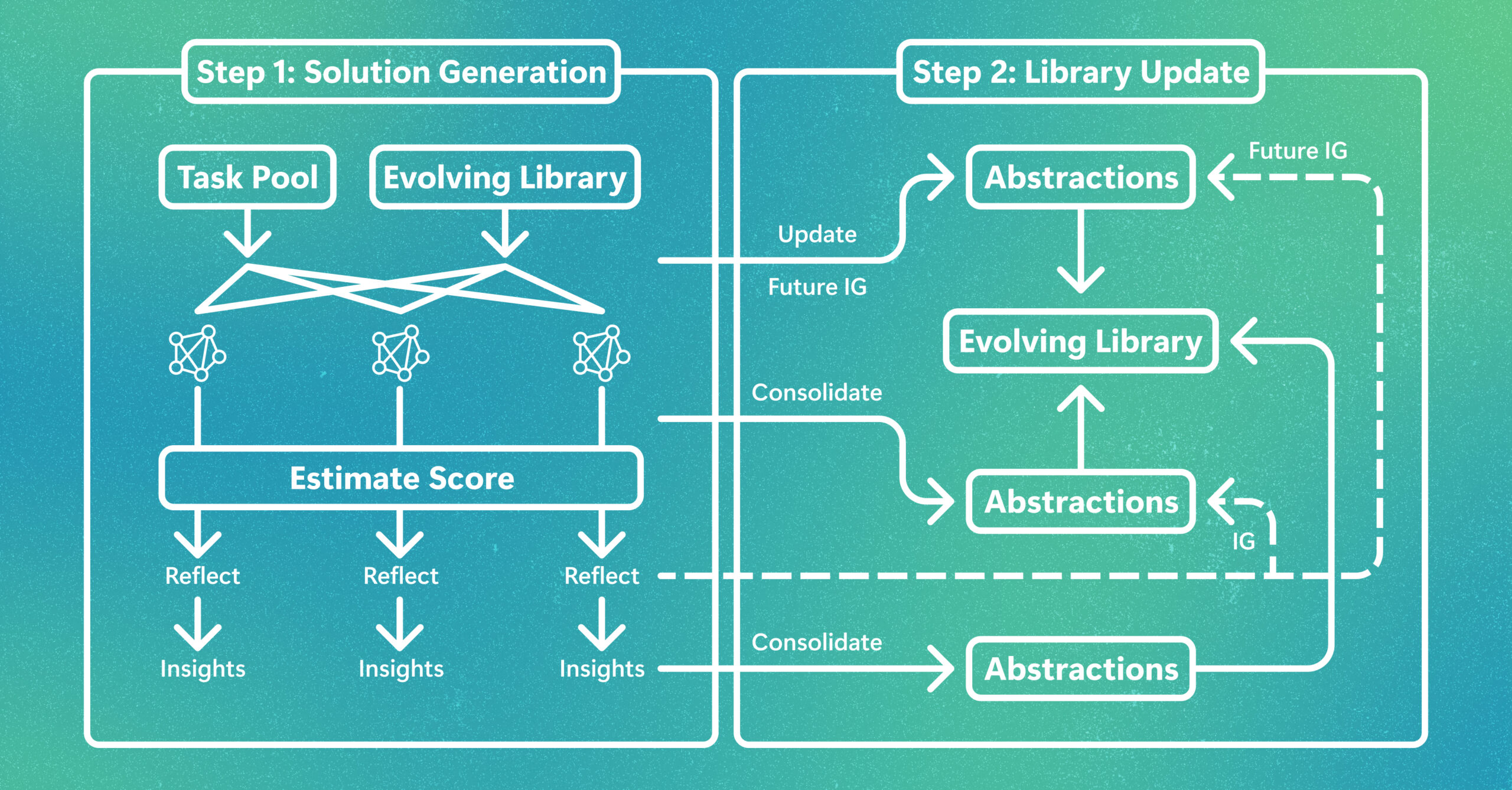
EvoLib: Turning experience into evolving knowledge

LLMs do not get smarter just by remembering more. EvoLib turns experience into evolving knowledge, taking reusable skills and insights that help models learn and adapt across tasks long after deployment. The post EvoLib: Turning experience into evolving knowledge appeared first on Microsoft Research.

We use cookies to run the site and, with your consent, for analytics and to show ads. See our Cookie Policy.