Skip to content

Generative AI in University EFL Writing: Tensions among Efficiency, Language Proficiency, and Learner Agency

Sep 2026 · Journal of Linguistics & Cultural Studies · 0 citations · 10 references

Abstract

The rapid diffusion of generative artificial intelligence (GenAI) is reshaping university-level English writing by lowering the linguistic and cognitive costs of text production. Large language models can generate and revise prose, suggest vocabulary, explain grammatical problems, reorganize paragraphs, and provide immediate feedback. These affordances can improve writing efficiency and the surface quality of students' texts, particularly when learners face linguistic constraints or limited access to individualized feedback. Yet the educational value of GenAI cannot be reduced to technological empowerment. When AI performs ideation, language production, organization, and revision on behalf of learners, opportunities for language output and cognitive engagement may be reduced. This paper examines the resulting tension among writing efficiency, language proficiency, and learner agency through the lenses of second language acquisition, cognitive load, constructivist learning, and self-regulated learning. It argues that the central issue is not whether students use AI, but how responsibility for thinking and decision-making is distributed between students and AI. The paper proposes a conceptual model in which the depth of AI involvement interacts with learner agency to shape learning outcomes. The most productive condition is a collaborative development zone in which students retain ownership of goals, arguments, and final judgments while using AI as a linguistic and cognitive scaffold. The paper further argues for process-based assessment, critical AI literacy, staged AI access, and a redefinition of EFL writing competence. In an AI-mediated environment, effective writing competence extends beyond language generation to include evaluation, strategic collaboration, and meaning reconstruction.

Read PDF

Similar papers

#computer vision Open access Jun 2016

Software Development in Startup Companies: The Greenfield Startup Model

The results are packaged in the Greenfield Startup Model (GSM), which explains the priority of startups to release the product as quickly as possible, and the need to shorten time-to-market, by speeding up the development through low-precision engineering activities.

Carmine Giardino, Nicolò Paternoster, M. Unterkalmsteiner et al. · 178 citations · ⚡14
#computer vision Open access Oct 2016

Software Startups - A Research Agenda

Software startup companies develop innovative, software-intensive products within limited timeframes and with few resources, searching for sustainable and scalable business models.

M. Unterkalmsteiner, P. Abrahamsson, Xiaofeng Wang et al. · 157 citations · ⚡17
#machine learning Review Open access Oct 2016

“Failures” to be celebrated: an analysis of major pivots of software startups

This study conducts a case survey study based on the secondary data of the major pivots happened in 49 software startups, and demonstrates that customer need pivot is the most common among all pivot types.

Sohaib Shahid Bajwa, Xiaofeng Wang, Anh Nguyen-Duc et al. · 127 citations · ⚡15
#computer vision Review Open access May 2015

A survey study on major technical barriers affecting the decision to adopt cloud services

The comparison of adopter and non-adopter sample reveals three potential adoption inhibitor, security, data privacy, and portability, which underlines the importance of the technical and security perspectives for research investigating the adoption of technology.

Nattakarn Phaphoom, Xiaofeng Wang, S. Samuel et al. · 111 citations · ⚡8
#computer vision Open access Feb 2018

Lean Internal Startups for Software Product Innovation in Large Companies: Enablers and Inhibitors

This study investigates how Lean internal startup facilitates software product innovation in large companies and identifies its enablers and inhibitors, and shows the potential of the method-in-action framework to investigate the Lean startup approach in non-startup context.

Henry Edison, Nina M. Smørsgård, Xiaofeng Wang et al. · 78 citations · ⚡6
#computer vision Conference Sep 2010

Exploring the Sources of Waste in Kanban Software Development Projects

The application of agile software methods and more recently the integration of Lean practices contribute to the trend of continuous improvement in the software industry. One such area warranting proper empirical evidence is a project’s operational efficiency when using the Kanban method. This short paper takes a new an...

Marko Ikonen, Petri Kettunen, Nilay V. Oza et al. · 67 citations · ⚡9

Related blog posts

MIT News · Artificial Intelligence Sep 30, 2026

This game-playing AI is the new champ at Stratego

Able to defeat top-ranked human players and more efficient than other models, the new system could help decision-makers in military maneuvers or business negotiations.

Microsoft Research Blog Sep 29, 2026

Introducing Quine: An AI research system designed for the complexity of biology

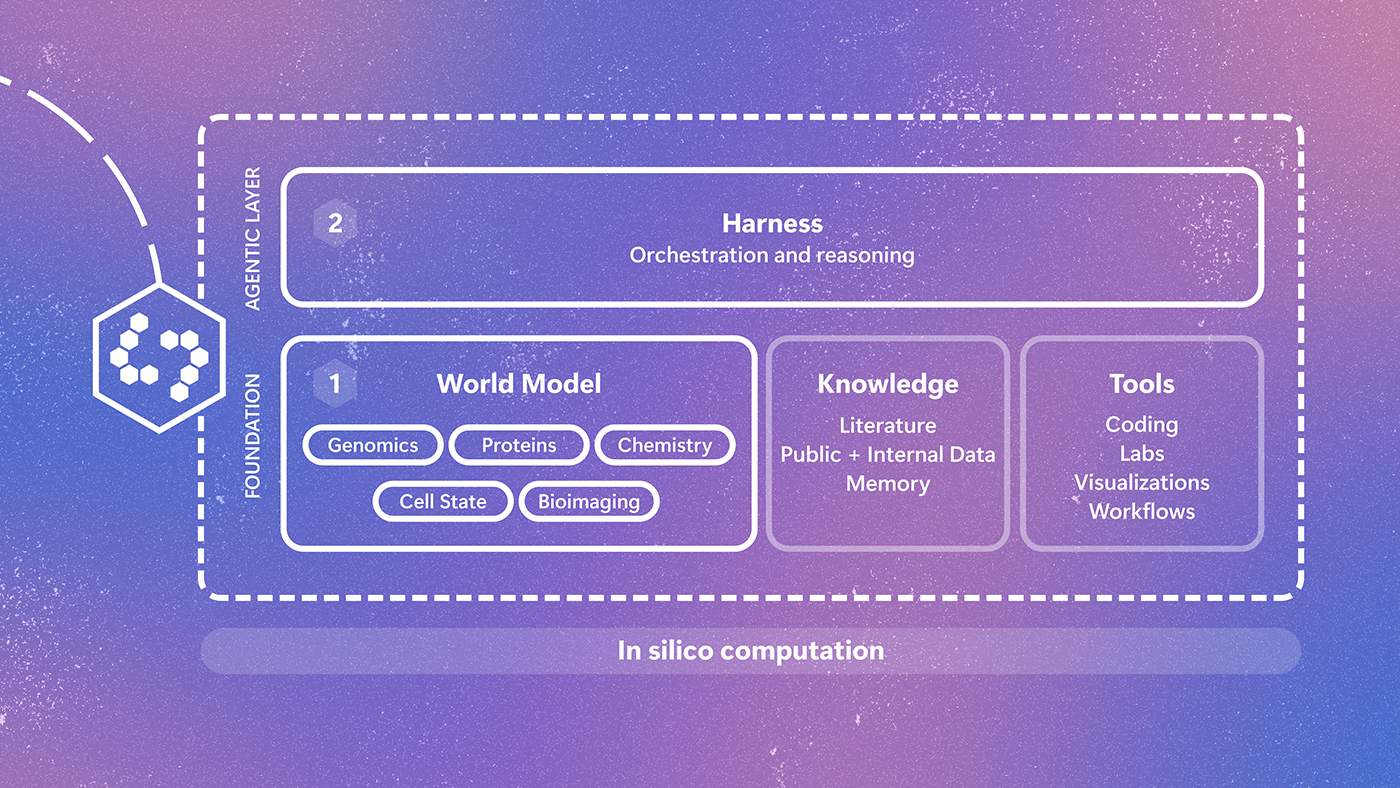
Biology doesn't operate in silos, and neither should the AI representation of it. Quine is an early-stage research effort to create a multimodal world model of biology. By connecting insights across biological scales and modalities, Quine helps scientists computationally search a space far larger than intuition allows and prioritize hypotheses before they reach the lab. Experimental results provide important feedback, helping researchers sharpen future research directions. The post Introducing Q…

We use cookies to run the site and, with your consent, for analytics and to show ads. See our Cookie Policy.