Skip to content
#protein folding Open access

Piercing mechanism in the minimal contractile tail of bacteriophage P2

Sep 2026 · bioRxiv · 0 citations · 61 references
Biology

Abstract

Bacteriophage P2 is a long-standing model for contractile injection systems, yet high-resolution structures of the intact virion and the mechanism of baseplate activation have remained unresolved. Here, we combine high-resolution cryo-electron microscopy and in situ cryo-electron tomography to characterize P2, using its lytic mutant P2vir, in its pre- and post-contraction states and during host infection. We identify a previously undescribed fold in the head-to-tail adaptor, which mediates the transition from 12-fold portal symmetry to sixfold tail symmetry through interlocking β-strand “handshake” interactions. Our structures further reveal a compact, threefold-symmetric baseplate established by a distinctive loop-helix module formed by the hub and tube initiator, which bioinformatic and phylogenetic analyses identify as a characteristic architectural feature of the Peduovirus lineage. We also propose a rope-like arrangement that anchors the tail fibre to the baseplate triplex component gpI and obtain evidence that the tape-measure protein adopts a C3 arrangement within the tail lumen, while computational predictions suggest a possible hexameric, pore-like organization after release. Comparison of pre- and post-contraction particles, supported by in situ imaging of infection, suggests that sheath contraction destabilizes the baseplate, promoting its disassembly. The inner tail tube appears to penetrate the host outer membrane but does not appear to reach the inner membrane, leading us to propose that the reorganized tape-measure protein forms a secondary conduit for genome translocation. These findings support a distinct model of contractile tail activation and expand the known architectural diversity of viral injection systems.
Read PDF

Similar papers

#computer vision Review Open access May 2015

A survey study on major technical barriers affecting the decision to adopt cloud services

The comparison of adopter and non-adopter sample reveals three potential adoption inhibitor, security, data privacy, and portability, which underlines the importance of the technical and security perspectives for research investigating the adoption of technology.

Nattakarn Phaphoom, Xiaofeng Wang, S. Samuel et al. · 111 citations · ⚡8
#computer vision Open access Feb 2018

Lean Internal Startups for Software Product Innovation in Large Companies: Enablers and Inhibitors

This study investigates how Lean internal startup facilitates software product innovation in large companies and identifies its enablers and inhibitors, and shows the potential of the method-in-action framework to investigate the Lean startup approach in non-startup context.

Henry Edison, Nina M. Smørsgård, Xiaofeng Wang et al. · 78 citations · ⚡6
#computer vision Book Open access Jul 2015

Understanding the affect of developers: theoretical background and guidelines for psychoempirical software engineering

This paper highlights the challenges to conduct proper affect-related studies with psychology, provides a comprehensive literature review in affect theory, and proposes guidelines for conducting psychoempirical software engineering.

D. Graziotin, Xiaofeng Wang, P. Abrahamsson · 56 citations · ⚡4
#machine learning Open access May 2017

What Influences the Speed of Prototyping? An Empirical Investigation of Twenty Software Startups

This study conducts a multiple case study on twenty European software startups and proposes a prototype-centric learning model in early stage software startups, and identifies factors that occur as barriers but also facilitators for prototyping in earlystage software startups.

Anh Nguyen-Duc, Xiaofeng Wang, P. Abrahamsson · 44 citations · ⚡5
#protein folding Open access Sep 2026

Programmable design of functional proteins from natural language

Pinal, a 16-billion-parameter foundation model that produces protein candidates from natural-language functional descriptions, supports natural language as a high-level interface for candidate generation in protein design, enabling programmable exploration with reduced reliance on manually specified structural or seque...

Fengyuan Dai, Shiyang You, Yudian Zhu et al. · 31 citations · ⚡3

Related blog posts

Google DeepMind Blog Sep 30, 2026

Introducing SynthID Bio

Proof of concept for watermarking AI-generated proteins while preserving biological function.

MIT News · Artificial Intelligence Aug 27, 2026

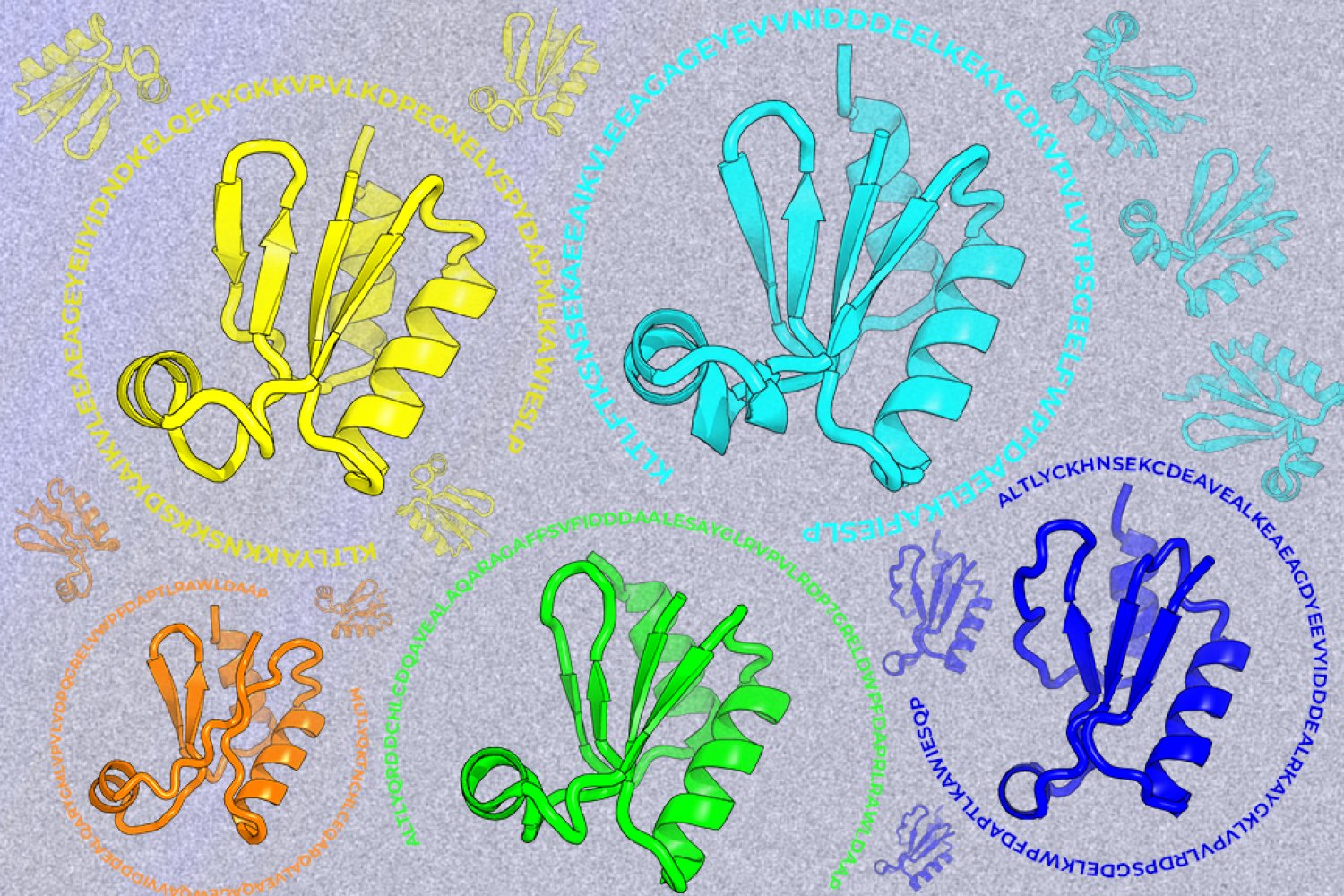
Looking beyond natural sequences

A new machine-learning framework aims to improve the success rate of computational protein design while moving away from results that reproduce sequences found in nature.

We use cookies to run the site and, with your consent, for analytics and to show ads. See our Cookie Policy.