Aug 2026· Zenodo (CERN European Organization for Nuclear Research)
Protein Structure and Dynamics
Abstract
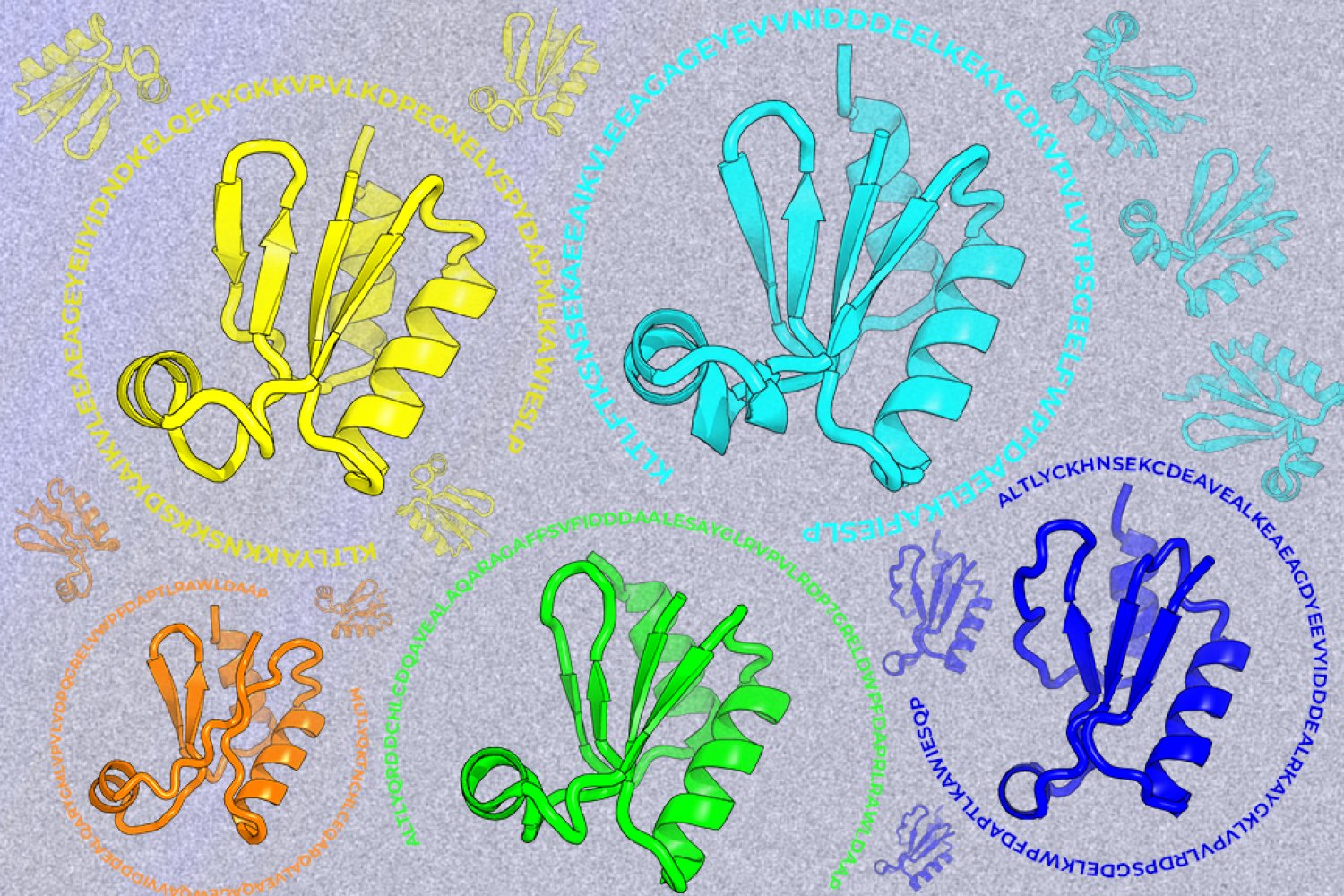
Protein structure prediction remains a grand challenge in computational biology. Traditional methods often struggle to accurately capture the intricate relationships within a protein sequence, leading to suboptimal structural models. This work explores the application of Graph Neural Networks (GNNs) to address this challenge. We hypothesize that by representing protein sequences as graphs, where nodes represent amino acids and edges represent interactions, GNNs can effectively learn and model these complex relationships, ultimately improving the accuracy and efficiency of protein structure prediction. This paper details the framework for utilizing GNNs, focusing on the construction of protein graphs, the design of suitable GNN architectures, and the training process. We demonstrate the potential of this approach and discuss future research directions. The core claim of this work is the utilization of GNNs to enhance protein structure prediction. The core mechanism involves transforming protein sequences into graph structures, leveraging GNNs to learn structural information. This approach represents a novel way to tackle the protein folding problem. ---
This study constructed a pH-responsive P-TN/SF@Fe-Cur composite coating that demonstrated significant anti-infective, anti-inflammatory, antioxidant, pro-angiogenic, and pro-osteogenic effects in rat subcutaneous infection and femoral defect models.
The results show that alternative transcript diversity extensively enters translation-supported proteoform space and establish a systematic link between transcript variation and protein functional diversification.
Felicia T. Jiang, Dengwang Chen, Ziwei Wang et al.· bioRxiv· 1 citation
HydroGym is introduced, a solver-independent reinforcement learning platform providing more than 60 validated, openly available flow control environments spanning from canonical laminar flows to complex turbulent flows, with systematic progression in the Reynolds number up to Re = 4 × 10⁵, and Mach number variations in two and three dimensions.
Christian Lagemann, Sajeda Mokbel, Miro Gondrum et al.· Nature· 1 citation
Related blog posts
MIT News · Artificial Intelligence· news.mit.eduAug 27, 2026
A new machine-learning framework aims to improve the success rate of computational protein design while moving away from results that reproduce sequences found in nature.
MIT News · Artificial Intelligence· news.mit.eduJul 15, 2026
Assistant Professor Pat Pataranutaporn describes a new interface that lets everyday users glimpse inside an AI's neural network before their chatbot ever says a word.
MIT News · Artificial Intelligence· news.mit.eduJul 6, 2026
PhD student Rachel Sava, winner of the Envisioning the Future of Computing Prize, explores transformative improvements and dystopian risks of neural technology.