Sep 2026· International Journal of Biological Macromolecules· pp.
154526
· 0 citations· 42 references
Medicine
Abstract
The bioactivity of plant proteins is often limited by the compact and aggregated structures. In this study, the walnut protein-whey protein isolate (WP-WPIp) complex was constructed via pH cycling. This treatment appeared to induce conformational changes characterized by a disordering of secondary structures and a disruption of tertiary folds, which may have exposed hydrophobic residues and reduced steric hindrance. Structural remodeling enhanced digestibility, with the complex reaching a hydrolysis degree of 78.78% versus 73.12% for native WP, likely facilitating enzymatic accessibility. Bioactivity assessments revealed a structure-dependent trade-off. Antioxidant capacity (DPPH and ABTS) and xanthine oxidase inhibition (up to 35.09% gastric phase) were synergistically enhanced whereas sodium taurocholate binding and cholesterol esterase inhibition decreased, likely due to reduced surface hydrophobicity. Digestion products also showed moderate α-amylase and α-glucosidase inhibition. This study elucidates the complex interplay between conformation and multifunctionality providing insights for high-value plant protein utilization through precision structural design.

Rice bran protein (RBP) exhibits limited functional properties because of its compact structure, which reduces its interfacial adsorption capacity and consequently constrains its food applications. This study combined moderate enzymatic hydrolysis and non-covalent complexation with tannic acid (TA) to improve RBP funct...
Qiu-Feng Zhang, Ya-Nan Zhao, Shuo Han et al.· Food Chemistry· 0 citations
Endpoint-based studies failed to clarify time-resolved hydrolysis properties, bioactivities, peptide profiles, and structural characteristics. Current study aimed to explore the correlations of these characteristics during Alcalase hydrolysis of cricket protein (CP) for 30–300 min. Prolonged hydrolysis increased degree...
Guang-Bin Wu, Han-Zhu Tan, Xiao-Nan Sui et al.· Food Chemistry: X· 0 citations
Driven by the rising demand for healthy diets, vegetable oil-based oleogels as animal fat substitutes have attracted increasing research attention. In this study, a starch-protein composite oleogel was prepared by emulsion templating using protein-glutaminase (PG)-modified glutinous rice flour (GRF)/soy protein isolate...
Ran Zhang, Ting Wang, Lu Zhang et al.· Food and Bioprocess Technolo...· 0 citations
This study aimed to investigate the effects of pH (2-10) on the physicochemical properties, gelation behaviors, microstructural characteristics, and intermolecular interactions of the heat-induced whey protein isolate-oxidized konjac glucomannan (WPI-OKGM) composite gels. Results showed that pH significantly modulated...
Min Zhou, Zhi-Long Zeng, Ren-Xiang Xie et al.· Journal of Food Science· 0 citations
Related blog posts
MIT News · Artificial Intelligence· news.mit.eduNov 9, 2026
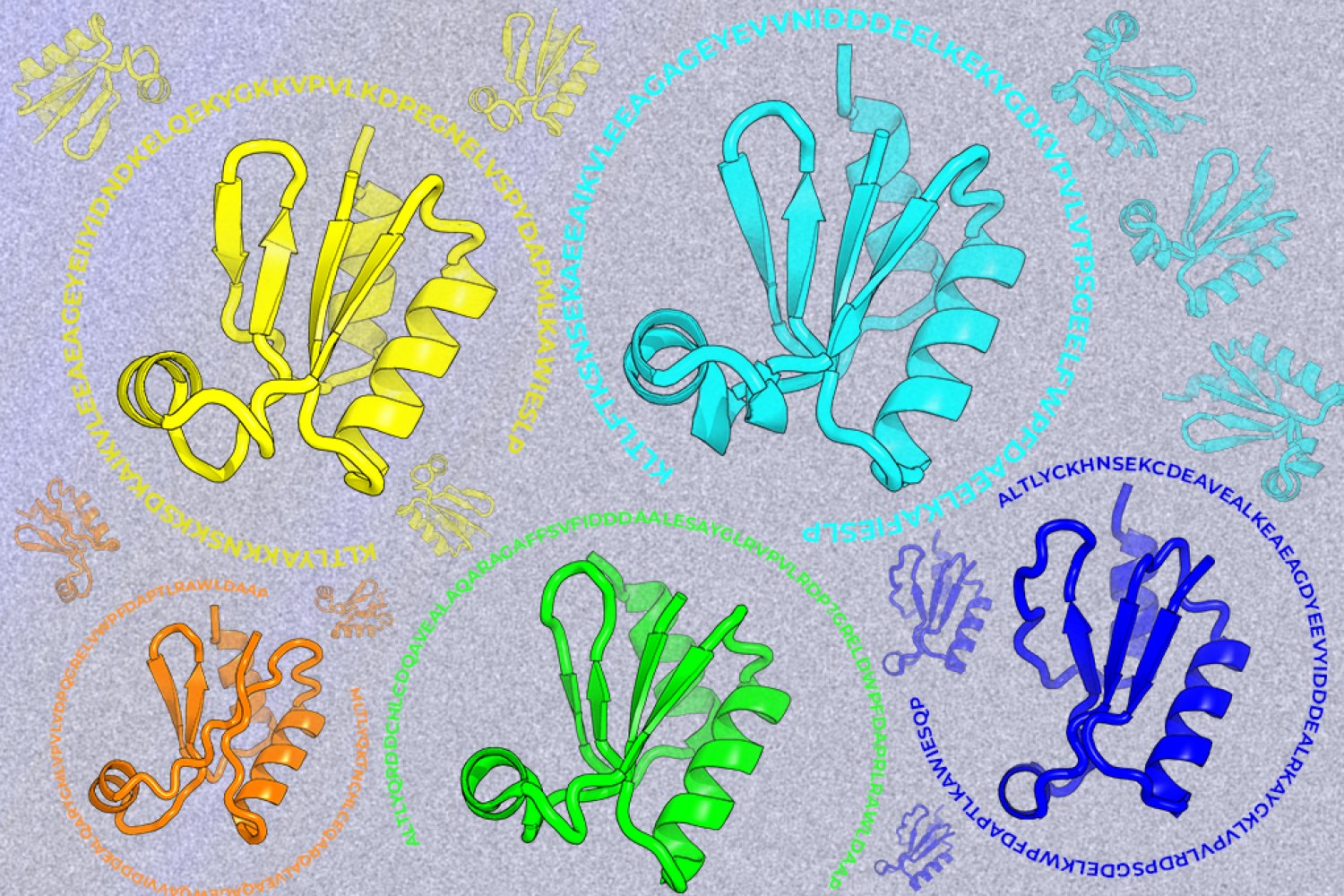
A new machine-learning framework aims to improve the success rate of computational protein design while moving away from results that reproduce sequences found in nature.