Skip to content

The Coordination Compression Trap: A Dynamic Model of AI-Enabled Productivity, Verification Debt, and Organisational Resilience in Global Knowledge Firms

Aug 2026 · Journal of global economics, management & business research · Vol 18, pp. 256-278 · 2 citations

Abstract

Aims: This study develops a dynamic explanation for the gap between task-level artificial intelligence productivity and durable enterprise value. It introduces verification debt, the accumulated stock of unverified assumptions, weak review, concealed dependencies, deferred validation, and capability loss. Study Design: Analytical model development with longitudinal Monte Carlo simulation, policy-space search, and structural-heterogeneity robustness analysis. Place and Duration of Study: Singapore; model development, simulation, and revision were conducted in July 2026. Methodology: The model links automation, governance, verification, task fit, uncertainty, expertise, resilience, and shocks. Five stylised regimes were simulated for 5,000 firms over 60 periods. A three-dimensional search evaluated 3,375 fixed policies before boundary refinement. The analysis also incorporated moderate firm-specific heterogeneity and paired comparisons using common random numbers. Results: Verified autonomy produced the highest mean cumulative value among the five named regimes at 454.93 units, compared with 419.97 for debt-responsive governance and 3.77 for acceleration-first adoption. Acceleration-first peaked in period 23, generated fragility in 82.94% of base trajectories, and ended with negative values in 41.40%. The full search did not confirm verified autonomy as optimal over the expanded grid. The highest evaluated fixed policy was , with a mean value of 608.92 and no fragile trajectories under the base model. Under synthetic cross-firm heterogeneity, the five-regime ranking persisted and paired comparisons remained strongly favourable to verified autonomy over the other named regimes. Conclusion: The coordination compression trap is conditional on inadequate assurance, not automation alone. Extensive automation can remain valuable when verification is strong, while weakly verified acceleration creates debt, deskilling, and shock sensitivity. Numerical optima remain model-dependent and require empirical calibration.

Read PDF

Similar papers

Sep 2026

The Competition-Stability Nexus Under Macroeconomic Uncertainty: Differentiated Moderating Roles of Institutions and Innovation in Asean

Abstract This study examines how bank market power, macroeconomic uncertainty, the technology-enabled financial environment, and institutional quality are associated with bank stability in ASEAN. Using an unbalanced panel of 60 commercial banks across five ASEAN economies from 2010 to 2023, the study adopts a layered e...

T. Pham, T. Pham · 0 citations
Open access Sep 2026

Strategic Responses to Uncertainty

This study tests dynamic capabilities and resource dependence theory using panel data from 101 U.S. private nonprofit universities (505 institution-year observations, 2019–2023), using linear mixed-effects models to examine strategic diversification and financial sustainability. Fully online instruction was positively...

Uday Kumar Ghosh, Thang Cao Nguyen · 0 citations
Open access Sep 2026

Organizational Responsiveness in a Three-Dimensional Discrete Model of AI, ESG Disclosure, and Green Supply Chain Collaboration

Artificial intelligence (AI) investment, environmental, social, and governance (ESG) disclosure, and green supply chain collaboration increasingly operate as an interconnected corporate sustainability system, yet their relationships are commonly examined through static or approximately linear models. This study develop...

Fang Sun · 0 citations
Review Open access Sep 2026

Beyond the AI Bubble Analogy: Valuation, Productivity, and Infrastructure in the Generative AI Investment Boom

The article proposes an author-developed monitoring framework based on revenue quality, contribution margin, inference economics, economic obsolescence, utilization, enterprise retention, grid execution, and complementary organizational investment that supports a dual diagnosis of generative artificial intelligence.

Sérgio Matos da Silva · 0 citations
Conference Open access 2026

A DSGE Simulation of Investment Behaviour of U.S. Public Companies under Federal Reserve Rate Hike Shocks: A Refined Draft

: This paper refines and completes the original draft by clarifying the internal structure of the model, filling in several previously missing equilibrium conditions, and laying out a more transparent and reproducible simulation plan. The study constructs a three-sector DSGE framework consisting of representative house...

Zheng-Han Yang · 0 citations

Related blog posts

Microsoft Research Blog Sep 29, 2026

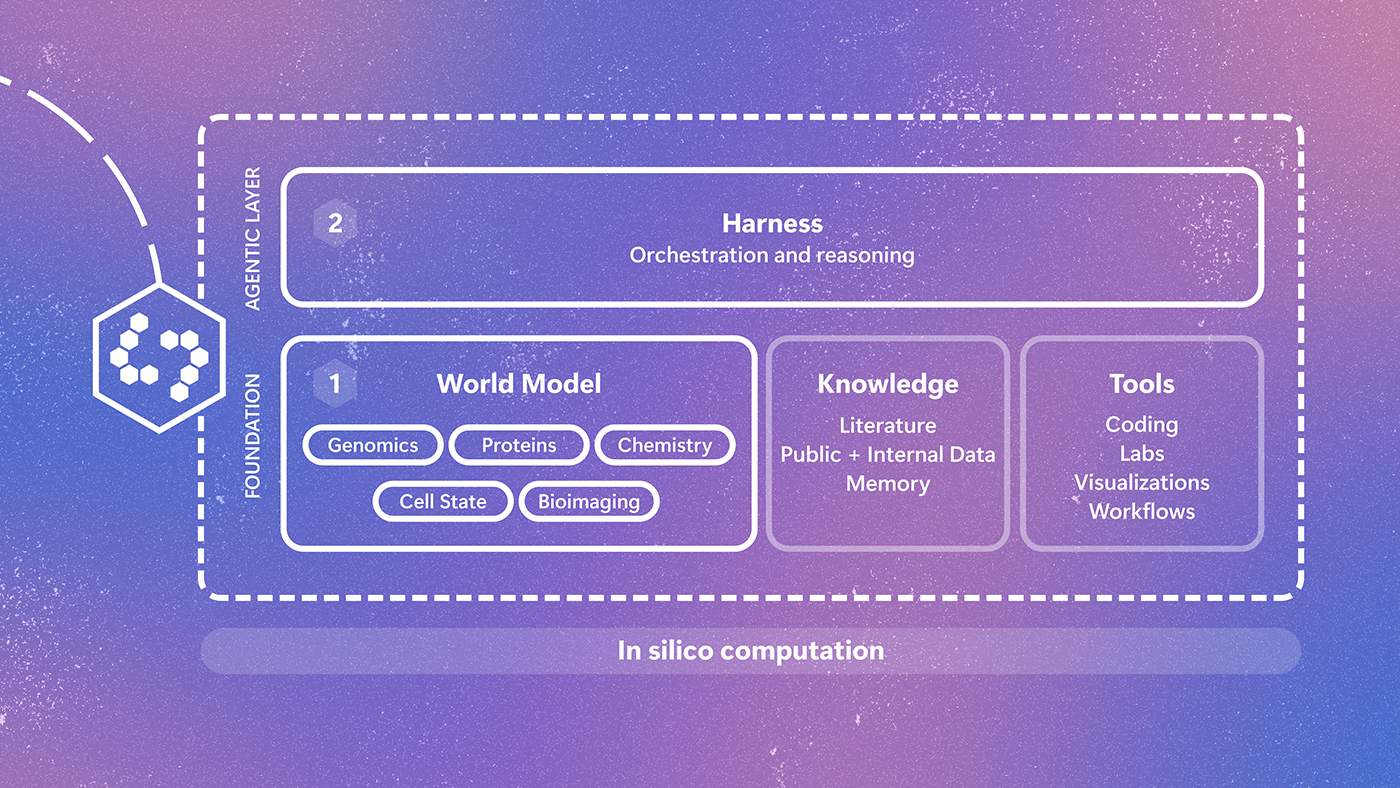
Introducing Quine: An AI research system designed for the complexity of biology

Biology doesn't operate in silos, and neither should the AI representation of it. Quine is an early-stage research effort to create a multimodal world model of biology. By connecting insights across biological scales and modalities, Quine helps scientists computationally search a space far larger than intuition allows and prioritize hypotheses before they reach the lab. Experimental results provide important feedback, helping researchers sharpen future research directions. The post Introducing Q…

MIT News · Artificial Intelligence Sep 14, 2026

New method enables AI for safety-critical situations

The “HardFlow” algorithm could help generative AI models produce high-quality outputs that obey strict requirements when “pretty close” doesn’t cut it.

We use cookies to run the site and, with your consent, for analytics and to show ads. See our Cookie Policy.