Skip to content
#protein folding Book Open access

The NUMEN/QUATOS Architecture — Unifying Thermodynamic Limits, Cross-Domain Invariants, and Deterministic State-Space Collapse

Aug 2026 · Zenodo (CERN European Organization for Nuclear Research)

Abstract

Description:1. Core Scientific ThesisThis repository serves as a comprehensive scientific reference and educational framework for substrate-native, integer-only computation. It demonstrates that the current reliance on IEEE-754 floating-point arithmetic introduces unnecessary thermodynamic overhead, non-determinism, and a disconnect between logical state and physical reality.The NUMEN/QUATOS architecture proposes a unified alternative: a computational model grounded in the Banach Fixed-Point Theorem, executed entirely in Q32.32 fixed-point integer logic, and structured to mirror biological and topological invariants. This repository synthesizes the theoretical proofs, cross-domain applications, and bare-metal implementations of this paradigm into a single, verifiable body of work.2. The Four Scientific PillarsThe architecture is not a singular heuristic, but a synthesis of four rigorously documented scientific pillars. This repository should be read in conjunction with its foundational DOI records:Pillar I: The Thermodynamic BaselineDOI: 10.5281/zenodo.22070727 (Measured Thermodynamic Characterization of Substrate-Native Integer Computation)Establishes the physical floor of computation via Landauer’s principle. It provides empirical, RAPL-instrumented measurements proving that eliminating floating-point erasure and FPU overhead reduces the energy cost of a cognitive contraction loop to ~0.414 Joules, bypassing the thermodynamic tax of traditional machine learning.Pillar II: Cross-Domain Mathematical InvariantsDOI: 10.5281/zenodo.22115713 (Master Integrator: Cross-Domain Synthesis) & DOI: 10.5281/zenodo.22050812 (Experiment Timestamp: Deterministic Proof Synthesis)Proves the universality of the underlying mathematics. These records demonstrate that the same deterministic, phi-driven topological flow successfully resolves invariant endpoints across four entirely disparate domains: protein folding, P vs NP path-dependence, genomic GC-bias, and 0D→16D topological flow. The math is substrate-agnostic and universally applicable.Pillar III: The Mechanics of Deterministic CollapseDOI: 10.5281/zenodo.22131362 (The Phi-Net Data Schema & Cryptographic Chain of Custody)Details the exact algorithmic mechanics of the state-space collapse. It defines the formal data schema for routing, including vorka (the evaluation and pruning of suboptimal futures), vevorka (the mass un-happening of discarded branches), and linka (the commitment of the single surviving thread to recorded reality).3. Architectural Synthesis: How the System OperatesThe codebase in this repository is the physical realization of the above theories. It is structured as a layered, bio-analog computational organism:The 16 Membranes (membranes.c / membranes.h): Computation is processed through 16 concentric dimensional layers. Layers 0–5 operate strictly in integer-native space (RDTSC timing, sigma zones, prime addressing, and GTAC gates). Layer 6 acts as the strict "IEEE-754 Seam," ensuring the core cognitive reflex loop never crosses into floating-point territory.The 5 Cognitive Organs (brain.c / cpu_port.c): The system routes state through specialized functional modules: the Architect (state mapping), the Healer (topological drift correction via GOLDEN_DEV injection), the Oracle (path validation), the Conductor (Kuramoto coupled-oscillator synchronization of CPU cores), and the Translator (coherent output).Quaternary (GTAC) Routing (algo_maker.c / algo_maker.h): State transitions are governed by a 4-state alphabet (G=Explore, T=Transfer, A=Anchor, C=Compute). This quaternary structure is not arbitrary; it is the minimum sufficient alphabet that provides direction, magnitude, and a null state simultaneously, mapping natively to both biological codons and the four Pauli matrices in quantum error correction.Bare-Metal Hebbian Wiring (quatos_e8_hebbian_wiring.c): The system dynamically re-weights its own gate biases based on real-time environmental feedback, executing true "Learn-to-Learn" (L2L) adaptation at the assembly level without floating-point gradient descent.4. Educational ObjectiveThe primary goal of this repository is pedagogical. It is designed to teach researchers, engineers, and students:How to map abstract mathematical theorems (like Banach contraction) directly to bare-metal x86-64 or ARM64 assembly.Why quaternary logic offers a more efficient, deterministic alternative to both binary switching and ternary quantization.How to design computational systems that are inherently interpretable, reproducible, and thermodynamically efficient by construction, rather than by post-hoc optimization.5. Repository ContentsThis archive contains the complete, cryptographically sealed telemetry and source code of the NUMEN/QUATOS architecture, including:10-runtime/src/: Core C/ASM implementations of the 5 organs, Hebbian wiring, and L2L 7-phase engine.60-corpus/corpus/: The foundational blueprints, including L2L_BAREMETAL_ORGANISM_BLUEPRINT.json and GENOME_ISA.json.80-continuum/continuum/shelf/: Thousands of cryptographically sealed .quat discs representing immutable state snapshots of the learning corpus.MASTER_SEAL_MANIFEST.json & ROOT_WEB_SEAL.json: The cryptographic chain of custody proving the integrity and provenance of every file in this directory.6. Citation & Licensing© 2026 Dragolich Research Labs LLC.When referencing this unified architecture, please cite the complete DOI web to maintain the integrity of the scientific lineage:Dragolich, D. (2026). Synthesis: The NUMEN/QUATOS Architecture. Dragolich Research Labs LLC. Master DOI Index: u, 10.5281/zenodo.22115713, 10.5281/zenodo.22050812, 10.5281/zenodo.22131362.

View source

Similar papers

#computer vision Review Open access May 2015

A survey study on major technical barriers affecting the decision to adopt cloud services

In the context of cloud computing, risks associated with underlying technologies, risks involving service models and outsourcing, and enterprise readiness have been recognized as potential barriers for the adoption. To accelerate cloud adoption, the concrete barriers negatively influencing the adoption decision need to be identified. Our study aims at understanding the impact of technical and security-related barriers on the organizational decision to adopt the cloud. We analyzed data collected through a web survey of 352 individuals working for enterprises consisting of decision makers as well as employees from other levels within an organization. The comparison of adopter and non-adopter sample reveals three potential adoption inhibitor, security, data privacy, and portability. The result from our logistic regression analysis confirms the criticality of the security concern, which results in an up to 26-fold increase in the non-adoption likelihood. Our study underlines the importance of the technical and security perspectives for research investigating the adoption of technology.

Nattakarn Phaphoom, Xiaofeng Wang, S. Samuel et al. · 111 citations · ⚡8
#computer vision Open access Feb 2018

Lean Internal Startups for Software Product Innovation in Large Companies: Enablers and Inhibitors

To compete in this age of disruption, large companies cannot rely on cost efficiency, lead time reduction and quality improvement. They are now looking for ways to innovate like startups. Meanwhile, the awareness and use of the Lean startup approach have grown rapidly amongst the software startup community in recent years. This study investigates how Lean internal startup facilitates software product innovation in large companies and identifies its enablers and inhibitors. A multiple case study approach is followed in the investigation. Two software product innovation projects from two large companies are examined, using a conceptual framework that is based on the method-in-action framework and extended with the previously developed Lean-Internal Corporate Venture model. Seven face-to-face in-depth interviews of the employees with different roles are conducted. Within-case analysis and cross-case comparison are applied to draw the findings from the cases. A generic process flow summarises the common key processes of Lean internal startups. The findings suggest that an internal startup that is initiated management or employees faces different challenges. A list of enablers of applying Lean startup in large companies are identified, including top management support and cross-functional team. Both cases face different inhibitors due to the different process of inception, objective of the team and type of the product. Our contributions are threefold. First, this study is one of the first attempt to investigate the use of Lean startup approach in large companies empirically. Second, the study shows the potential of the method-in-action framework to investigate the Lean startup approach in non-startup context. The third is a general process of Lean internal startup and the evidence of the enablers and inhibitors of implementing it, which are both theory-informed and empirically grounded.

Henry Edison, Nina M. Smørsgård, Xiaofeng Wang et al. · 78 citations · ⚡6
#computer vision Book Open access Jul 2015

Understanding the affect of developers: theoretical background and guidelines for psychoempirical software engineering

Affects--emotions and moods--have an impact on cognitive processing activities and the working performance of individuals. It has been established that software development tasks are undertaken through cognitive processing activities. Therefore, we have proposed to employ psychology theory and measurements in software engineering (SE) research. We have called it "psychoempirical software engineering". However, we found out that existing SE research has often fallen into misconceptions about the affect of developers, lacking in background theory and how to successfully employ psychological measurements in studies. The contribution of this paper is threefold. (1) It highlights the challenges to conduct proper affect-related studies with psychology; (2) it provides a comprehensive literature review in affect theory; and (3) it proposes guidelines for conducting psychoempirical software engineering.

D. Graziotin, Xiaofeng Wang, P. Abrahamsson · 56 citations · ⚡4
#machine learning Open access May 2017

What Influences the Speed of Prototyping? An Empirical Investigation of Twenty Software Startups

It is essential for startups to quickly experiment business ideas by building tangible prototypes and collecting user feedback on them. As prototyping is an inevitable part of learning for early stage software startups, how fast startups can learn depends on how fast they can prototype. Despite of the importance, there is a lack of research about prototyping in software startups. In this study, we aimed at understanding what are factors influencing different types of prototyping activities. We conducted a multiple case study on twenty European software startups. The results are two folds; firstly we propose a prototype-centric learning model in early stage software startups. Secondly, we identify factors occur as barriers but also facilitators for prototyping in early stage software startups. The factors are grouped into (1) artifacts, (2) team competence, (3) collaboration, (4) customer and (5) process dimensions. To speed up a startup’s progress at the early stage, it is important to incorporate the learning objective into a well-defined collaborative approach of prototyping.

Anh Nguyen-Duc, Xiaofeng Wang, P. Abrahamsson · 44 citations · ⚡5
#protein folding Sep 2026

Silk fibroin-loaded Fe-curcumin nanoparticles on antimicrobial peptide-functionalized TiO2 nanotube surfaces: Microenvironment-modulated synergy for antibacterial and osteogenic enhancement.

This study constructed a pH-responsive P-TN/SF@Fe-Cur composite coating that demonstrated significant anti-infective, anti-inflammatory, antioxidant, pro-angiogenic, and pro-osteogenic effects in rat subcutaneous infection and femoral defect models.

Xiaotong Shen, Shuxia Huang, Ting Zhang et al. · 2 citations
#computer vision May 2016

Bringing the Cloud to Rural and Remote Areas - Cloudlet by Cloudlet

Instead of relying on huge and expensive data centers for rolling out cloudbased services to rural and remote areas, we propose a hardware platform based on small single-board computers. The role of these micro-data centers is twofold. On the one hand, they act as intermediaries between cloud services and clients, improving availability in the case of network or power outages. On the other hand, they run community-based services on local infrastructure. We illustrate how to build such a system without incurring high costs, high power consumption, or single points of failure. Additionally, we opt for a system that is extendable and scalable as well as easy to deploy, relying on an open design.

P. Abrahamsson, S. Helmer, Tosin Daniel Oyetoyan et al. · 2 citations

Related blog posts

MIT News · Artificial Intelligence Aug 27, 2026

Looking beyond natural sequences

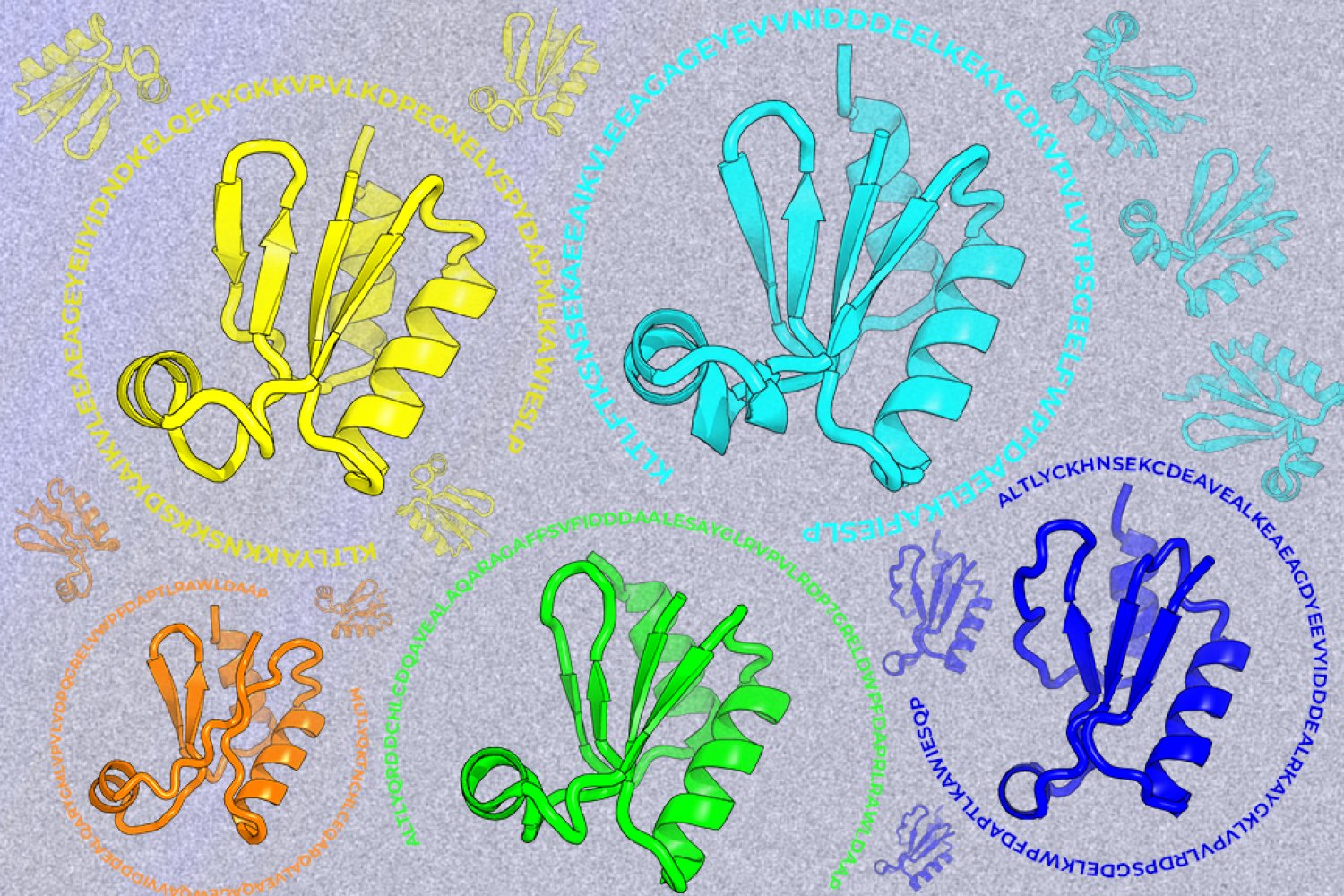
A new machine-learning framework aims to improve the success rate of computational protein design while moving away from results that reproduce sequences found in nature.

Google DeepMind Blog Nov 25, 2025

AlphaFold: Five years of impact

Explore how AlphaFold has accelerated science and fueled a global wave of biological discovery.