Skip to content

Prioritized Rollouts for Efficient World Model-based Vision-Language-Action Policy Optimization

Sep 2026 · 0 citations · 33 references
Computer Science

Abstract

Vision-Language-Action (VLA) models have emerged as a powerful paradigm for embodied intelligence, but fine-tuning them with reinforcement learning (RL) remains constrained by the cost of real-world robot interaction. Model-based reinforcement learning (MBRL) reduces this cost by using a learned world model to generate rollouts for policy optimization. However, it becomes computationally expensive as VLA policies and world models scale. Existing methods typically treat states equally, overlooking substantial differences in their utility for policy improvement. In this paper, we show that policy uncertainty helps identify states with greater potential for policy improvement. The policy exhibits high uncertainty at only a small subset of states, often during decision-sensitive stages where small action differences can alter task outcomes, suggesting that policy improvements at these states could be particularly valuable. Building on these findings, we introduce U-GROW, a lightweight, plug-and-play sampling layer that directs more model rollouts to these informative states. By modifying only the branched-start distribution, U-GROW can be integrated into existing MBRL pipelines without changing the policy optimization objective. Experiments in both simulated and real-world manipulation tasks demonstrate the efficiency and effectiveness of U-GROW, supporting the use of policy uncertainty to guide experience generation.

View source

Similar papers

#machine learning Review Open access Oct 2014

Software development in startup companies: A systematic mapping study

The results indicate that software engineering work practices are chosen opportunistically, adapted and configured to provide value under the constrains imposed by the startup context.

Nicolò Paternoster, Carmine Giardino, M. Unterkalmsteiner et al. · 394 citations · ⚡54

Diffusion models as plug-and-play priors

The possibility of inferring high-dimensional data inference in a model that consists of a prior and an auxiliary differentiable constraint given some additional information is considered, thereby allowing a range of potential applications in adapting models to new domains and tasks.

Alexandros Graikos, Esmeralda S. Whitammer, N. Jojic et al. · 316 citations · ⚡15

Trajectory Balance: Improved Credit Assignment in GFlowNets

It is proved that any global minimizer of the trajectory balance objective can define a policy that samples exactly from the target distribution, and empirically demonstrate the benefits of the trajectories balance objective for GFlowNet convergence, diversity of generated samples, and robustness to long action sequenc...

Esmeralda S. Whitammer, Moksh Jain, Emmanuel Bengio et al. · 302 citations · ⚡60
#computer vision Open access Jun 2016

Software Development in Startup Companies: The Greenfield Startup Model

The results are packaged in the Greenfield Startup Model (GSM), which explains the priority of startups to release the product as quickly as possible, and the need to shorten time-to-market, by speeding up the development through low-precision engineering activities.

Carmine Giardino, Nicolò Paternoster, M. Unterkalmsteiner et al. · 178 citations · ⚡14
#machine learning Review Open access Jun 2014

Why Early-Stage Software Startups Fail: A Behavioral Framework

This state-of-practice investigation was performed using a literature review followed by a multiple-case study approach and presents how inconsistency between managerial strategies and execution can lead to failure by means of a behavioral framework.

Carmine Giardino, Xiaofeng Wang, P. Abrahamsson · 175 citations · ⚡19
#computer vision Open access Oct 2016

Software Startups - A Research Agenda

Software startup companies develop innovative, software-intensive products within limited timeframes and with few resources, searching for sustainable and scalable business models.

M. Unterkalmsteiner, P. Abrahamsson, Xiaofeng Wang et al. · 157 citations · ⚡17

Related blog posts

GPT-Lab Sep 3, 2026

Adaptive AI Agents in Construction Workflows

Adaptive AI agents can help make BIM data more machine-readable by navigating IFC models, interpreting inconsistent information, and mapping it to defined standards. In this blog, Alok Rawat shares findings from a real-world pilot in construction workflows. The post Adaptive AI Agents in Construction Workflows appeared first on GPT-Lab.

GPT-Lab Aug 28, 2026

We built an AI factory for HVAC control

What does it take to trust AI-driven HVAC optimization? Our AI Model Factory combines agents, machine learning, reinforcement learning and deterministic checks in a governed workflow designed for messy, real-world building data. The post We built an AI factory for HVAC control appeared first on GPT-Lab.

Microsoft Research Blog Jul 30, 2026

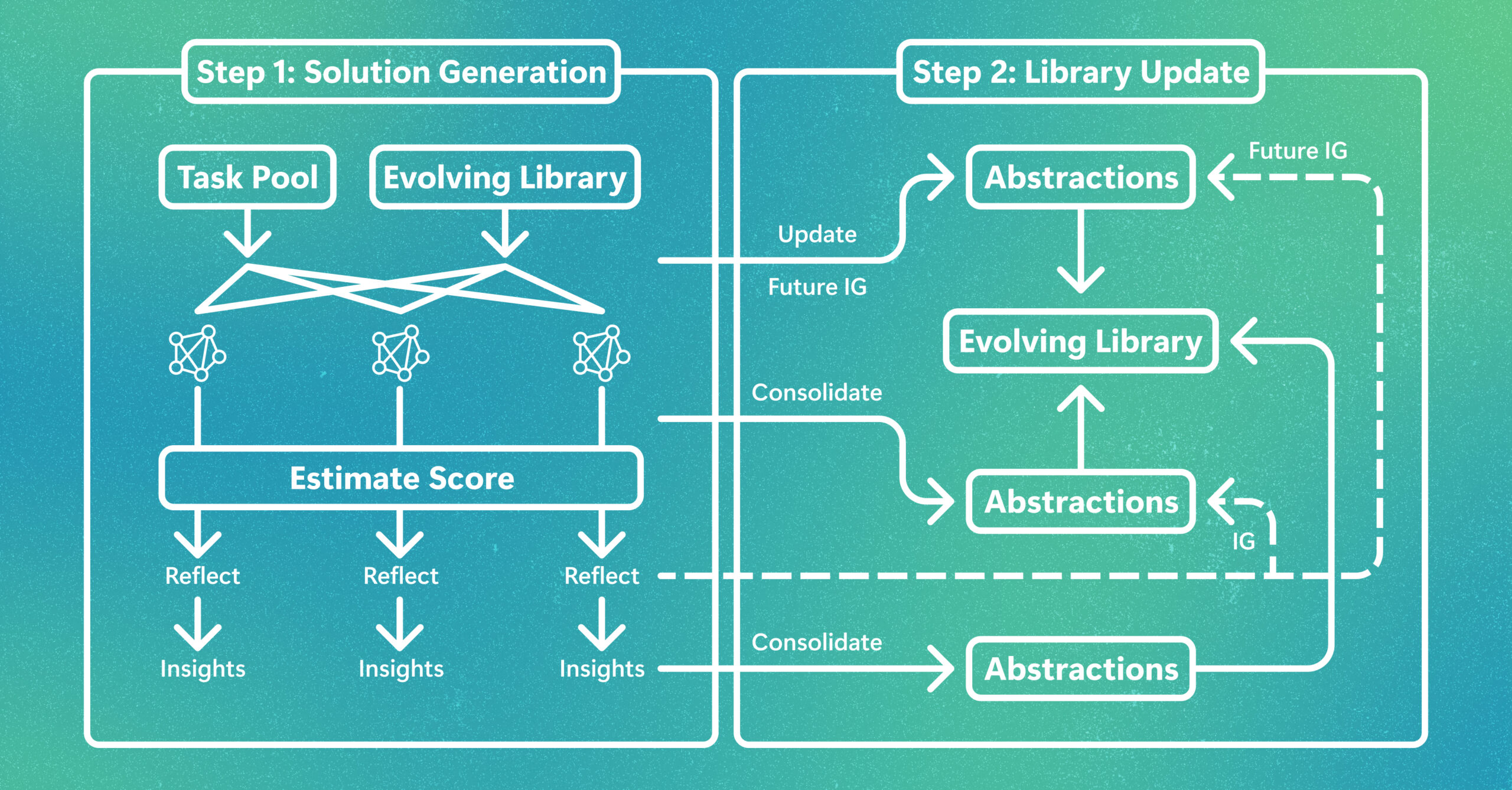
EvoLib: Turning experience into evolving knowledge

LLMs do not get smarter just by remembering more. EvoLib turns experience into evolving knowledge, taking reusable skills and insights that help models learn and adapt across tasks long after deployment. The post EvoLib: Turning experience into evolving knowledge appeared first on Microsoft Research.

We use cookies to run the site and, with your consent, for analytics and to show ads. See our Cookie Policy.