The efficacy of photothermal therapy (PTT) mediated immunotherapy against tumor recurrence and metastasis is limited by inherent cellular thermoresistance and weak immune activation. To address this, we developed an accelerated immunomodulatory matrix reservoir (AIMR) integrating methylgermanane nanosheets (mGeNS) within an active Ca2 +-crosslinked alginate hydrogel. As an emerging 2D material, mGeNS exhibits exceptional drug-loading capacity and robust near-infrared (NIR) photothermal conversion (efficiency > 60%). Importantly, the hydrogel matrix effectively shields these biodegradable nanosheets from premature in vivo clearance. Upon NIR irradiation, localized hyperthermia softens the hydrogel, triggering the co-release of Ca2+ and an mGeNS-delivered immunogenic cell death (ICD) inducer (doxorubicin, DOX). This heat stimulation promotes intracellular Ca2+ influx, causing mitochondrial dysfunction that downregulates thermoprotective heat shock proteins (e.g., HSP70), thereby sensitizing tumor cells and amplifying PTT‑mediated endoplasmic reticulum stress. Such a synergistic strategy boosts ICD accompanied by the release of numerous damage-associated molecular patterns for dendritic cell maturation and CD8+ T cell activation. In murine bilateral tumor models, AIMR achieved > 80% local tumor suppression and a 2.43-fold increase in abscopal immune memory over 60 days compared to surgery alone. By synergizing novel 2D mGeNS with active thermosensitive hydrogel, AIMR provides a dual-organelle stress platform for durable photoimmunotherapy.

The comparison of adopter and non-adopter sample reveals three potential adoption inhibitor, security, data privacy, and portability, which underlines the importance of the technical and security perspectives for research investigating the adoption of technology.
Nattakarn Phaphoom, Xiaofeng Wang, S. Samuel et al.· Journal of Systems and Softw...· 111 citations· ⚡8
This study investigates how Lean internal startup facilitates software product innovation in large companies and identifies its enablers and inhibitors, and shows the potential of the method-in-action framework to investigate the Lean startup approach in non-startup context.
Henry Edison, Nina M. Smørsgård, Xiaofeng Wang et al.· Journal of Systems and Softw...· 78 citations· ⚡6
This paper highlights the challenges to conduct proper affect-related studies with psychology, provides a comprehensive literature review in affect theory, and proposes guidelines for conducting psychoempirical software engineering.
D. Graziotin, Xiaofeng Wang, P. Abrahamsson· SSE@SIGSOFT FSE· 56 citations· ⚡4
This study conducts a multiple case study on twenty European software startups and proposes a prototype-centric learning model in early stage software startups, and identifies factors that occur as barriers but also facilitators for prototyping in earlystage software startups.
Anh Nguyen-Duc, Xiaofeng Wang, P. Abrahamsson· International Conference on...· 44 citations· ⚡5
It is demonstrated that linker-free PROTACs can outperform traditional designs, marking a paradigm shift in PROTAC development for targeted protein degradation.
Pinal, a 16-billion-parameter foundation model that produces protein candidates from natural-language functional descriptions, supports natural language as a high-level interface for candidate generation in protein design, enabling programmable exploration with reduced reliance on manually specified structural or seque...
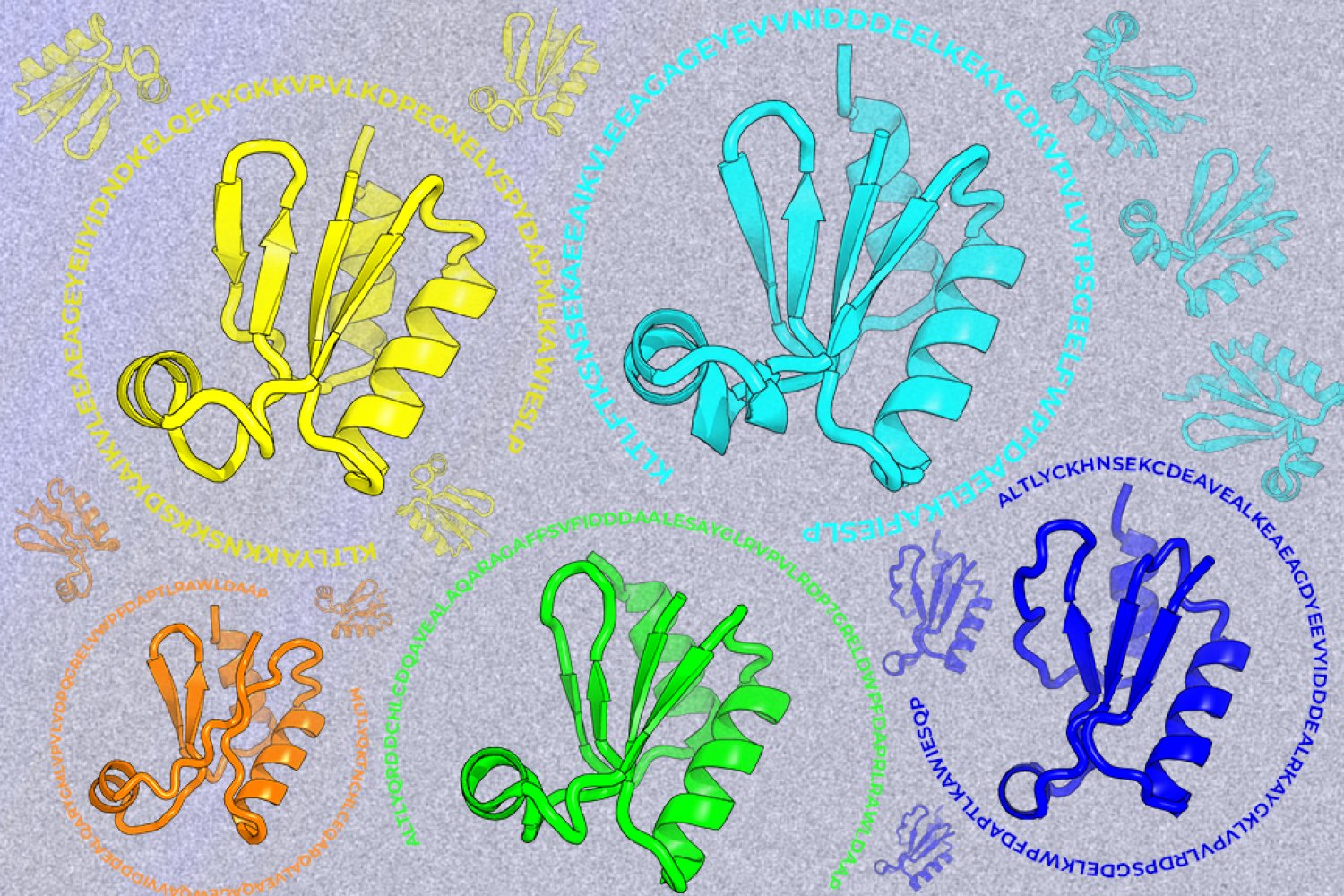
A new machine-learning framework aims to improve the success rate of computational protein design while moving away from results that reproduce sequences found in nature.