Skip to content

PREreview of "An Empirical Study of Harness Design for Coding Agents"

Sep 2026 · Zenodo (CERN European Organization for Nuclear Research)

Abstract

This Zenodo record is a permanently preserved version of a PREreview. You can view the complete PREreview at https://prereview.org/reviews/22879230. The authors take a coding harness apart and vary planning, the action space and context management over four models, two benchmarks and 176 matched settings. They report that context management is worth most when the window is tight (it prevents overflow terminations), that elision staged before summarization (T4) is the cheapest strategy at similar accuracy, and that planning is an accuracy scaffold for the weakest model but a cost saver for stronger ones. I read it as a practitioner who runs coding agents every day, not as a benchmark author. In our company the software development is done by AI agents and I measure what they bill me, so maybe my practical side is useful here. My comments are about money and verification. 1. The cost column is the most useful thing here, and I would like it split. Table 3 and Table 4 give mean cost per task, Table 5 the change in input tokens per call. In my measurement of 722 agent sessions (150,902 model calls, 34.6 billion tokens) more than 85% of the modeled spend was work with context - cache reads plus cache writes - not generation (DOI 10.5281/zenodo.22759216, technical report, not peer-reviewed). On a separate 168-session run, 94.4% of paid tokens were re-reads of context already sent (DOI 10.5281/zenodo.22712985), a share of tokens and not of the bill. Rewriting the prefix is charged too, so a policy that looks cheap in M3 calls (Figure 5(b)) can still push money into re-sent context. Logging cached input, fresh input and output apart would show whether T4 wins by calling the summarizer less or by carrying a shorter prefix each turn. 2. Your managed-T0 gap matches something I got from another direction. In 3.2 it falls from 35.7 to 2.7 percentage points on SWE-Bench between 32k and 128k, while T4 keeps the lowest mean cost at every budget. I ran an experiment on how often to clear an agent's context between tasks - 36 runs, six session-length policies, six repeats each, 4,086 tests. The curve was U-shaped, the minimum sat at three tasks per session, three to six were a plateau, and clearing after every task came out about a third more expensive (+33.5%, p = 0.002, 0.011 after Holm correction; DOI 10.5281/zenodo.22759217). Two caveats on my number - the comparison point was picked after the runs, and in the clear-every-task arm the agent wrote more tests, so part of the gap may be extra work. 3. About planning cutting post-edit verification - I would be careful with that outside the benchmark. Section 4 reports that planning drops the median SWE-Bench trajectory from 108 to 74 turns for Nemotron-3 550B and from 68 to 53 for Mistral-Medium-3.5-128B, with most of the cut in the Verify phase. On SWE-Bench a hidden test suite grades the run afterwards, so the verification the agent skips is done for it. In my work nobody grades the run, and my rule is that every task needs a check the agent can run itself, because otherwise "looks done" is the only signal it has. The model sounds the same when it is right and when it is wrong (a made-up fact, a missed case and a "fixed" bug arrive in one confident tone). So I read that as stopping behaviour under an external grader, and Table 6 counts runs that stopped without an edit, not runs that stopped without verifying an edit they did make. 4. The planning ablation changes the prompt as well as the component. Section 2.1 with Figures 15, 16 and 17 shows planning arrives as a system block, a first-turn reminder, and the plan re-inserted every later turn, so T4 w/o plan drops an instruction block together with the plan state. I keep agent instruction files short in my own work (around 200 lines, and the test for each line is whether the agent starts making mistakes if I delete it) because long files get followed worse. A length-matched control, with the planning block swapped for inert text of the same size, would show how much of the +293.2% turns for Nemotron-3 30B in Table 5 is the plan and how much is more instruction. Competing interests Yes: the text cites the author's own technical reports (DOI 10.5281/zenodo.22759216, 10.5281/zenodo.22759217, 10.5281/zenodo.22712985); no connection to the article's authors. Use of Artificial Intelligence (AI) The author declares that they did not use generative AI to come up with new ideas for their review.

View source

Similar papers

#computer vision Review Sep 2017

Agile Software Development Methods: Review and Analysis

This publication proposes a definition and a classification of agile software development approaches and analyses ten software development methods that can be characterized as being "agile" against the defined criterion.

P. Abrahamsson, O. Salo, Jussi Ronkainen et al. · 727 citations · ⚡54
#computer vision Jun 2008

The impact of agile practices on communication in software development

The study shows that agile practices improve both informal and formal communication, but indicates that, in larger development situations involving multiple external stakeholders, a mismatch of adequate communication mechanisms can sometimes even hinder the communication.

M. Pikkarainen, Jukka Haikara, O. Salo et al. · 401 citations · ⚡48
#machine learning Review Open access Oct 2014

Software development in startup companies: A systematic mapping study

The results indicate that software engineering work practices are chosen opportunistically, adapted and configured to provide value under the constrains imposed by the startup context.

Nicolò Paternoster, Carmine Giardino, M. Unterkalmsteiner et al. · 394 citations · ⚡54
#computer vision Review Mar 2008

Agile methods in European embedded software development organisations: a survey on the actual use and usefulness of Extreme Programming and Scrum

The results show that the embedded industry has been able to apply agile methods in its development processes and that the appreciation of the agile methods and their individual practices appears to increase once adopted and applied in practice.

O. Salo, P. Abrahamsson · 238 citations · ⚡9
#computer vision Open access Jul 2017

What happens when software developers are (un)happy

Consequences of happiness and unhappiness that are beneficial and detrimental for developers' mental well-being, the software development process, and the produced artifacts are found.

D. Graziotin, Fabian Fagerholm, Xiaofeng Wang et al. · 236 citations · ⚡13
#computer vision Open access Oct 2004

Mobile-D: an agile approach for mobile application development

The Mobile-D approach is briefly outlined here and the experiences gained from four case studies are discussed, which helped develop an agile development approach for mobile application development.

P. Abrahamsson, Antti Hanhineva, H. Hulkko et al. · 225 citations · ⚡18

Related blog posts

GPT-Lab Sep 23, 2026

Requirements Don’t Live in Isolation: What We’re Exploring with Req-Space

Requirements in large systems rarely exist in isolation. Their meaning depends on the wider project context - other requirements, policies, decisions, tests, and implementation details. That becomes especially important when AI is used for review, because spotting a possible conflict or gap is only the beginning. ReqSpace explores how AI, visualisation, and connected project context can help reviewers understand those findings, trace the relationships behind them, and focus on the questions that…

GPT-Lab Sep 17, 2026

Beyond Prompt Engineering: The Role of Tacit Knowledge in Software Engineering

AI is making software generation faster, but speed does not remove the need for expertise. As more work is delegated to AI, tacit knowledge may become one of the most important human advantages in software engineering. The post Beyond Prompt Engineering: The Role of Tacit Knowledge in Software Engineering appeared first on GPT-Lab.

Microsoft Research Blog Aug 12, 2026

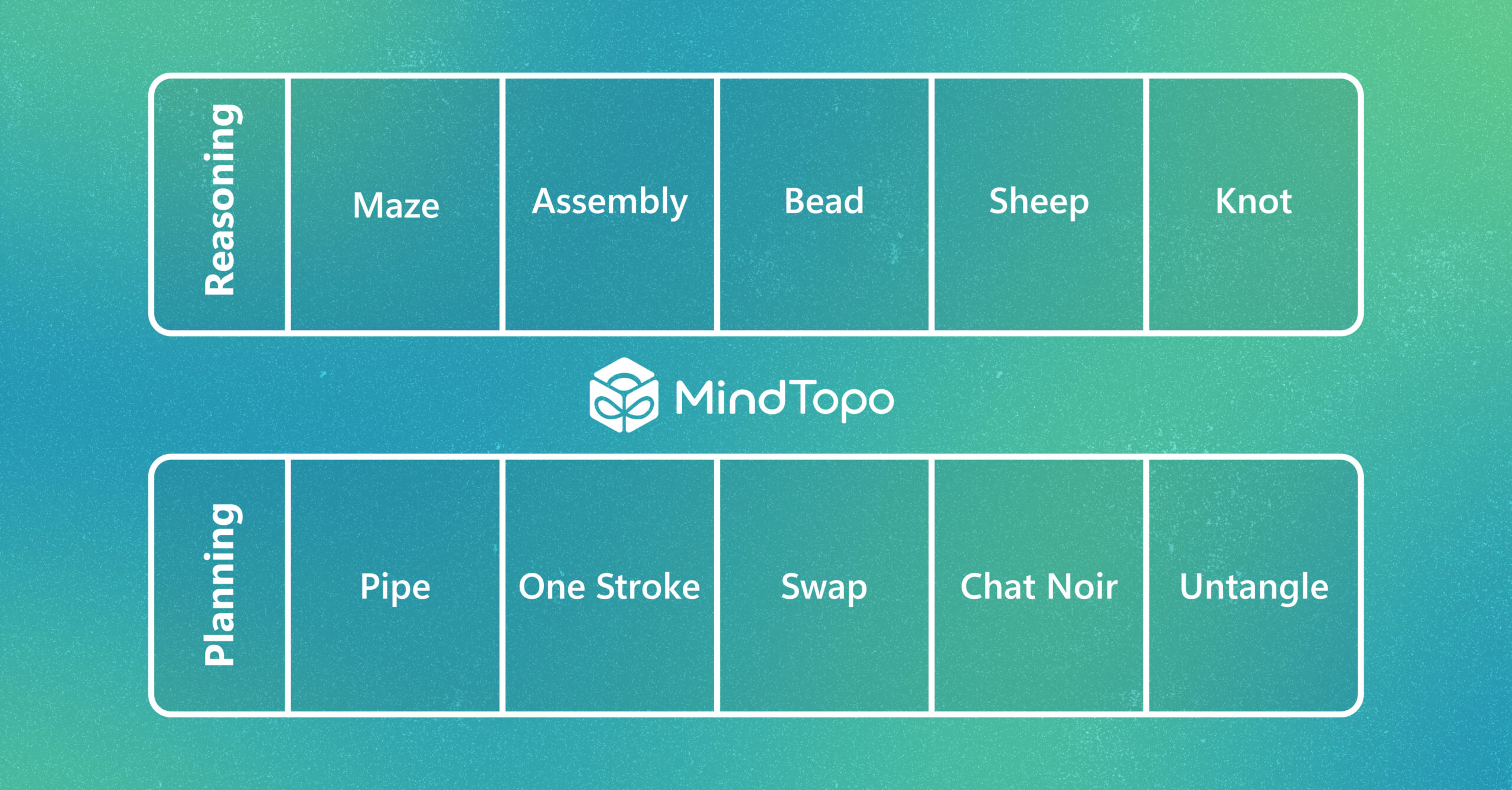
MindTopo reveals VLMs’ spatial reasoning abilities

A path, a fence, a knot. MindTopo sets a new benchmark for testing how AI understands topological relationships and highlights new opportunities to strengthen spatial reasoning and planning. The post MindTopo reveals VLMs’ spatial reasoning abilities appeared first on Microsoft Research.

Microsoft Research Blog Jul 30, 2026

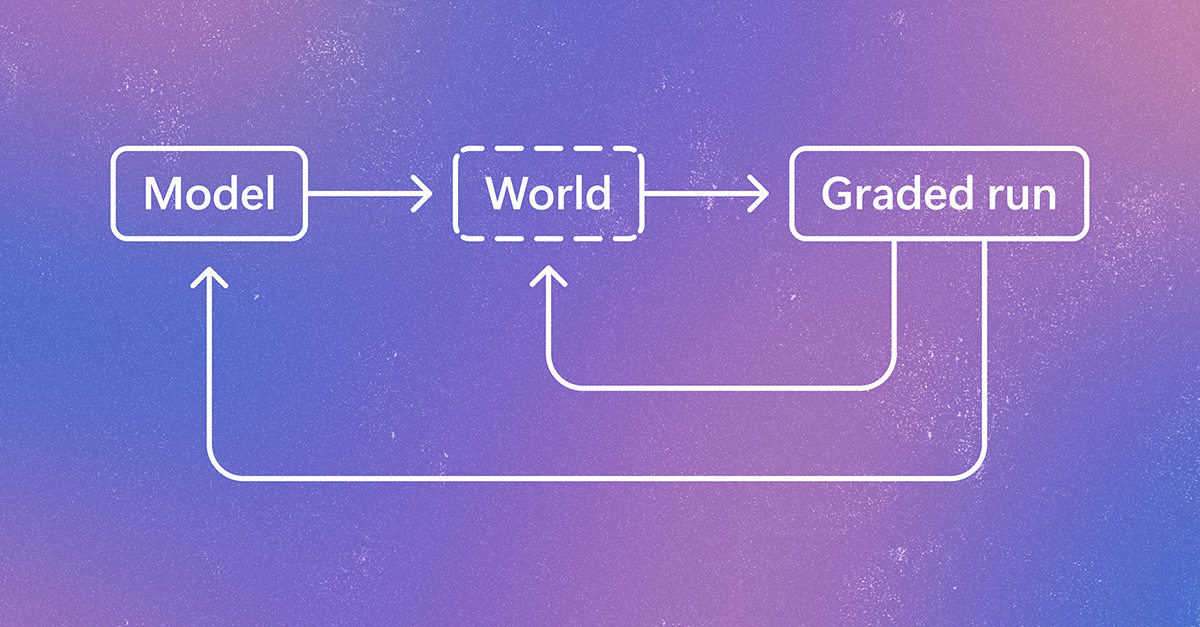
Echoverse: Deep, evolving environments for computer-use agents

Computer-use AI agents struggle with multi-step workflows like email and customer support. Echoverse trains agents in realistic environments rather than simply providing more training tasks, helping them improve as the tasks, tests, and environments evolve. The post Echoverse: Deep, evolving environments for computer-use agents appeared first on Microsoft Research.

We use cookies to run the site and, with your consent, for analytics and to show ads. See our Cookie Policy.