Autonomous parking in nonconvex and narrow environments remains challenging. Although optimal-control methods can explicitly enforce vehicle dynamics and collision constraints, nonconvexity compromises solver robustness and can cause failures. Large language models (LLMs) exhibit strong semantic reasoning capabilities, but directly generating dense trajectories makes it difficult to guarantee physical feasibility. We introduce SE-LLM-OCP, a unified framework in which LLMs make high-level discrete maneuver decisions, while an optimal-control module enforces low-level vehicle dynamics and collision constraints. Online, the LLM proposes sparse maneuver plans, decomposing the parking task into a sequence of short-horizon trajectory-optimization problems. A low-level solver then sequentially solves optimal-control problems. If the solver fails, the LLM aggregates failure evidence from the solver and validation stages to guide replanning. Offline, SE-LLM-OCP automatically evolves a structured decision-making knowledge base from scratch, driven by accumulated online failures. We validate our proposed framework in simulation on a car-like vehicle model and on a differential-drive robot. Our experimental results show that SE-LLM-OCP enables safer autonomous parking in narrow scenarios and demonstrates transfer of the same maneuver representation to a different kinematic platform.

GAOKAO-Bench is introduced, an intuitive benchmark that employs questions from the Chinese GAOKAO examination as test samples, including both subjective and objective questions that contribute a robust evaluation benchmark for future large language models and offers valuable insights into the advantages and limitations...
Xiaotian Zhang, Chun-yan Li, Yi Zong et al.· arXiv.org· 216 citations· ⚡17
This work investigates the possibilities of using LLMs in a resume screening setting via a document retrieval framework that simulates job candidate selection and finds that the MTEs are biased, significantly favoring White-associated names in 85% of cases and female-associated names in only 11.1% of cases.
This work shows that orders of magnitude enhancement in performance could be obtained by a combination of hardware improvements and tight quantum-HPC integration and introduces high-performance architectures for quantum-probabilistic computing with custom-designed accelerators to tackle today's industry-scale classical...
Masoud Mohseni, Artur Scherer, K. Johnson et al.· arXiv.org· 121 citations· ⚡9
This paper presents a comprehensive overview of the Ultralytics YOLO family, emphasizing architectural evolution, benchmarking, deployment, and emerging directions from YOLOv5 through YOLO27, and examines detection, segmentation, depth, classification, pose, oriented detection, tracking, export, quantization, and deplo...
This work revisits schema linking when using the latest generation of large language models (LLMs) and finds empirically that newer models are adept at utilizing relevant schema elements during generation even in the presence of large numbers of irrelevant ones.
Karime Maamari, Fadhil Abubaker, Daniel Jaroslawicz et al.· arXiv.org· 109 citations· ⚡19
A novel threat is unveiled in which attackers steer the RAG system's response by injecting malicious passages into its knowledge base, enabling the attacker to steer the response without altering the user input or modifying the RAG weights.
Jiaqi Xue, Meng Zheng, Yebowen Hu et al.· arXiv.org· 109 citations· ⚡8
Related blog posts
MIT News · Artificial Intelligence· news.mit.eduJul 30, 2026
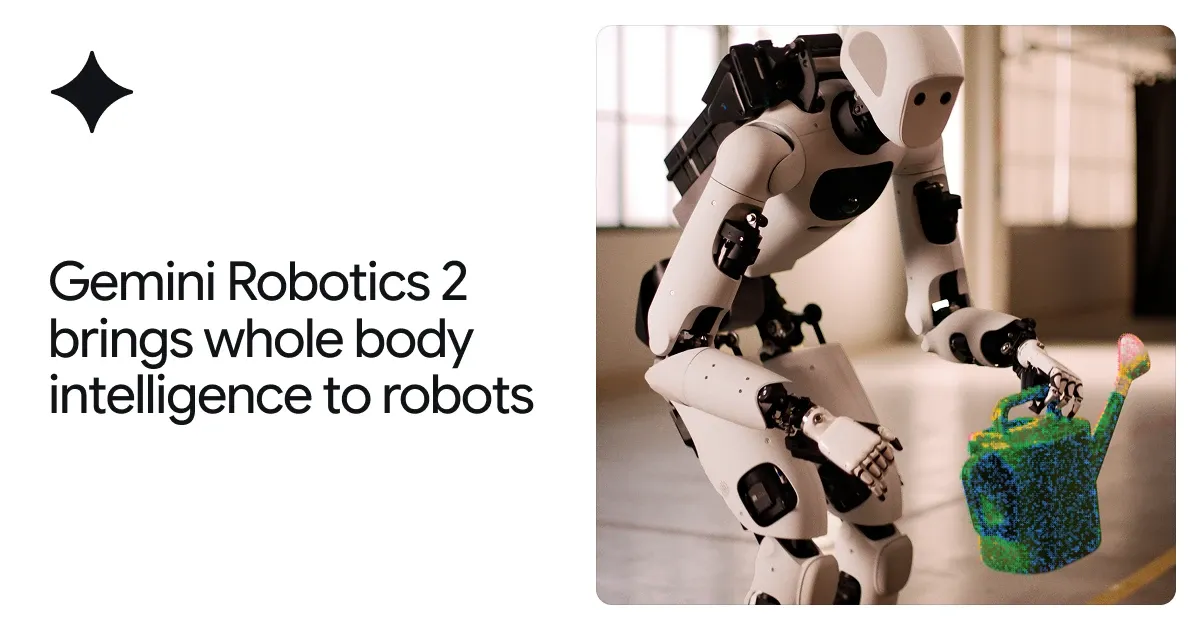
From feet to fingertips — we are teaching robots intelligent whole-body control, fine dexterity, and teamwork to complete a broad range of complex tasks.
With $2.1 million funding from Google.org, the open-source Public Transit Intelligence Hub will unify public transit monitoring, operations, and passenger communication.
We use cookies to run the site and, with your consent, for analytics and to show ads.
See our Cookie Policy.