May 2026· International Journal of Data Science and Analysis· Vol 22· 0 citations· 44 references
Computer Science
Abstract
Accurate early warning of vineyard disease risk can support timely intervention and more targeted crop-protection decisions. However, conventional daily-status classification does not directly measure whether a model can anticipate the beginning of a new risk episode. This study investigates an event-based formulation for short-horizon warning of vineyard mildew risk from agro-meteorological time series. The available downy- and powdery-mildew annotations are derived from fungicide-treatment records and are therefore interpreted as management-oriented risk proxies rather than direct pathological observations. Because the two labels agree on 98.9% of observed days and are identical in the validation and test years, they are combined into an operational any-mildew target without implying epidemiological equivalence. New events are defined after a minimum disease-free gap, and models estimate whether an event will begin within the following 3–7 days. Using a chronological 2020–2021/2022/2023 train–validation–test split, we compare calendar-only, environmental-only, and combined representations with logistic regression, XGBoost, long short-term memory (LSTM) networks, and temporal convolutional networks (TCNs). Calendar-only models were highly competitive, with calendar-based LSTM and TCN models detecting 7 of 8 test events, while a monthly climatological baseline detected 6 events. Environmental-only models were substantially weaker, and adding environmental variables to calendar information produced inconsistent gains across model families. A comparison with conventional daily-status classification showed that the two formulations capture different objectives and exhibit different trade-offs in point-wise performance, event coverage, and alert burden, without uniform superiority of either formulation. Sensitivity analyses further showed that results depend on the historical window, prediction horizon, and event-separation gap. SHapley Additive exPlanations (SHAP) analysis indicated that the fitted model used both seasonal and meteorological information, without revealing a single dominant or consistently interpretable environmental precursor. These findings demonstrate the value of event-oriented evaluation for assessing anticipatory warning and emphasize the need for explicit seasonal baselines and cautious biological interpretation of management-derived proxy targets.

It is found that Llama 3 delivers comparable quality to leading language models such as GPT-4 on a plethora of tasks, and performs competitively with the state-of-the-art on image, video, and speech recognition tasks.
This paper investigates developing real-world perception for active agents, proposes Gibson Environment for this purpose, and showcases a set of perceptual tasks learned therein.
F. Xia, Amir Zamir, Zhi-Yang He et al.· 2018 IEEE/CVF Conference on...· 1,069 citations· ⚡112
The results indicate that software engineering work practices are chosen opportunistically, adapted and configured to provide value under the constrains imposed by the startup context.
Nicolò Paternoster, Carmine Giardino, M. Unterkalmsteiner et al.· Information and Software Tec...· 394 citations· ⚡54
The possibility of inferring high-dimensional data inference in a model that consists of a prior and an auxiliary differentiable constraint given some additional information is considered, thereby allowing a range of potential applications in adapting models to new domains and tasks.
Alexandros Graikos, Esmeralda S. Whitammer, N. Jojic et al.· Neural Information Processin...· 316 citations· ⚡15
It is proved that any global minimizer of the trajectory balance objective can define a policy that samples exactly from the target distribution, and empirically demonstrate the benefits of the trajectories balance objective for GFlowNet convergence, diversity of generated samples, and robustness to long action sequenc...
Esmeralda S. Whitammer, Moksh Jain, Emmanuel Bengio et al.· Neural Information Processin...· 302 citations· ⚡60
An algorithm is proposed which leverages disentangled semantic factors to generate adversarial perturbation by altering controlled semantic attributes to fool the learner towards various "adversarial" targets.
Haonan Qiu, Chaowei Xiao, Lei Yang et al.· arXiv.org· 208 citations· ⚡17
Related blog posts
MIT News · Artificial Intelligence· news.mit.eduNov 17, 2026
By studying the computational foundations of language learning, Associate Professor Jacob Andreas builds intelligent systems that can communicate effectively with humans.
Microsoft Research Blog· microsoft.comNov 16, 2026
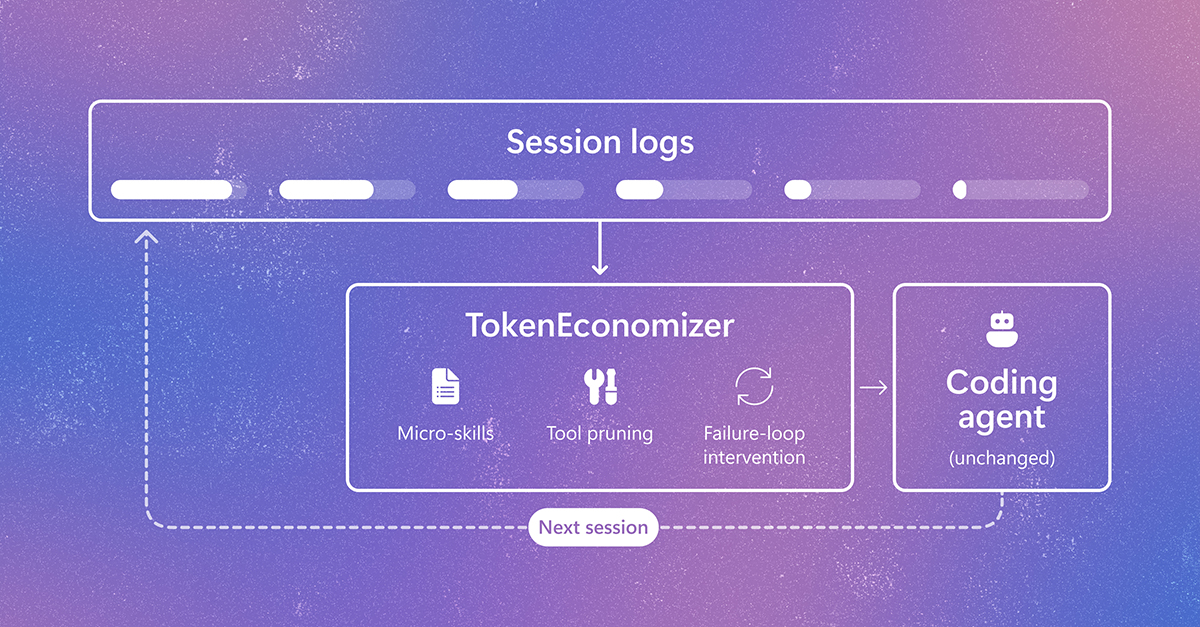
AI coding agents are increasingly help developers fix bugs and build features largely on their own, but every interaction with their models consumes tokens. In each session, an agent sends instructions, tool descriptions, and session history to its model. Most efforts to reduce this cost focus on individual tasks. Yet developers return to the same […] The post TokenEconomizer: Learning from Experience to Make AI Coding Agents More Efficient appeared first on Microsoft Research.
MIT News · Artificial Intelligence· news.mit.eduNov 13, 2026