Sep 2026· International Conference on Systems Thinking in Management· 0 citations
Abstract
This paper addresses the privacy barriers of underlying time-series data not leaving the domain and the limitations of macro-network interaction latency faced by the energy supply chain in the distributed interconnection of multi-source heterogeneous devices. A distributed collaborative optimization control strategy mechanism for microgrid clusters based on a federated learning architecture is designed. By coupling a proximal regularization dimensionality reduction operator with an adaptive attention aggregation alignment algorithm based on the high-dimensional space cosine angle, the correlation data dependency between the microgrid's local real load time-series characteristics and the cloud-based global scheduling command update closed loop is decoupled. Test data from a digital twin-on -a-loop platform containing an ARM heterogeneous computing cluster shows that, while ensuring local data physical isolation, this strategy reduces the time consumption of a single closed-loop control inference link to 38.5ms, and suppresses the number of iterations for the global network strategy algebraic optimization error gradient to complete convergence to 42. This application mechanism reduces the average daily comprehensive economic operating cost ratio of the system's microgrid test cluster by 7.6% to the $1985.6 mark. Under extreme combined disturbance stress test conditions with a communication packet loss rate of 30% and a bottom-level sensor acquisition offset ratio of 20%, the maximum extreme value of the upper limit of the physical jitter variance increment of the control command quantity is limited to within the range of 14.2%, providing a standard benchmark for covert security control under a massive high-dynamic node network architecture.
The results indicate that software engineering work practices are chosen opportunistically, adapted and configured to provide value under the constrains imposed by the startup context.
Nicolò Paternoster, Carmine Giardino, M. Unterkalmsteiner et al.· Information and Software Tec...· 394 citations· ⚡54
This state-of-practice investigation was performed using a literature review followed by a multiple-case study approach and presents how inconsistency between managerial strategies and execution can lead to failure by means of a behavioral framework.
Carmine Giardino, Xiaofeng Wang, P. Abrahamsson· International Conference on...· 175 citations· ⚡19
This study conducts a case survey study based on the secondary data of the major pivots happened in 49 software startups, and demonstrates that customer need pivot is the most common among all pivot types.
Sohaib Shahid Bajwa, Xiaofeng Wang, Anh Nguyen-Duc et al.· Empirical Software Engineeri...· 127 citations· ⚡15
It is found that roles of MVPs in startups were not fully aware by entrepreneurs, and entrepreneurs should consider a systematic approach to fully explore the value of MVP, as a multiple facet product (MFP).
Anh Nguyen-Duc, P. Abrahamsson· International Conference on...· 93 citations· ⚡9
It is found that what perceived as biggest challenges by software startups do vary across different life cycle stages, even though its significance decreases when the learning focuses of the startups move from problem to solution and their products mature.
Xiaofeng Wang, Henry Edison, Sohaib Shahid Bajwa et al.· International Conference on...· 62 citations· ⚡6
A comprehensive overview of how enhanced sampling methods are reshaping the field, with a particular focus on the data-driven construction of collective variables, is provided.
Kai Zhu, Enrico Trizio, Jintu Zhang et al.· Chemical Reviews· 58 citations
Related blog posts
MIT News · Artificial Intelligence· news.mit.eduOct 2, 2026
Martin Trust Center Managing Director Bill Aulet introduces Dear Dreamer, a free platform for middle and high school students who want to learn about entrepreneurship.
Microsoft Research Blog· microsoft.comSep 30, 2026
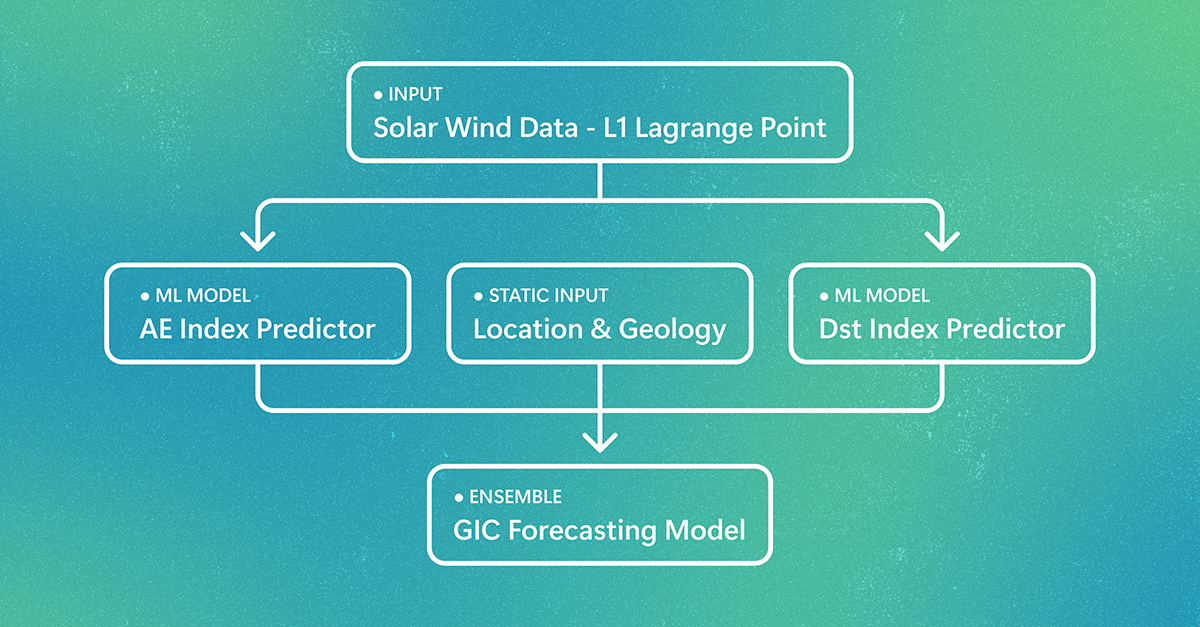
Extreme space-weather events can damage power systems on Earth and degrade GPS accuracy and satellite operations. A new machine learning system can predict where damage is likely to occur 30-60 minutes before a storm arrives. The post Forecasting space weather risks on power grids appeared first on Microsoft Research.
We use cookies to run the site and, with your consent, for analytics and to show ads.
See our Cookie Policy.