Sep 2026· International journal of recent engineering science· 0 citations· 38 references
Optimal Power Flow Distribution
TL;DR
This research introduces a decentralized optimization framework for improved operational performance of 11kV, 32-bus Nsukka Radial Distribution Network (RDN), using a privacy-preserving decentralized optimization framework known as Federated Learning (FL).
Abstract
Modern power distribution grids have become more sophisticated with the incorporation of Distributed Energy Resources (DERs), advanced metering infrastructure and intelligent monitoring technologies. However, traditional centralized optimization methods are communication-intensive, exposed to cybersecurity risks, and less desirable for data privacy, thus limiting their effectiveness in a smart distribution network. This research introduces a decentralized optimization framework for improved operational performance of 11kV, 32-bus Nsukka Radial Distribution Network (RDN), using a privacy-preserving decentralized optimization framework known as Federated Learning (FL). The system combines the Federated Averaging (FedAvg) algorithm with the Backward/Forward Sweep (BFS) power flow technique to optimize network operation while avoiding the sharing of raw operational data. A multi-objective optimization model was formulated, which minimizes the losses in the active power and also improves the voltage profiles, reduces communication overhead, and enhances network reliability without compromising customer data privacy. The framework was implemented using MATLAB under various loading conditions. The results confirmed that the proposed method achieved 21.0% reduction in active power losses, an increase in bus voltage by 3.9% (0.921- 0.958 p.u), 54.3% reduction in voltage deviation, 66.7% reduction in communication overhead, 38.9% accelerated convergence, 97.1% accuracy in prediction and 99.1% improvement in network reliability compared with conventional centralized optimization.
A protocol where each participant simulates multiple virtual users to report target functions through distinct, anonymized messages is proposed, which improves utility for tested multi‐target aggregation tasks compared to representative decentralized DP baselines, simplifies privacy amplification analysis through group...
Sen-Qiao Liu, Wei-Guo Wu, Shaowei Wang et al.· Transactions on Emerging Tel...· 0 citations
This study addresses the challenges of privacy leakage and data silos in multi-source heterogeneous data interaction within smart grids by designing a federated multi-source data fusion architecture that combines adaptive local differential privacy with feature space alignment. This architecture utilizes Hessian matrix...
Jia-Ying Li, Can Pei· International Conference on...· 0 citations
This paper presents an integrated internet of things (IoT) and machine learning-based framework for secure and efficient demand-side management (DSM) in modern smart grids. The proposed approach combines long short-term memory (LSTM) networks for accurate load forecasting, federated learning (FL) for decentralized priv...
S. Pushpa, Jonnadula Narasimharao, K. L. Kishore et al.· International Journal of Pow...· 0 citations
The electrification transition of intelligent transportation systems (ITSs) is coupling mobility operations with distribution- grid scheduling and producing highly heterogeneous charging loads whose forecasting must not expose sensitive vehicle, passenger, or operator data. This paper presents a privacy-preserving fede...
Zi-Xin Yu, Yan-Hong Xu, Feng Long et al.· International Conference on...· 0 citations
The research provides a new security situation awareness solution with real-time, privacy and scalability for the Industrial Internet of Things, which has practical application value for collaborative security protection in complex industrial environments.
Hui-Nian He· Discover Internet of Things· 0 citations
Related blog posts
MIT News · Artificial Intelligence· news.mit.eduOct 2, 2026
Martin Trust Center Managing Director Bill Aulet introduces Dear Dreamer, a free platform for middle and high school students who want to learn about entrepreneurship.
Microsoft Research Blog· microsoft.comSep 30, 2026
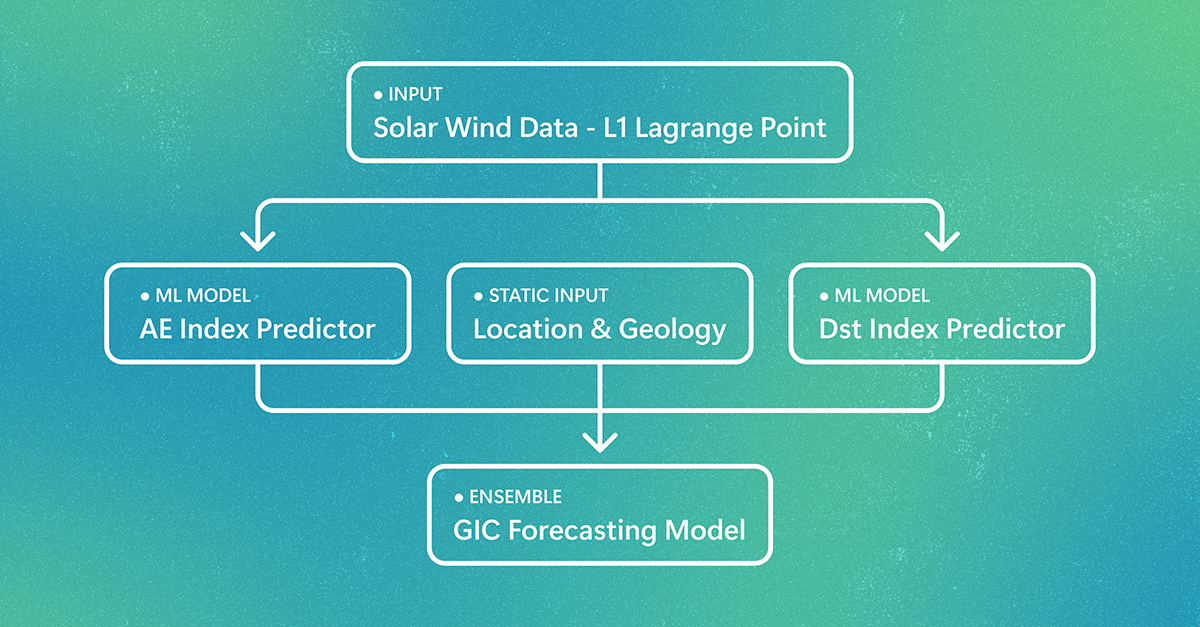
Extreme space-weather events can damage power systems on Earth and degrade GPS accuracy and satellite operations. A new machine learning system can predict where damage is likely to occur 30-60 minutes before a storm arrives. The post Forecasting space weather risks on power grids appeared first on Microsoft Research.
We use cookies to run the site and, with your consent, for analytics and to show ads.
See our Cookie Policy.