The Generalized Langevin Equation (GLE) is an integro-differential equation of motion for a general observable of a many-body system and is rigorously derived using the projection operator formalism. In the standard derivation, a stationary canonical phase space distribution is used for the projection. Here, we derive a novel class of GLEs using a non-stationary projection distribution that constrains the initial ensemble to a hypersurface in phase space on which the observable has a fixed value $A_0$. As a result, all GLE parameters, and in particular the memory friction kernel, depend on $A_0$ and can be extracted from short simulations that do not sample the entire phase space. Applying this non-stationary GLE to protein folding trajectories, we find for villin and an $\alpha$-helical poly-alanine segment that the total friction is higher in the folded state. These results demonstrate that observable-dependent friction effects are non-negligible and can be accounted for using non-stationary GLEs derived by constrained projection schemes.
The comparison of adopter and non-adopter sample reveals three potential adoption inhibitor, security, data privacy, and portability, which underlines the importance of the technical and security perspectives for research investigating the adoption of technology.
Nattakarn Phaphoom, Xiaofeng Wang, S. Samuel et al.· Journal of Systems and Softw...· 111 citations· ⚡8
This study investigates how Lean internal startup facilitates software product innovation in large companies and identifies its enablers and inhibitors, and shows the potential of the method-in-action framework to investigate the Lean startup approach in non-startup context.
Henry Edison, Nina M. Smørsgård, Xiaofeng Wang et al.· Journal of Systems and Softw...· 78 citations· ⚡6
This paper highlights the challenges to conduct proper affect-related studies with psychology, provides a comprehensive literature review in affect theory, and proposes guidelines for conducting psychoempirical software engineering.
D. Graziotin, Xiaofeng Wang, P. Abrahamsson· SSE@SIGSOFT FSE· 56 citations· ⚡4
This study conducts a multiple case study on twenty European software startups and proposes a prototype-centric learning model in early stage software startups, and identifies factors that occur as barriers but also facilitators for prototyping in earlystage software startups.
Anh Nguyen-Duc, Xiaofeng Wang, P. Abrahamsson· International Conference on...· 44 citations· ⚡5
It is demonstrated that linker-free PROTACs can outperform traditional designs, marking a paradigm shift in PROTAC development for targeted protein degradation.
Pinal, a 16-billion-parameter foundation model that produces protein candidates from natural-language functional descriptions, supports natural language as a high-level interface for candidate generation in protein design, enabling programmable exploration with reduced reliance on manually specified structural or seque...
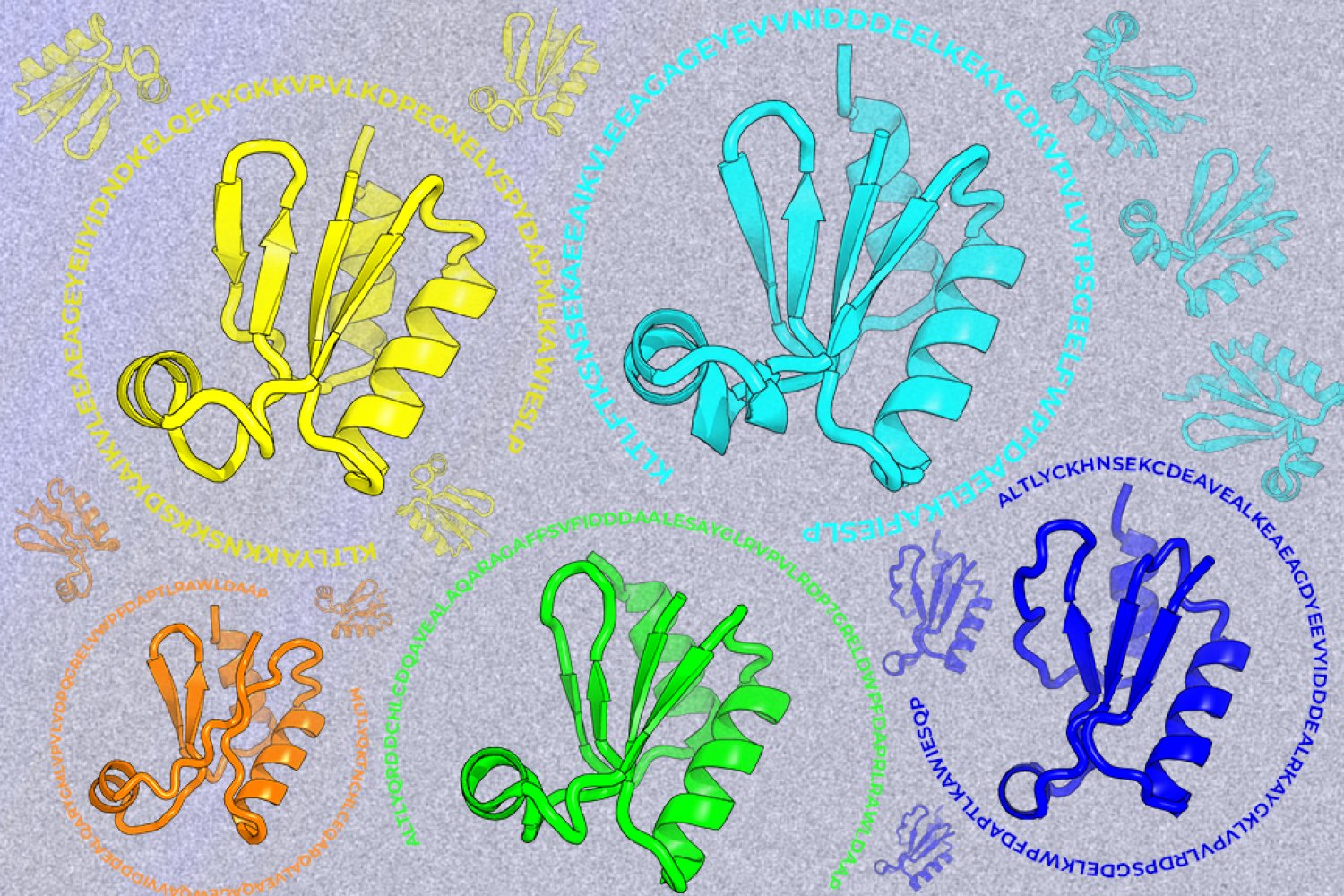
A new machine-learning framework aims to improve the success rate of computational protein design while moving away from results that reproduce sequences found in nature.