Skip to content
#protein folding Open access

Author response: Large scale prospective evaluation of co-folding across hundreds of Mac1-ligand complexes and three virtual screens

Sep 2026

Abstract

Accurate prediction of ligand-bound protein complexes and ranking them by affinity are central problems in drug discovery. While deep learning co-folding methods can help address these challenges, their evaluation has been hampered by the difficulties in assessing independence from training data and insufficiently large test sets. Here we test the ability of co-folding methods to predict the structures of 551 ligands, 489 of which are of sufficient quality for evaluation, bound to the SARS-CoV-2 NSP3 macrodomain (Mac1) that were determined after the training cut-off dates. AlphaFold3 (AF3), Boltz-2, and Chai-1 each reproduced >50% of the Mac1 ligand poses to better than 2 Å RMSD of experiment. Despite the potential for co-folding to describe protein conformational changes that stabilize ligand binding, we did not find that common conformational rearrangements, including peptide flip and a large loop opening, were recapitulated by the co-folding prediction. For AF3 and Chai-1, ligand pose prediction confidence weakly, but significantly, tracked experimental potency, while DOCK3.7 energies were only weakly correlated. Boltz-2 affinity predictions showed the strongest correlation with measured potency and, after calibration, achieved lower mean absolute error than a baseline predictor. We next assessed whether co-folding scores could rescore docking hit-lists to distinguish true ligands from non-binders among hundreds of molecules prospectively experimentally tested against AmpC β-lactamase, the dopamine D4 and the σ2 receptors. AF3 ligand pose confidence values did not separate true ligands from high-scoring false-positives as effectively as docking scores or Boltz-2 affinity predictions did. Taken together, the modest, but independent correlations of docking score and co-folding confidence or affinity suggests that integrating physics-based and deep-learning and approaches may help with hit prioritization and subsequent optimization in structure-based ligand discovery.

View source

Similar papers

#computer vision Review Open access May 2015

A survey study on major technical barriers affecting the decision to adopt cloud services

The comparison of adopter and non-adopter sample reveals three potential adoption inhibitor, security, data privacy, and portability, which underlines the importance of the technical and security perspectives for research investigating the adoption of technology.

Nattakarn Phaphoom, Xiaofeng Wang, S. Samuel et al. · 111 citations · ⚡8
#computer vision Open access Feb 2018

Lean Internal Startups for Software Product Innovation in Large Companies: Enablers and Inhibitors

This study investigates how Lean internal startup facilitates software product innovation in large companies and identifies its enablers and inhibitors, and shows the potential of the method-in-action framework to investigate the Lean startup approach in non-startup context.

Henry Edison, Nina M. Smørsgård, Xiaofeng Wang et al. · 78 citations · ⚡6
#computer vision Book Open access Jul 2015

Understanding the affect of developers: theoretical background and guidelines for psychoempirical software engineering

This paper highlights the challenges to conduct proper affect-related studies with psychology, provides a comprehensive literature review in affect theory, and proposes guidelines for conducting psychoempirical software engineering.

D. Graziotin, Xiaofeng Wang, P. Abrahamsson · 56 citations · ⚡4
#machine learning Open access May 2017

What Influences the Speed of Prototyping? An Empirical Investigation of Twenty Software Startups

This study conducts a multiple case study on twenty European software startups and proposes a prototype-centric learning model in early stage software startups, and identifies factors that occur as barriers but also facilitators for prototyping in earlystage software startups.

Anh Nguyen-Duc, Xiaofeng Wang, P. Abrahamsson · 44 citations · ⚡5
#protein folding Open access Sep 2026

Programmable design of functional proteins from natural language

Pinal, a 16-billion-parameter foundation model that produces protein candidates from natural-language functional descriptions, supports natural language as a high-level interface for candidate generation in protein design, enabling programmable exploration with reduced reliance on manually specified structural or seque...

Fengyuan Dai, Shiyang You, Yudian Zhu et al. · 31 citations · ⚡3

Related blog posts

Google DeepMind Blog Sep 30, 2026

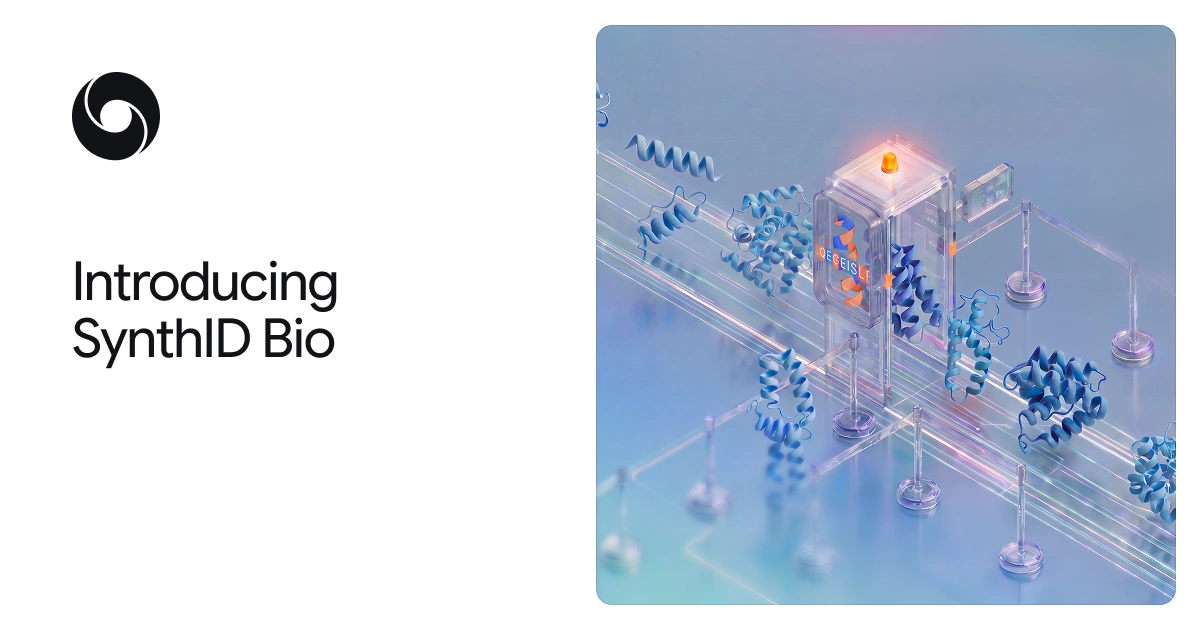
Introducing SynthID Bio

Proof of concept for watermarking AI-generated proteins while preserving biological function.

MIT News · Artificial Intelligence Aug 27, 2026

Looking beyond natural sequences

A new machine-learning framework aims to improve the success rate of computational protein design while moving away from results that reproduce sequences found in nature.

We use cookies to run the site and, with your consent, for analytics and to show ads. See our Cookie Policy.