World Action Models (WAMs) enable future-aware control by jointly modeling actions and environment dynamics. However, iterative diffusion or flow inference incurs substantial denoising latency. Prior inference state offers a natural opportunity for acceleration, yet changing planning contexts, observations, and intermediate representations can quickly render retained state stale. Preserving useful computation therefore requires adapting inference state rather than reusing it as-is. To this end, we present $\mathrm{WAM}{\scriptstyle\mathrm{ACHINE}}$, a training-free framework that accelerates WAM inference by preserving and adapting inference state for efficient and accurate continuation as the control loop evolves. Across closed-loop replans, Trajectory Remapping remaps replan state from the preceding replan to initialize the next replan, reducing redundant trajectory generation. Across denoising steps, Observation Rebinding performs anticipatory inference during action execution and rebinds retained denoising state to the real observation for continuation when consistency checks pass, reducing latency exposed to the control loop. Across Transformer layers, Residual Rescaling selectively rescales retained layer state and refreshes it through full computation of the middle layers when probe checks fail, reducing repeated Transformer computation. Evaluations of three representative WAM architectures on LIBERO and RoboTwin 2.0 show that $\mathrm{WAM}{\scriptstyle\mathrm{ACHINE}}$ achieves 1.47-3.05$\times$ speedups in observation-to-action latency and 2.23-3.27$\times$ speedups in GPU inference time per replan, while preserving 96.69-99.54% of native WAM task success.

GAOKAO-Bench is introduced, an intuitive benchmark that employs questions from the Chinese GAOKAO examination as test samples, including both subjective and objective questions that contribute a robust evaluation benchmark for future large language models and offers valuable insights into the advantages and limitations...
Xiaotian Zhang, Chun-yan Li, Yi Zong et al.· arXiv.org· 216 citations· ⚡17
An algorithm is proposed which leverages disentangled semantic factors to generate adversarial perturbation by altering controlled semantic attributes to fool the learner towards various "adversarial" targets.
Haonan Qiu, Chaowei Xiao, Lei Yang et al.· arXiv.org· 208 citations· ⚡17
This work proposes a HALO that directly maximizes the utility of generations instead of maximizing the log-likelihood of preferences, and suggests that the best loss depends on the inductive biases most appropriate for a given setting, an oft-overlooked consideration.
This work investigates the possibilities of using LLMs in a resume screening setting via a document retrieval framework that simulates job candidate selection and finds that the MTEs are biased, significantly favoring White-associated names in 85% of cases and female-associated names in only 11.1% of cases.
This work shows that orders of magnitude enhancement in performance could be obtained by a combination of hardware improvements and tight quantum-HPC integration and introduces high-performance architectures for quantum-probabilistic computing with custom-designed accelerators to tackle today's industry-scale classical...
Masoud Mohseni, Artur Scherer, K. Johnson et al.· arXiv.org· 121 citations· ⚡9
This paper presents a comprehensive overview of the Ultralytics YOLO family, emphasizing architectural evolution, benchmarking, deployment, and emerging directions from YOLOv5 through YOLO27, and examines detection, segmentation, depth, classification, pose, oriented detection, tracking, export, quantization, and deplo...
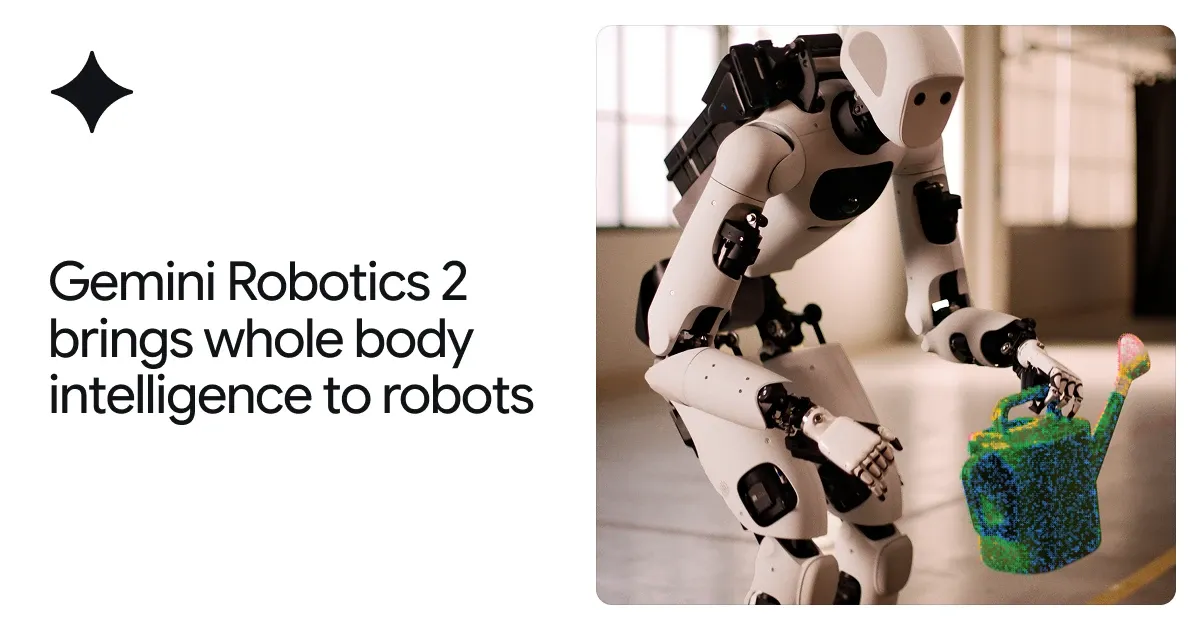
From feet to fingertips — we are teaching robots intelligent whole-body control, fine dexterity, and teamwork to complete a broad range of complex tasks.
MIT News · Artificial Intelligence· news.mit.eduOct 13, 2026
Machine-learning networks can learn without detailed instructions from a designer. Those that do may offer insight into how the brain reorganizes itself during learning.