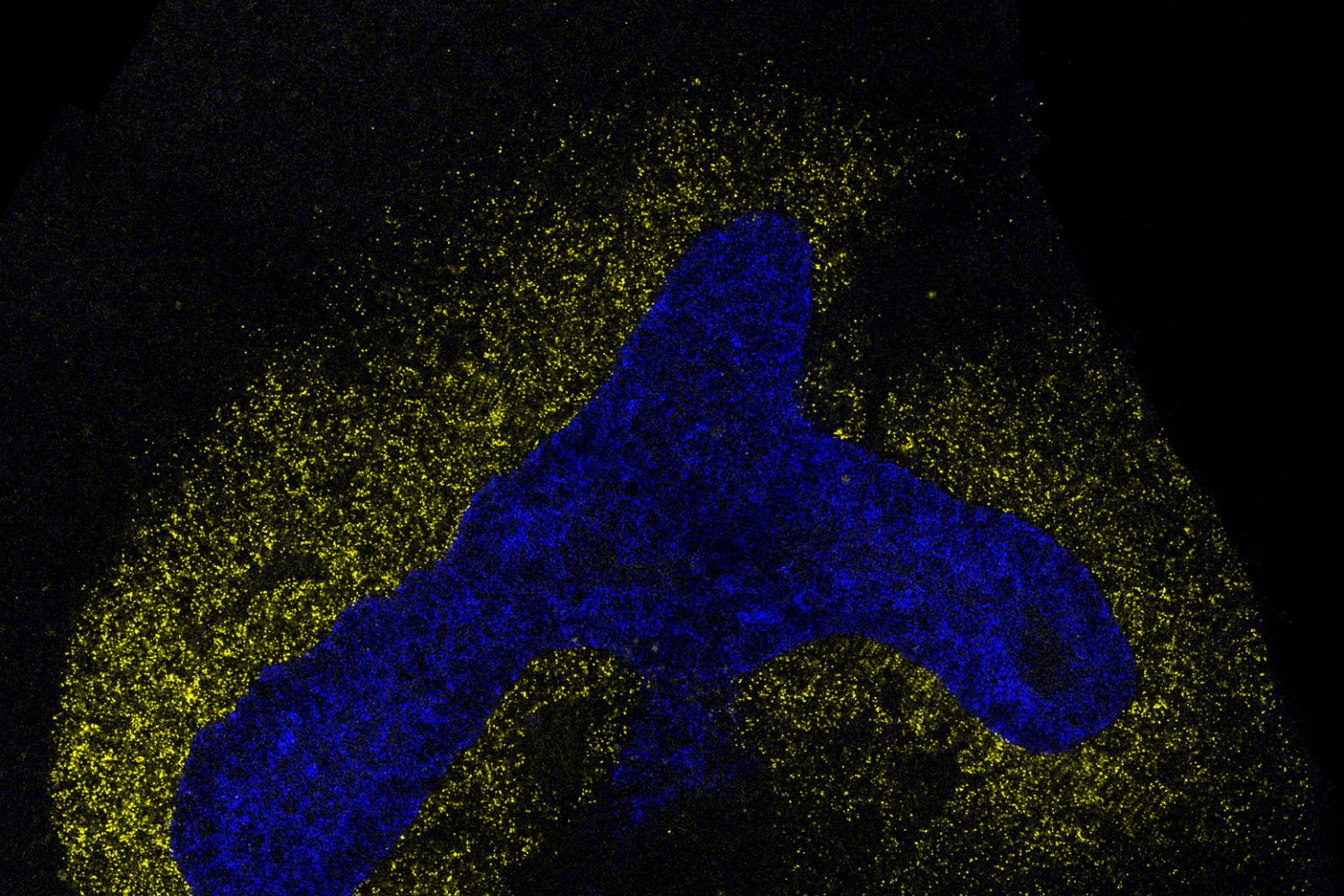
99.04% of the Proton's Mass Is Not the Higgs ── The Electron Is 100% Higgs, So Within One Word "Mass" There Is a Factor of 104 ── Set the Vacuum Expectation Value to 0 and the Proton Loses Only 0.96% ── [Paper 286]
Abstract
It is said that “the Higgs particle gives things their mass.”This paper asks what fraction of “things”──the answer, for the proton, is 0.96%. No new mathematical theorem and no new law is claimed. Scope of this paper (scope note): No new mathematical theorem and no new law is claimed──the PDG quark masses, the proton and neutron masses, mass generation by the Higgs mechanism, and mass generation by confinement are all standard. We do not build quantum chromodynamics──all we use is three additions and four divisions. We do not explain confinement──neither why quarks are confined nor the mass gap is treated at all. We count only the resulting mass. We do not derive the Higgs mechanism──we do not enter spontaneous symmetry breaking, nor the origin of the Yukawa couplings’ values. We perform no lattice calculation──the number 99.04% is the result of a subtraction, not a first-principles computation. The quark masses carry a definitional premise──m_u=2.16 and m_d=4.67 MeV are values in the MS scheme at renormalisation point 2 GeV. Change the scheme or the point and the values change, so the figure 0.9581% depends on this convention. We do not break down the 99%──the mass from confinement divides into quark kinetic energy, gluon field energy, and the chiral condensate, but this paper lumps them together as “non-Higgs”. We do not explain the neutron--proton difference──the 194% of Section 5 only shows that the naive count breaks, and asserts no value for the electromagnetic contribution. Relation to earlier papers: Paper 240 counted seven things called “mass” and in its scope note explicitly stated “we do not discuss the origin of mass──neither the Higgs mechanism nor confinement is treated”──this paper enters that explicitly ceded ground and compares the two origins numerically. Papers 35 and 51 used the proton mass as a number──this paper asks what it is made of. Paper 112 counted “six distinct roots sharing one rhyme”──the “mass” here likewise has two distinct roots under one word. Paper 274 showed that Drude was right through the cancellation of two errors──Section 5 here is likewise a case where two opposite signs cancel. What is added is computing the proton’s non-Higgs share as 99.0419%, writing the contrast with the electron as a factor of 104.37, showing by the thought experiment of setting the vacuum expectation value to 0 that 929.28 MeV remains, and recording, as the limit of the naive count, that the quark mass difference overshoots the neutron--proton difference by 194%. First, we add the rest masses of the quarks. The proton is uud, so 2x2.16+4.67=8.99 MeV (Section 2). Second, this is the core of the paper. The proton’s mass is 938.27209 MeV, so the Higgs share is 0.9581%, that is 99.0419% is not of Higgs origin (Section 2). Third, the electron is 100% of Higgs origin. Within the one word “mass” there is a factor of 104.37 (Section 3). Fourth, setting the vacuum expectation value to 0 leaves the proton nearly untouched.938.27 MeV merely becomes 929.28 MeV──while the electron vanishes entirely (Section 4). Fifth, there is a place where the naive count fails. Against the neutron--proton difference of 1.29333 MeV, the quark mass difference of 2.51 MeV overshoots by 194% (Section 5). Sixth, the separator is where the mass comes from. Yukawa coupling and confinement energy are different categories, differing in amount by 103.37 (Section 6). “The Higgs gives things their mass” is 100% right for the electron and only 0.9581% right for the proton. The proton is uud, and the sum of the quarks’ rest masses is a mere 8.99 MeV──the actual 938.27 MeV is 104.3684 times that, and 99.0419% is not of Higgs origin. The thought experiment of setting the vacuum expectation value to 0 shows it──the proton merely becomes 929.28 MeV; the electron vanishes entirely. Counting for ordinary matter, 98.9879% of a hydrogen atom’s mass is of non-Higgs origin. But this naive count has a limit──applying it to the neutron--proton difference overshoots at 194.07%. One thing separates them──whether the mass comes from a coupling written into the Lagrangian, or from a consequence of dynamics that emerges only upon solving. The former is the Yukawa coupling, the latter confinement, and they differ in amount by 103.37. Both are measured in MeV, but their standing differs. So when one says “the Higgs gives mass,” one must say which particle is meant. On the making of this work: The ideas and content of this work stem from the author's own considerations. Assistance from an AI (a large language model) was used for structuring, English translation, and checking the algebra. Any remaining errors or misinterpretations are solely the author's. Feedback and corrections are sincerely appreciated. ----- 「ヒッグス粒子は物に質量を与える」と言われる。本稿が問うのは、その「物」の何割かである──答は、陽子については 0.96%である。新しい数学定理も新しい法則も主張しない。 本稿の射程(射程注記):新しい数学定理も新しい法則も主張しない──クォーク質量の PDG 値、陽子・中性子の質量、ヒッグス機構による質量生成、閉じ込めによる質量生成は、いずれも標準的である。量子色力学を作らない──使うのは三つの足し算と、四つの割り算だけである。閉じ込めを説明しない──なぜクォークが閉じ込められるかも、質量ギャップも一切扱わない。結果としての質量だけを数える。ヒッグス機構を導出しない──自発的対称性の破れにも、湯川結合の値の起源にも立ち入らない。格子計算をしない──99.04% という数は引き算の結果であって、第一原理計算ではない。クォーク質量の定義に前提がある──m_u=2.16、m_d=4.67 MeV はMS スキーム・繰り込み点 2 GeVでの値である。スキームと点を変えれば値が変わるので、0.9581% という数字はこの規約に依存する。99% の内訳を分けない──閉じ込めによる質量はクォークの運動エネルギー・グルーオン場のエネルギー・カイラル凝縮などに分かれるが、本稿はそれらを一括して「非ヒッグス」と呼ぶ。中性子・陽子差を説明しない──第5節の 194% は素朴な数え上げが破れることを示すだけであり、電磁的寄与の値を主張しない。既刊との関係:論文240 は「質量」が七つあることを数え、その射程で「質量の起源を論じない──ヒッグス機構も閉じ込めも扱わない」と明記した──本稿はその明示的に譲られた土地に入り、二つの起源の量を数で比べる。論文35・51 は陽子質量を数値として用いた──本稿はその内訳を問う。論文112 は「同じ韻の別根」を数えた──本稿の「質量」も一語の下に二つの別根を持つ。論文274 はドルーデが二つの誤差の打ち消しで当たったと示した──本稿の第5節も符号の逆な二つが打ち消す場合である。加えたのは陽子の非ヒッグス割合を 99.0419% と計算したこと、電子との対照を 104.37 倍と書いたこと、真空期待値を 0 にする思考実験で 929.28 MeV が残ると示したこと、中性子・陽子差でクォーク質量差が 194% 行き過ぎることを、素朴な数え上げの限界として記録したことである。 第一に、クォークの静止質量を足す。陽子は uud なので 2x2.16+4.67=8.99 MeV である(第2節)。 第二に、これが本稿の芯である。陽子の質量は 938.27209 MeV なので、ヒッグス由来は 0.9581%、すなわち99.0419% はヒッグス由来ではない(第2節)。 第三に、電子は 100% ヒッグス由来である。同じ「質量」という一語の中で、104.37 倍の違いがある(第3節)。 第四に、真空期待値を 0 にしても陽子はほぼそのままである。938.27 MeV が 929.28 MeV になるだけ──一方で電子は完全に消える(第4節)。 第五に、素朴な数え上げが失敗する場所がある。中性子と陽子の差 1.29333 MeV に対し、クォーク質量差は 2.51 MeV で194% 行き過ぎる(第5節)。 第六に、分離子は「質量が何から来るか」である。湯川結合と閉じ込めのエネルギーは別の圏であり、量が 103.37 倍違う(第6節)。 「ヒッグスが物に質量を与える」は、電子については 100% 正しく、陽子については 0.9581% しか正しくない。陽子は uud で、クォークの静止質量の和は 8.99 MeV にすぎない──実際の 938.27 MeV はその 104.3684 倍であり、99.0419% はヒッグス由来ではない。真空期待値を 0 にする思考実験がそれを見せる──陽子は 929.28 MeV になるだけ、電子は完全に消える。身の回りの物質で数えれば、水素原子の質量の 98.9879% が非ヒッグス起源である。ただしこの素朴な数え上げには限界がある──中性子と陽子の差を同じやり方で説明しようとすると、194.07% と行き過ぎる。分けるものは一つ──その質量が、ラグランジアンに書き込まれた結合から来るのか、解いてはじめて出る力学の帰結なのか。前者は湯川結合、後者は閉じ込めであり、量は 103.37 倍違う。どちらも MeV で測れるが、身分は違う。だから「ヒッグスが質量を与える」と言うときは、どちらの粒子の話かを言わねばならない。 作成にあたって:本稿の着想と内容は、著者自身の考察に基づくものです。文章の構成整理や英訳、数式の確認には AI(大規模言語モデル)の助力を得ました。最終的な内容の解釈や誤りがあれば、それらはすべて著者の責に帰します。お気づきの点があれば、ご教示いただければ幸いです。