Skip to content

Similar papers

Open access Aug 2026

Characterization of soy lecithin/tween 80 synergistically stabilized cumin essential oil nanoemulsions and their application in air-dried camel meat processing

The objective of this study was to develop a nanoemulsion of cumin essential oil (CEO-NE) stabilized synergistically by soybean lecithin (SL) and Tween 80 (TW 80), and to investigate the effects of different cumin essential oil (CEO) concentrations (1%–5%) on its physicochemical properties, antioxidant, and antibacterial activities, with a view to further evaluating its potential for preserving sun-dried camel meat. The results showed that when the SL to TW 80 ratio was 1:1, the prepared CEO-NE exhibited the smallest particle size (119.33 ± 2.52 nm) and the highest absolute zeta potential (−56.72 ± 1.23 mV). Through hydrogen bonding and hydrophobic interactions, CEO-NE at various concentrations formed stable nanoemulsion systems, with significantly improved thermal stability. Among these, 3% CEO-NE exhibited the best encapsulation efficiency and the most uniform particle distribution. The results of the antioxidant and antibacterial activity assessments showed that all CEO-NE samples (1%–5%) exhibited concentration-dependent antioxidant and antibacterial effects. The DPPH and ABTS radical scavenging rates increased from 60.24% to 97.09% and from 58.99% to 81.52%, respectively, while the total colony counts of Escherichia coli and Staphylococcus aureus decreased by 1.1 log CFU/mL and 1.32 log CFU/mL, respectively. Furthermore, the activity of CEO-NE at all concentrations was significantly superior to that of free CEO (P < 0.05). Experiments applying CEO-NE to the preservation of air-dried camel meat indicated that, during the 12-day drying process, the CEO-NE-treated group effectively maintained meat moisture content, significantly reduced thiobarbituric acid reactant values (0.46 ± 0.07 mg/kg) and total microbial counts (4.03 ± 0.14 log CFU/g), and improved sensory quality.

Hongyan Yu, Haitao Yue, Yu-Chuan Wang et al. · 0 citations
Jul 2026

W1/O/W2 emulsion stabilized by β-lactoglobulin/exopolysaccharides/epigallocatechin gallate complex: Protective effects on Lactobacillus plantarum A81 during storage, pasteurization and gastrointestinal digestion.

The efficacy of probiotics is limited by their low survival capacity in human gastrointestinal tract. In this study, a water-in-oil-in-water (W1/O/W2) emulsion delivery system stabilized by a ternary complex composed of β-lactoglobulin (β-LG), exopolysaccharide (EPS) and epigallocatechin gallate (EGCG) was constructed to encapsulate L. plantarum A81. Compared with native β-LG and binary β-LG-EPS complexes, the β-LG-EPS-EGCG ternary complex significantly decreased emulsion droplet size, improved interfacial protein adsorption efficiency, and formed a denser, elastic interfacial structure. Confocal laser scanning microscopy confirmed more uniform droplet distribution and favorable bacterial encapsulation in ternary complex-stabilized emulsions. Furthermore, the emulsion stabilized by β-LG-EPS-EGCG complex significantly improved the survival rate of strains during 30-day storage (from 27.62% ± 1.35% to 47.33% ± 1.23%), after pasteurization (from 10.55% ± 1.24% to 18.87% ± 1.56%), and after in vitro simulated gastrointestinal digestion (from 3.01% ± 0.81% to 8.97% ± 1.37%). These results demonstrate that β-LG-EPS-EGCG ternary complex is a good stabilizer for W1/O/W2 emulsion.

Cuicui Duan, Yi Zhang, Hongru Wang et al. · 0 citations
Open access Jul 2026

W/O/W Emulsions as a Strategy to Preserve NADES-Derived Annatto Carotenoids and Enhance the Functional Properties of Potato Starch-Based Active Packaging Films

This study investigated the use of a water-in-oil-in-water (W/O/W) double emulsion to encapsulate a natural deep eutectic solvent (NADES)-based annatto (Bixa orellana L.) seed extract and incorporate it into potato starch-based films. The aim was to improve the stability and functionality of the extract compared with its direct addition to the starch matrix. The physicochemical properties of the W/O and W/O/W emulsions were first characterized, followed by the evaluation of the resulting films. The droplet size of the W/O/W emulsion (1.21 ± 0.03 μm) was larger than that of the W/O emulsion (0.42 ± 0.03 μm). The W/O/W emulsion exhibited a high encapsulation efficiency (95.5 ± 0.5%) and maintained a substantial fraction of the antioxidant activity of the encapsulated extract. When incorporated into potato starch films, the W/O/W emulsion reduced the moisture content by 46.7% and water vapor permeability by 52.2%, from 1.84 ± 0.41 to 0.88 ± 0.02 g mm m–2 h–1 kPa–1. The film containing the double emulsion (DE-5%) exhibited a tensile strength of 21.84 ± 0.97 MPa and showed antioxidant activity comparable to the free extract, with a measured value of 4.88 ± 0.28 mg TE g–1 of annatto seed. In addition, the ultraviolet–visible (UV–vis) light barrier properties were improved. Microstructural, X-ray diffraction (XRD), and thermal analyses indicated that the W/O/W emulsion modified film morphology and reduced matrix crystallinity without impairing film formation. Overall, the results indicate that W/O/W emulsions are a promising strategy to enhance the protection of NADES-derived bioactive compounds and improve the structural and functional properties of potato starch-based films for active biodegradable packaging applications.

S. K. Balabram, Fernanda P. Silva, B. Maniglia et al. · 0 citations
Open access Aug 2026

Comparative Evaluation of Silymarin Nanoemulsions Stabilized by Grape Seed and Sacha Inchi Oils: Physicochemical Stability and Enhanced Biological Activities

Silymarin has been facing several challenges which reduce its therapeutic effect, mainly low solubility and poor bioavailability. This study aimed to develop and comparatively evaluate the stability and antioxidant activity of an oil-in-water (O/W) nanoemulsions to encapsulate silymarin, formulated with two distinct natural carriers: Grape seed oil (GSO) and Sacha Inchi seed oil (SIO). To achieve a stable system, Tween 80 and Poloxamer 407 (F-127) were employed as the primary surfactant and co-stabilizer, respectively, using the phase inversion composition technique at a surfactant-to-oil mass ratio of 1.1:1 (w/w). The resulting optimized formulations demonstrated favorable physicochemical characteristics, including droplet sizes between 300 and 700 nm and PDI values from 0.2 to 0.5. High electrostatic stability was confirmed by negative zeta potentials exceeding -30 mV. The formulations with a lower silymarin content exhibited higher entrapment efficiency compared to those with a higher drug loading. While FT-IR and microscopic analyses verified successful encapsulation and uniform morphology, DPPH assays indicated that the nanoemulsions maintained potent radical scavenging activity (52.88 and 13.82%), although they are lower than that of the free silymarin (92.08%) due to the protective encapsulation. Additionally, the use of GSO and SIO significantly enhanced oxidative stability, as reflected by low peroxide levels. These findings highlight Sacha Inchi seed oil as a highly effective and promising platform for the advanced delivery of silymarin, which can be further formulated into popular and convenient dosage forms such as soft gel capsules or nanoemulgels.

T. Trinh, T. Hoang, Thuy Chi Nguyen et al. · 0 citations
Oct 2026

Novel food-grade water-in-water Pickering emulsions for encapsulation and delivery of hydrophilic bioactives.

Curcumin exhibits excellent bioactive potential, but its practical applications in functional foods are limited. In this study, novel food-grade water-in-water (W/W) Pickering emulsions constructed by maltodextrin/pullulan (MD/PUL) were developed to encapsulate and deliver of aqueously dispersible curcumin nanocomplex. Cellulose nanocrystals (CNCs) prepared by TEMPO oxidation method were used as Pickering stabilizers, and the 0.06 wt% CNCs-stabilized emulsions showed excellent storage stability and environmental stability. Soy protein isolate-curcumin complex (SPI-Cur) was prepared by the pH-driven method through hydrophobic interactions and hydrogen bonds, thus enhancing the water solubility of curcumin. SPI-Cur exhibited stronger binding affinity to MD than to PUL, enabling efficient encapsulation in the dispersed phase of MD/PUL Pickering emulsions. Furthermore, the emulsion system significantly enhanced the storage, photostability and thermal stability of SPI-Cur. The bioaccessibility of encapsulated SPI-Cur reached 51.98% after in vitro simulated digestion, which was significantly higher than that of free SPI-Cur (37.62%). This study provides an environment friendly strategy to address the poor water solubility and stability bottlenecks of curcumin in functional foods, and expands the application of W/W Pickering emulsions for encapsulating and delivering of hydrophilic bioactives.

Pengrui Wu, Xindi Wei, Chunling Nie et al. · 0 citations
Aug 2026

W/O/W emulsions with gelled aqueous and oil phases: Construction, characterization, and their effect on enhancing the stress resistance of Lactobacillus plantarum and Streptococcus thermophilus.

To overcome the poor stability and low probiotic survival associated with traditional delivery systems, this study systematically developed and compared water-in-oil-in-water (W/O/W) emulsions with different phase gelation strategies. Three emulsion types were constructed: oil-phase (O-W/O/W), external aqueous-phase (A-W/O/W), and dual-phase gelled (B-W/O/W) emulsions. The results revealed that dual-phase gelation (B-W/O/W) exhibited a superior synergistic effect compared to single-phase gelation. Both aqueous- and oil-phase gelation increased apparent viscosity and restricted internal water mobility, but their combination provided the most robust physical barrier. Specifically, oil-phase gelation reduced particle size by immobilizing free water, while aqueous gelation formed a dense protective network. This synergistic protection significantly enhanced probiotic viability during pasteurization, in vitro digestion, and long-term storage. This study demonstrates that dual-phase gelation is a highly effective and novel strategy for the development of high-performance delivery vehicles, providing a theoretical basis for the commercial application of sensitive probiotics in functional foods.

Yejun Zhong, Hailin Zheng, Ruiyun Chen et al. · 0 citations

Related blog posts

MIT News · Artificial Intelligence Aug 27, 2026

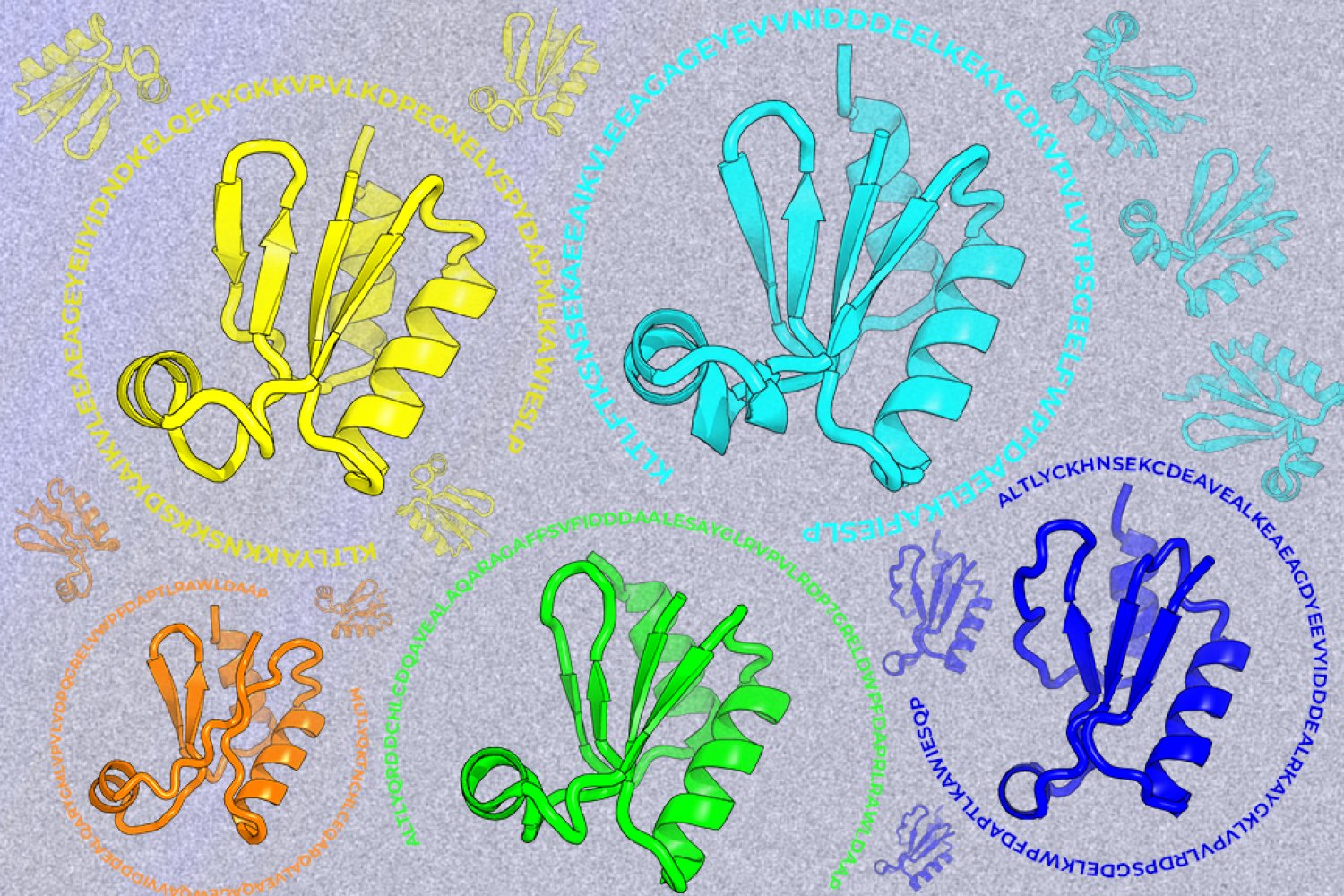
Looking beyond natural sequences

A new machine-learning framework aims to improve the success rate of computational protein design while moving away from results that reproduce sequences found in nature.

Google DeepMind Blog Nov 25, 2025

AlphaFold: Five years of impact

Explore how AlphaFold has accelerated science and fueled a global wave of biological discovery.