Skip to content

Synergistic 1-Ethyl-3-methylimidazolium Trifluoromethanesulfonate and Sodium Percarbonate Pretreatment for Enhanced Medium-Chain Fatty Acid Recovery from Waste-Activated Sludge: Mechanisms and Microbial Insights

Sep 2026 · ACS ES&T Engineering · 0 citations · 53 references
Wastewater Treatment and Nitrogen Removal

Abstract

Medium-chain fatty acids (MCFAs) offer a sustainable route for valorizing waste-activated sludge (WAS) into higher-value products, yet their bioproduction is constrained by the rigid extracellular polymeric substance (EPS) barrier and inefficient chain elongation (CE). Here, we develop a synergistic pretreatment strategy employing 1-ethyl-3-methylimidazolium trifluoromethanesulfonate ([Emim][OTf], a representative ionic liquid) and sodium percarbonate (SPC) to sequentially enhance sludge solubilization and targeted MCFA production. The maximum MCFA yield reaches 5910 mg COD/L in the combined group, 1.3-, 1.1-, and 0.7-fold higher than the control (2537 mg COD/L), [Emim][OTf] alone (2888 mg COD/L), and SPC alone (3409 mg COD/L) groups, respectively. Mechanistically, SPC acted as the primary oxidant to disrupt EPS and cell membranes, while [Emim][OTf] synergistically amplified this effect, as evidenced by enhanced protein solubilization and the progressive mineralization of organic nitrogen to ammonium. The combined pretreatment enriched acidogens (e.g., Proteiniclasticum, 96.8-fold increase), CE-associated Bacillota and Petrimonas (1.1- and 24-fold increases), and MCFA release-associated thioesterase-encoding genes (e.g., fluoroacetyl-CoA thioesterase, 0.5-fold increase). These findings demonstrate that [Emim][OTf] not only activates SPC-mediated sludge disintegration but also facilitates CE, as evidenced by a 1.7-fold increase in MCFA selectivity in model substrate tests, offering a dual-functional strategy for the efficient recovery of MCFA from WAS.
View source

Similar papers

#computer vision Review Open access May 2015

A survey study on major technical barriers affecting the decision to adopt cloud services

The comparison of adopter and non-adopter sample reveals three potential adoption inhibitor, security, data privacy, and portability, which underlines the importance of the technical and security perspectives for research investigating the adoption of technology.

Nattakarn Phaphoom, Xiaofeng Wang, S. Samuel et al. · 111 citations · ⚡8
#computer vision Open access Feb 2018

Lean Internal Startups for Software Product Innovation in Large Companies: Enablers and Inhibitors

This study investigates how Lean internal startup facilitates software product innovation in large companies and identifies its enablers and inhibitors, and shows the potential of the method-in-action framework to investigate the Lean startup approach in non-startup context.

Henry Edison, Nina M. Smørsgård, Xiaofeng Wang et al. · 78 citations · ⚡6
#computer vision Book Open access Jul 2015

Understanding the affect of developers: theoretical background and guidelines for psychoempirical software engineering

This paper highlights the challenges to conduct proper affect-related studies with psychology, provides a comprehensive literature review in affect theory, and proposes guidelines for conducting psychoempirical software engineering.

D. Graziotin, Xiaofeng Wang, P. Abrahamsson · 56 citations · ⚡4
#machine learning Open access May 2017

What Influences the Speed of Prototyping? An Empirical Investigation of Twenty Software Startups

This study conducts a multiple case study on twenty European software startups and proposes a prototype-centric learning model in early stage software startups, and identifies factors that occur as barriers but also facilitators for prototyping in earlystage software startups.

Anh Nguyen-Duc, Xiaofeng Wang, P. Abrahamsson · 44 citations · ⚡5
#protein folding Open access Sep 2026

Programmable design of functional proteins from natural language

Pinal, a 16-billion-parameter foundation model that produces protein candidates from natural-language functional descriptions, supports natural language as a high-level interface for candidate generation in protein design, enabling programmable exploration with reduced reliance on manually specified structural or seque...

Fengyuan Dai, Shiyang You, Yudian Zhu et al. · 31 citations · ⚡3

Related blog posts

Google DeepMind Blog Sep 30, 2026

Introducing SynthID Bio

Proof of concept for watermarking AI-generated proteins while preserving biological function.

MIT News · Artificial Intelligence Aug 27, 2026

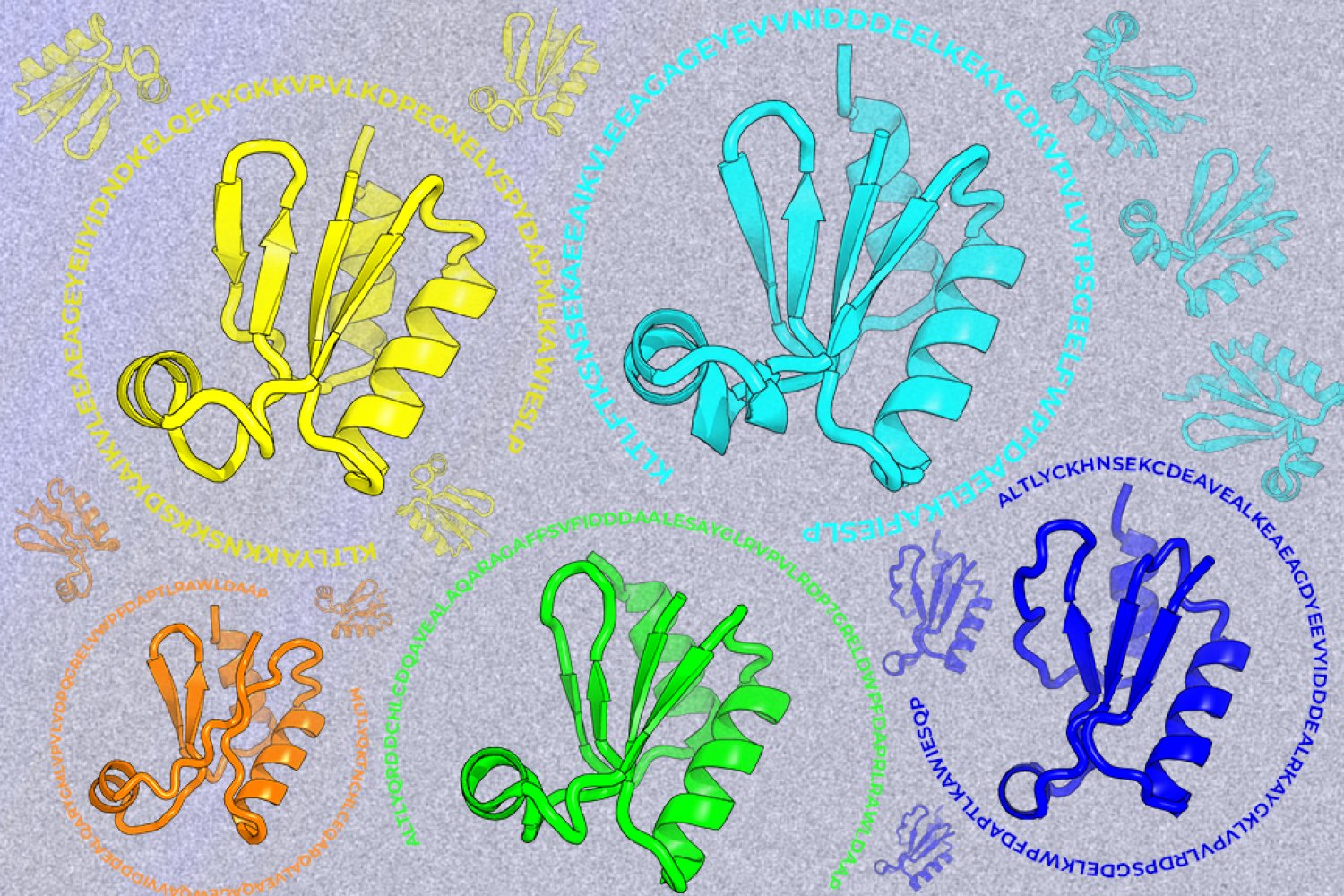
Looking beyond natural sequences

A new machine-learning framework aims to improve the success rate of computational protein design while moving away from results that reproduce sequences found in nature.

We use cookies to run the site and, with your consent, for analytics and to show ads. See our Cookie Policy.