Jul 2026· Zenodo (CERN European Organization for Nuclear Research)
Noncommutative and Quantum Gravity Theories
Abstract
This article develops a joint state-law fixed-point method for self-consistent quantum models. A physical model is represented by a density operator and a finite-dimensional vector of effective law parameters; admissible dynamics consist of a state-update channel and a law-update map. A recursive solution is their joint fixed point. This formulation separates stationarity of a state-dependent Hamiltonian from genuine co-determination of states and laws and preserves the option of completely positive trace-preserving subsystem dynamics. Three general results are obtained: existence for continuous maps on compact convex state-law domains, uniqueness and iterative stability under a contraction condition, and persistence of non-degenerate fixed points under weak deformation. An exactly solvable two-state model displays a supercritical pitchfork bifurcation, critical exponent one-half, and a divergent zero-field susceptibility at the feedback threshold. In renormalization-group theory space, the same perturbative result yields first-order shifts of fixed-point coordinates and critical exponents. An action-level construction shows how recursive consistency operators can enter the standard functional flow without adding ad hoc terms to the Wetterich equation. Covariant gravity and laboratory phase-shift formulas are presented as conditional templates whose predictions require a specified kernel and normalization. The framework therefore contributes a broadly applicable method linking quantum channels, nonlinear dynamics, fixed-point theory, and renormalization-group deformations, while making no claim to a completed theory of quantum gravity.
This publication proposes a definition and a classification of agile software development approaches and analyses ten software development methods that can be characterized as being "agile" against the defined criterion.
P. Abrahamsson, O. Salo, Jussi Ronkainen et al.· arXiv.org· 727 citations· ⚡54
The study shows that agile practices improve both informal and formal communication, but indicates that, in larger development situations involving multiple external stakeholders, a mismatch of adequate communication mechanisms can sometimes even hinder the communication.
M. Pikkarainen, Jukka Haikara, O. Salo et al.· Empirical Software Engineeri...· 401 citations· ⚡48
The results indicate that software engineering work practices are chosen opportunistically, adapted and configured to provide value under the constrains imposed by the startup context.
Nicolò Paternoster, Carmine Giardino, M. Unterkalmsteiner et al.· Information and Software Tec...· 394 citations· ⚡54
The perception of the impact of agile methods is predominantly positive, and several challenge areas were discovered, but based on this study, agile methods are here to stay.
M. Laanti, O. Salo, P. Abrahamsson· Information and Software Tec...· 260 citations· ⚡20
Related blog posts
Microsoft Research Blog· microsoft.comSep 29, 2026
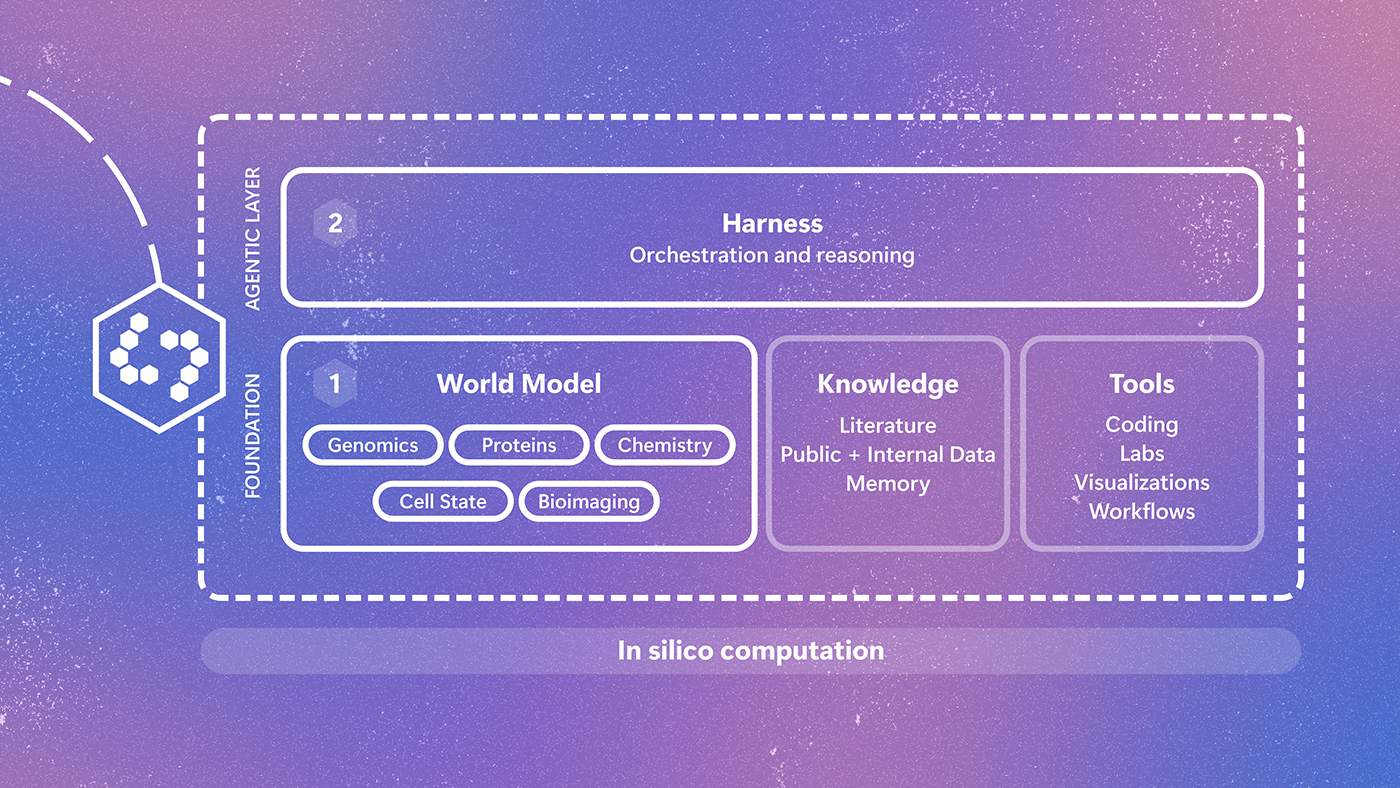
Biology doesn't operate in silos, and neither should the AI representation of it. Quine is an early-stage research effort to create a multimodal world model of biology. By connecting insights across biological scales and modalities, Quine helps scientists computationally search a space far larger than intuition allows and prioritize hypotheses before they reach the lab. Experimental results provide important feedback, helping researchers sharpen future research directions. The post Introducing Q…
MIT News · Artificial Intelligence· news.mit.eduSep 14, 2026
The “HardFlow” algorithm could help generative AI models produce high-quality outputs that obey strict requirements when “pretty close” doesn’t cut it.
Microsoft Research Blog· microsoft.comAug 31, 2026
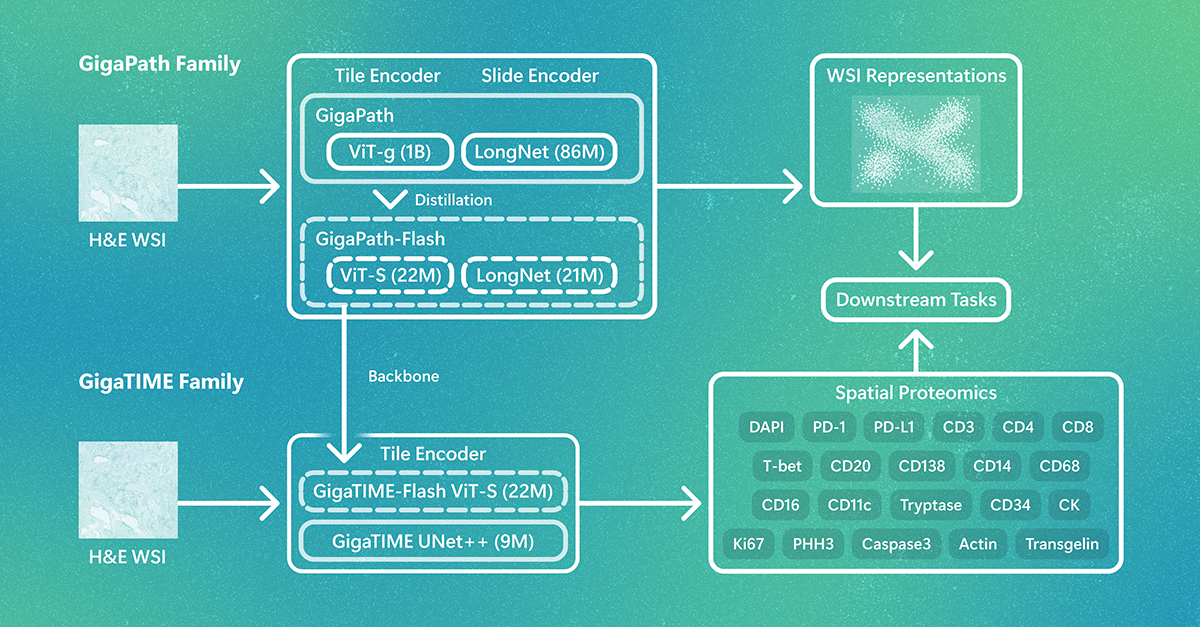
What if pathology foundation models could do more with less? GigaPath-Flash and GigaTIME-Flash cut computational demands while maintaining strong performance, opening the door to larger studies and broader exploration. The post GigaPath-Flash and GigaTIME-Flash: Toward population-scale discovery with efficient pathology foundation models appeared first on Microsoft Research.