Skip to content

Are Predictive Models Epistemically Superior to Causal Ones?

Aug 2026 · Zenodo (CERN European Organization for Nuclear Research)
Philosophy and History of Science

Abstract

This thesis investigates the complex and often contentious question of whether predictive models are epistemically superior to causal models. It challenges the simplistic dichotomy that often frames this debate, arguing that the epistemic superiority of a model is not an intrinsic property but is contingent upon the specific epistemic goals and context of inquiry. Drawing on a multi-disciplinary framework that integrates philosophy of science, epistemology, and computer science, this thesis proposes a novel, multi-dimensional framework for evaluating the epistemic standing of predictive and causal models. This framework is grounded in a nuanced understanding of epistemic virtues, such as accuracy, robustness, and explanatory power, and is contextualized within Judea Pearl’s Causal Hierarchy. We argue that a richer understanding of the epistemic landscape reveals a more symbiotic relationship between prediction and causation than is commonly acknowledged. The thesis develops a novel perspective, the “Epistemic Parity and Complementation” (EPC) principle, which posits that while predictive and causal models may have different epistemic strengths, they are often epistemically complementary and can be leveraged in a synergistic manner to achieve a more comprehensive understanding of complex phenomena. Through a combination of theoretical analysis, mathematical modeling, and empirical case studies, this thesis aims to provide a more sophisticated and holistic understanding of the relative epistemic merits of predictive and causal models, ultimately arguing against a universal claim of epistemic superiority for either approach.

View source

Similar papers

#computer vision Review Sep 2017

Agile Software Development Methods: Review and Analysis

This publication proposes a definition and a classification of agile software development approaches and analyses ten software development methods that can be characterized as being "agile" against the defined criterion.

P. Abrahamsson, O. Salo, Jussi Ronkainen et al. · 727 citations · ⚡54
#computer vision Jun 2008

The impact of agile practices on communication in software development

The study shows that agile practices improve both informal and formal communication, but indicates that, in larger development situations involving multiple external stakeholders, a mismatch of adequate communication mechanisms can sometimes even hinder the communication.

M. Pikkarainen, Jukka Haikara, O. Salo et al. · 401 citations · ⚡48
#machine learning Review Open access Oct 2014

Software development in startup companies: A systematic mapping study

The results indicate that software engineering work practices are chosen opportunistically, adapted and configured to provide value under the constrains imposed by the startup context.

Nicolò Paternoster, Carmine Giardino, M. Unterkalmsteiner et al. · 394 citations · ⚡54

Diffusion models as plug-and-play priors

The possibility of inferring high-dimensional data inference in a model that consists of a prior and an auxiliary differentiable constraint given some additional information is considered, thereby allowing a range of potential applications in adapting models to new domains and tasks.

Alexandros Graikos, Esmeralda S. Whitammer, N. Jojic et al. · 316 citations · ⚡15

Related blog posts

Microsoft Research Blog Sep 29, 2026

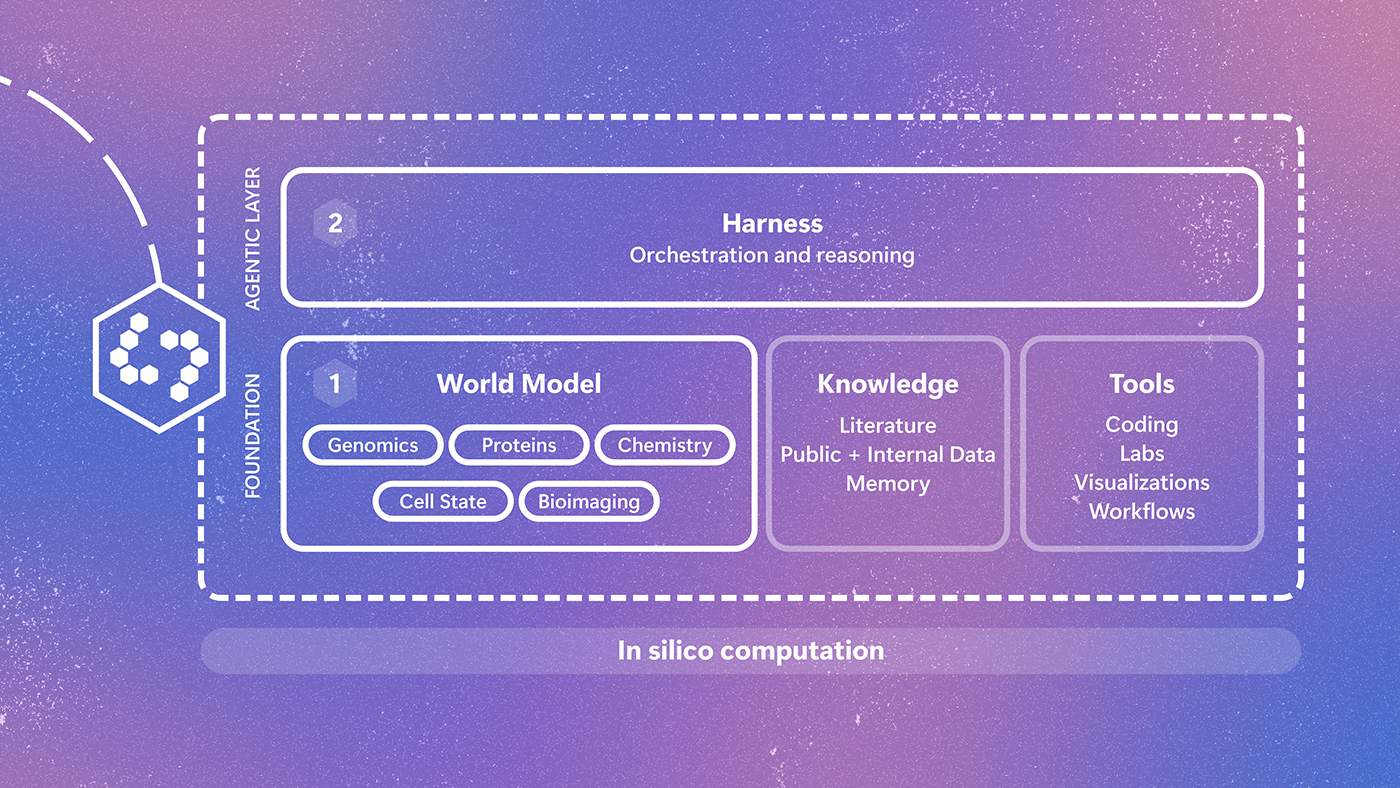
Introducing Quine: An AI research system designed for the complexity of biology

Biology doesn't operate in silos, and neither should the AI representation of it. Quine is an early-stage research effort to create a multimodal world model of biology. By connecting insights across biological scales and modalities, Quine helps scientists computationally search a space far larger than intuition allows and prioritize hypotheses before they reach the lab. Experimental results provide important feedback, helping researchers sharpen future research directions. The post Introducing Q…

We use cookies to run the site and, with your consent, for analytics and to show ads. See our Cookie Policy.