Skip to content

Reliability Beyond Accuracy in Crop Classification Benchmarks (Supplementary Materials)

Sep 2026 · Zenodo (CERN European Organization for Nuclear Research)

Abstract

Reliability Beyond Accuracy in Crop Classification Benchmarks (Supplementary Materials)Introduction: Near-perfect crop-label accuracy can conceal uncertainty, perturbation sensitivity, and weak explanations. This study evaluates these reliability dimensions without treating benchmark classification as agronomic recommendation. Materials and Methods: Ten classifiers were evaluated using five matched stratified fitting, validation, and test partitions on a 2,200-record crop-label benchmark and an independent 3,810-record rice-grain benchmark. A Calibrated Selective Forest combined Random Forest, validation-fitted temperature scaling, and confidence-based abstention. Analyses included feature and component ablations, probability calibration, Gaussian input perturbations, computational cost, and explanation fidelity. Results: Mean crop-label accuracy was 99.59% for Random Forest, 99.23% for XGBoost, and 98.32% for FT-Transformer. Random Forest calibration reduced mean expected calibration error from 0.0449 to 0.0038. At a 0.95 threshold, calibrated selection retained 98.59% of predictions with 0.091% mean selective error. Under perturbations of 0.20 training standard deviations, its accuracy fell to 86.96% and selective error rose to 4.29%. On rice grains, Random Forest accuracy was 91.71%, and calibration did not improve every probability metric. Local explanation rankings were often stable despite a median neighborhood weighted R² of 0.293 under the specified local interpretable model-agnostic explanations (LIME) configuration. Conclusions: Accuracy, calibration, selective reliability, and explanation fidelity are distinct properties. The composite pipeline provides an auditable benchmark procedure, not a new learning algorithm or a validated farm recommendation system. Geographic and temporal agronomic validation remain necessary.

View source

Similar papers

#computer vision Review Sep 2017

Agile Software Development Methods: Review and Analysis

This publication proposes a definition and a classification of agile software development approaches and analyses ten software development methods that can be characterized as being "agile" against the defined criterion.

P. Abrahamsson, O. Salo, Jussi Ronkainen et al. · 727 citations · ⚡54
#computer vision Jun 2008

The impact of agile practices on communication in software development

The study shows that agile practices improve both informal and formal communication, but indicates that, in larger development situations involving multiple external stakeholders, a mismatch of adequate communication mechanisms can sometimes even hinder the communication.

M. Pikkarainen, Jukka Haikara, O. Salo et al. · 401 citations · ⚡48
#machine learning Review Open access Oct 2014

Software development in startup companies: A systematic mapping study

The results indicate that software engineering work practices are chosen opportunistically, adapted and configured to provide value under the constrains imposed by the startup context.

Nicolò Paternoster, Carmine Giardino, M. Unterkalmsteiner et al. · 394 citations · ⚡54

Diffusion models as plug-and-play priors

The possibility of inferring high-dimensional data inference in a model that consists of a prior and an auxiliary differentiable constraint given some additional information is considered, thereby allowing a range of potential applications in adapting models to new domains and tasks.

Alexandros Graikos, Esmeralda S. Whitammer, N. Jojic et al. · 316 citations · ⚡15

Trajectory Balance: Improved Credit Assignment in GFlowNets

It is proved that any global minimizer of the trajectory balance objective can define a policy that samples exactly from the target distribution, and empirically demonstrate the benefits of the trajectories balance objective for GFlowNet convergence, diversity of generated samples, and robustness to long action sequenc...

Esmeralda S. Whitammer, Moksh Jain, Emmanuel Bengio et al. · 302 citations · ⚡60

Related blog posts

Microsoft Research Blog Jul 30, 2026

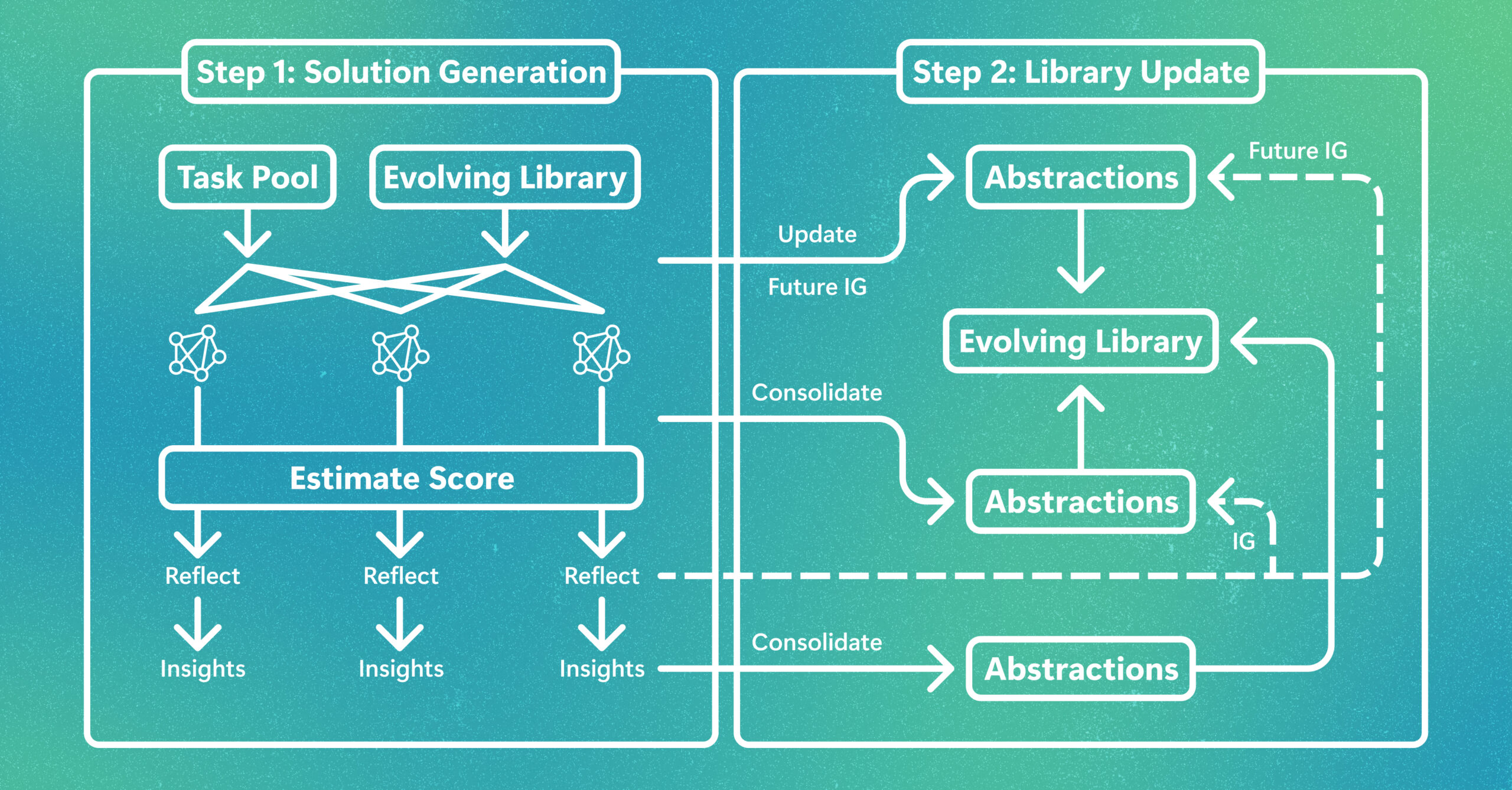
EvoLib: Turning experience into evolving knowledge

LLMs do not get smarter just by remembering more. EvoLib turns experience into evolving knowledge, taking reusable skills and insights that help models learn and adapt across tasks long after deployment. The post EvoLib: Turning experience into evolving knowledge appeared first on Microsoft Research.

GPT-Lab Aug 28, 2026

We built an AI factory for HVAC control

What does it take to trust AI-driven HVAC optimization? Our AI Model Factory combines agents, machine learning, reinforcement learning and deterministic checks in a governed workflow designed for messy, real-world building data. The post We built an AI factory for HVAC control appeared first on GPT-Lab.

Microsoft Research Blog Jul 13, 2026

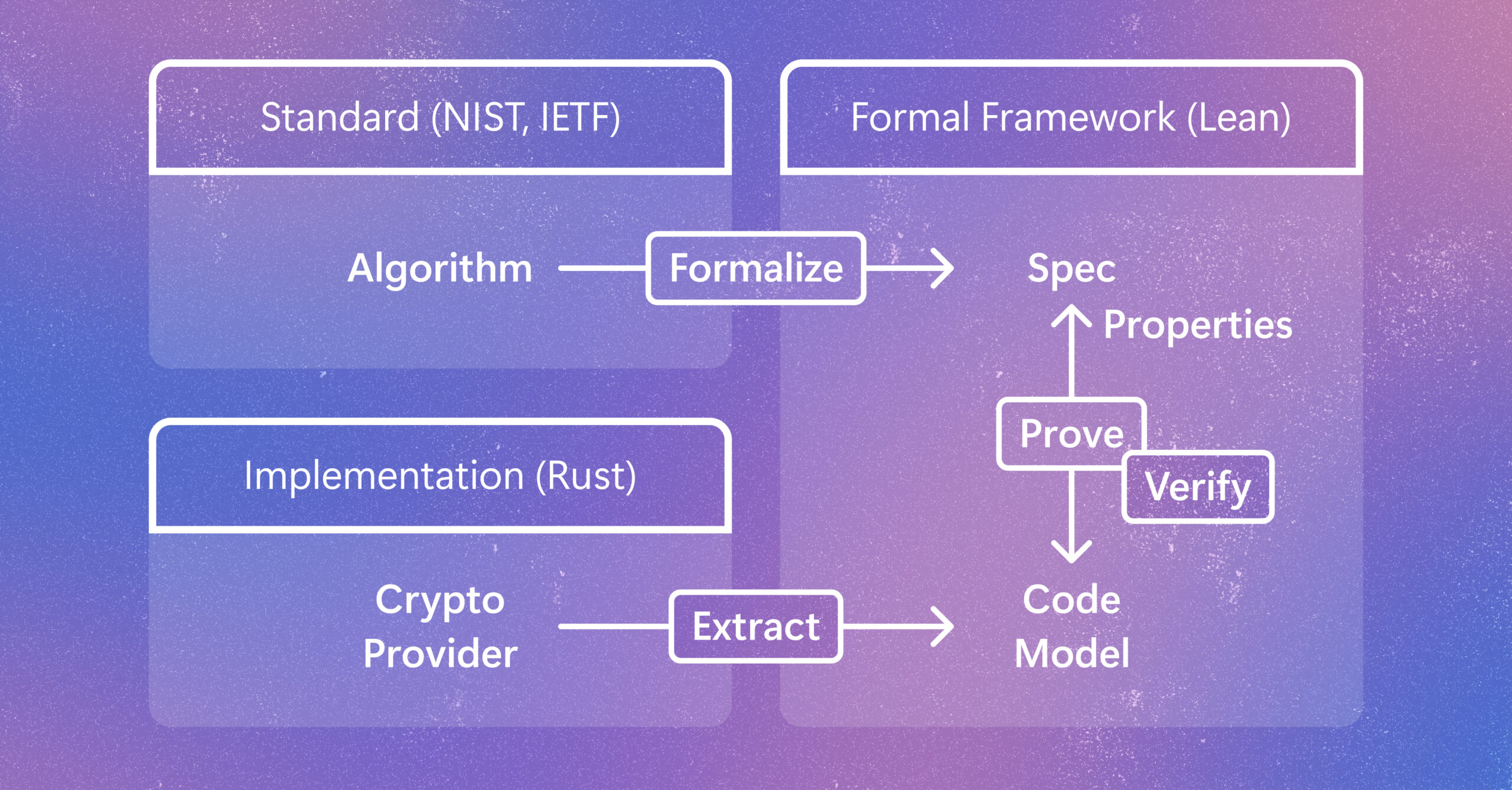
Verifying Rust cryptography in SymCrypt, from standards to code

Cryptographic code supports vital protections in modern computing systems. Learn how a new method helps verify code as developers write it while preserving speed and adaptability as it gets implemented and evolves. The post Verifying Rust cryptography in SymCrypt, from standards to code appeared first on Microsoft Research.

We use cookies to run the site and, with your consent, for analytics and to show ads. See our Cookie Policy.