Disaster social sensing converts public social-media posts into evidence for situational awareness and humanitarian needs, but generative artificial intelligence (AI) can produce plausible messages that resemble eyewitness reports. This study investigates whether text-based AI detectors can reliably distinguish human-authored from AI-generated disaster posts. We construct a dataset of 12,000 texts organised into 3,000 matched semantic units from nine disasters: original human posts (H0), minimally LLM-proofread human posts (H1), factual AI-generated posts based on the same verified facts (A0), and affectively framed versions of those AI posts (A1). A separate 6,000-text corpus from 42 events supports model selection and threshold calibration. We evaluate OSM-Det, Fast-DetectGPT, Binoculars, and direct large language model (LLM) judges across five model families, then test disaster-domain calibration, a frozen-encoder linear readout, paired transformation sensitivity, and dataset artifact controls. Across fourteen frozen cross-family configurations, AUROC is 0.402-0.517 and the best prospective recall at a calibration-derived low-false-positive operating point is 3.6%; OSM-Det reaches AUROC 0.521 and 10.4% recall at a realised 6.7% false-positive rate. A disaster-trained linear head reaches AUROC 0.817, but a seven-feature surface classifier reaches 0.784 on the H0-versus-A0 contrast, and neutralising identified surface asymmetries reduces the head from 0.733 to 0.594. The head also separates A0 from A1 even though provenance is unchanged. The results show that text-based detection is not reliable enough to serve as an operational trust gate; multimodal claims, accountable sources, and other contextual evidence should be rested on to safeguard trust in disaster social sensing.
This publication proposes a definition and a classification of agile software development approaches and analyses ten software development methods that can be characterized as being "agile" against the defined criterion.
P. Abrahamsson, O. Salo, Jussi Ronkainen et al.· arXiv.org· 727 citations· ⚡54
Consequences of happiness and unhappiness that are beneficial and detrimental for developers' mental well-being, the software development process, and the produced artifacts are found.
D. Graziotin, Fabian Fagerholm, Xiaofeng Wang et al.· Journal of Systems and Softw...· 236 citations· ⚡13
The Mobile-D approach is briefly outlined here and the experiences gained from four case studies are discussed, which helped develop an agile development approach for mobile application development.
P. Abrahamsson, Antti Hanhineva, H. Hulkko et al.· Conference on Object-Oriente...· 225 citations· ⚡18
A study with 42 participants investigates the relationship between the affective states, creativity, and analytical problem-solving skills of software developers and offers support for the claim that happy developers are indeed better problem solvers in terms of their analytical abilities.
D. Graziotin, Xiaofeng Wang, P. Abrahamsson· PeerJ· 216 citations· ⚡13
GAOKAO-Bench is introduced, an intuitive benchmark that employs questions from the Chinese GAOKAO examination as test samples, including both subjective and objective questions that contribute a robust evaluation benchmark for future large language models and offers valuable insights into the advantages and limitations...
Xiaotian Zhang, Chun-yan Li, Yi Zong et al.· arXiv.org· 216 citations· ⚡17
This state-of-practice investigation was performed using a literature review followed by a multiple-case study approach and presents how inconsistency between managerial strategies and execution can lead to failure by means of a behavioral framework.
Carmine Giardino, Xiaofeng Wang, P. Abrahamsson· International Conference on...· 175 citations· ⚡19
Related blog posts
MIT News · Artificial Intelligence· news.mit.eduSep 24, 2026
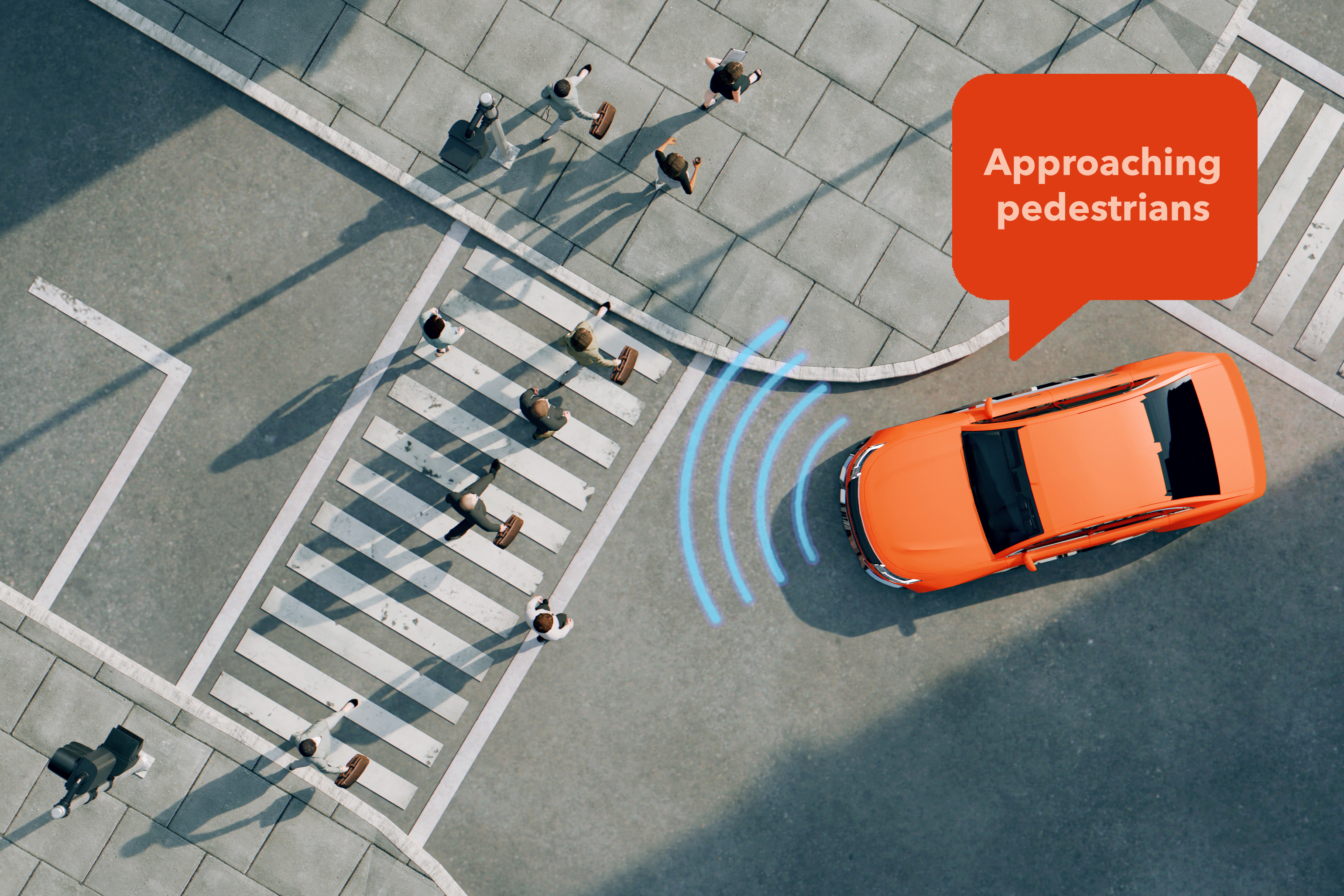
A new method, called CW-Net, translates the reasoning process of an autonomous vehicle’s AI system into understandable concepts that explain its behavior.
We use cookies to run the site and, with your consent, for analytics and to show ads.
See our Cookie Policy.