Skip to content

Riemannian Flow Models with Reinforcement Learning for Molecular Crystal Structure Prediction

Sep 2026 · arXiv.org · Vol abs/2609.39773 · 0 citations · 89 references
Computer Science Physics

Abstract

Crystal structure governs material properties, making crystal structure prediction (CSP) a fundamental problem in materials science. Generative models are a promising approach for solving this problem, but the prevalence of polymorphism, coupled with large unit cells and complex packing geometry, makes the molecular CSP task challenging for existing models. To address this, we introduce Coarse-Grained Open Materials Generation (CG-OMatG), an equivariant Riemannian flow-based generative model. CG-OMatG predicts molecular crystal structures \textit{via} a coarse-grained, hierarchical representation. CG-OMatG treats molecules as rigid bodies---performing both inter- and intra-molecular message passing to construct a geometric representation for molecular packings---and learns to reconstruct molecule centroid positions, orientations, and lattice parameters, conditioned on chemical species and conformer geometry. We train the model on subsets of the Open Molecular Crystals (OMC25) and Cambridge Structural Database (CSD) datasets. Further, we fine-tune the model \textit{via} policy gradient reinforcement learning to steer the model towards generating low-energy candidate structures. We validate the generated structures on the CSP blind test benchmark, assessing agreement with experimentally determined crystals using COMPACK packing-similarity analysis. CG-OMatG exhibits strong performance for generative molecular crystal structure prediction, paving the way for accelerated polymorph screening and organic solid-state materials discovery.
View source

Similar papers

#artificial intelligence Preprint Jul 2024

The Llama 3 Herd of Models

It is found that Llama 3 delivers comparable quality to leading language models such as GPT-4 on a plethora of tasks, and performs competitively with the state-of-the-art on image, video, and speech recognition tasks.

Aaron Grattafiori, Abhimanyu Dubey, Abhinav Jauhri et al. · 21,082 citations · ⚡3,832
#artificial intelligence Conference Open access Jun 2018

Gibson Env: Real-World Perception for Embodied Agents

This paper investigates developing real-world perception for active agents, proposes Gibson Environment for this purpose, and showcases a set of perceptual tasks learned therein.

F. Xia, Amir Zamir, Zhi-Yang He et al. · 1,069 citations · ⚡112
#machine learning Review Open access Oct 2014

Software development in startup companies: A systematic mapping study

The results indicate that software engineering work practices are chosen opportunistically, adapted and configured to provide value under the constrains imposed by the startup context.

Nicolò Paternoster, Carmine Giardino, M. Unterkalmsteiner et al. · 394 citations · ⚡54

Diffusion models as plug-and-play priors

The possibility of inferring high-dimensional data inference in a model that consists of a prior and an auxiliary differentiable constraint given some additional information is considered, thereby allowing a range of potential applications in adapting models to new domains and tasks.

Alexandros Graikos, Esmeralda S. Whitammer, N. Jojic et al. · 316 citations · ⚡15

Trajectory Balance: Improved Credit Assignment in GFlowNets

It is proved that any global minimizer of the trajectory balance objective can define a policy that samples exactly from the target distribution, and empirically demonstrate the benefits of the trajectories balance objective for GFlowNet convergence, diversity of generated samples, and robustness to long action sequenc...

Esmeralda S. Whitammer, Moksh Jain, Emmanuel Bengio et al. · 302 citations · ⚡60

Related blog posts

MIT News · Artificial Intelligence Nov 17, 2026

Learning the language of machine learning

By studying the computational foundations of language learning, Associate Professor Jacob Andreas builds intelligent systems that can communicate effectively with humans.

Microsoft Research Blog Nov 16, 2026

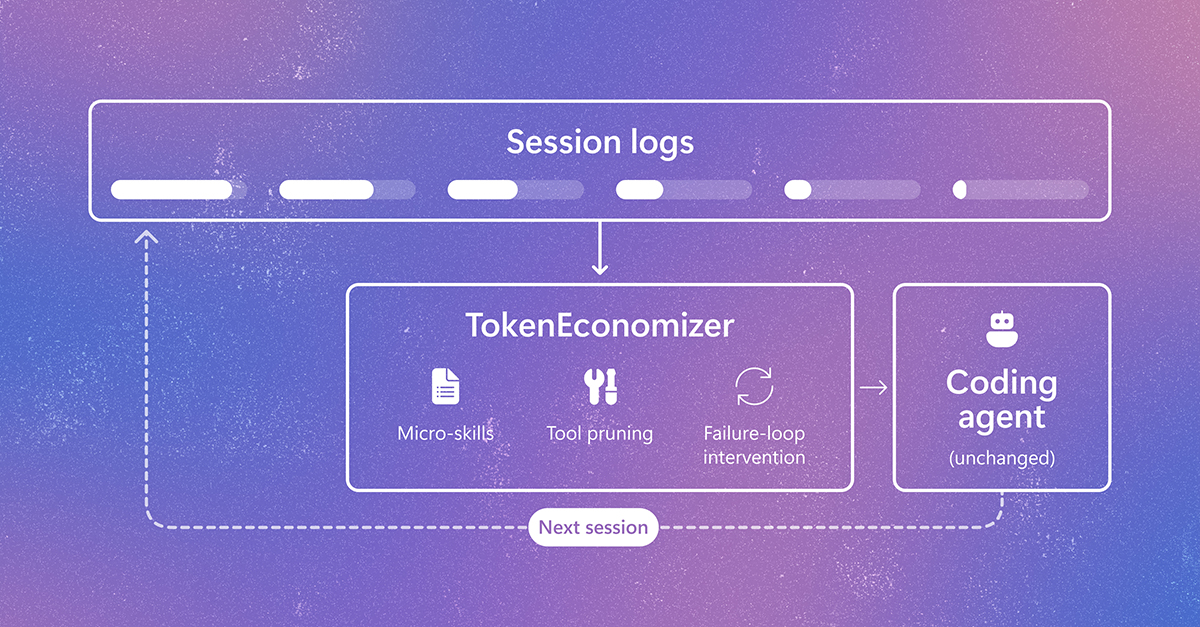
TokenEconomizer: Learning from Experience to Make AI Coding Agents More Efficient

AI coding agents are increasingly help developers fix bugs and build features largely on their own, but every interaction with their models consumes tokens. In each session, an agent sends instructions, tool descriptions, and session history to its model. Most efforts to reduce this cost focus on individual tasks. Yet developers return to the same […] The post TokenEconomizer: Learning from Experience to Make AI Coding Agents More Efficient appeared first on Microsoft Research.

We use cookies to run the site and, with your consent, for analytics and to show ads. See our Cookie Policy.