Skip to content

Human Agency under Algorithmic Governance: A Humanities Framework for Law, Management and Public Life

Jul 2026 · International Journal of Law Management & Humanities · 1 citation · 8 references
Ethics and Social Impacts of AI

TL;DR

The paper argues that algorithmic governance should not be assessed only by whether systems are accurate, explainable or compliant, but also by whether affected persons retain interpretive agency, contestatory power, relational recognition and meaningful participation in institutional life.

Abstract

Artificial intelligence is increasingly becoming a governing medium through which institutions classify persons, allocate opportunities, structure work, produce knowledge and mediate public trust. Current AI governance frameworks emphasise risk classification, technical assurance, transparency, accountability and human oversight. These instruments are necessary, but they remain incomplete when algorithmic decisions reshape the meaning of agency, dignity, responsibility and social recognition. This paper develops a humanities-based framework for algorithmic governance suitable for law, management and public life. Using an interdisciplinary conceptual methodology, it synthesises legal-policy frameworks, AI ethics scholarship, management studies and contemporary philosophical work on ontological instability, AI stakeholder recognition and moral responsibility. The paper argues that algorithmic governance should not be assessed only by whether systems are accurate, explainable or compliant, but also by whether affected persons retain interpretive agency, contestatory power, relational recognition and meaningful participation in institutional life. It proposes the Human Agency Impact Matrix, a six-dimensional framework that evaluates algorithmic systems through interpretability, contestability, relational accountability, dignity preservation, participatory design and institutional reversibility. The analysis shows that risk-based regulation is strongest when complemented by humanistic assessment of how AI changes roles, identities, vulnerabilities and obligations. The paper concludes that responsible AI governance must be understood as a cultural and institutional practice: a way of preserving human agency within socio-technical systems that increasingly act before, beside and sometimes instead of human judgment.

Read PDF

Similar papers

Open access Jul 2026

Beyond Human Oversight: Cognitive Sovereignty in Global Governance Frameworks for Agentic Artificial Intelligence

This qualitative study conducts a comparative document analysis of ten influential governance instruments issued by UNESCO, the OECD, the European Union, the Council of Europe, the United States National Institute of Standards and Technology, the United Kingdom, the Group of Seven, and Singapore.

Kwan-Hong Tan · 0 citations
Conference Open access Jul 2026

Collaborative Governance and Algorithmic Accountability: Regulating Risks and Restructuring Organizations for AI Integration

A normative analysis of thirteen recent studies on the challenges of technology implementation, ethical trust, and legal regulation suggests that the current governance dilemma stems not only from technological limitations but also from institutional neglect, which enables accountability avoidance.

Xiao-Ran Ma · 0 citations
Aug 2026

Artificial intelligence, work, and structural inequality: Why human-centric AI requires institutional architecture, not just ethics.

The article demonstrates how labour markets and migration governance function as "stress-test" domains in which continuous classification, automated risk assessment, worker scoring, and fragmented data environments can amplify existing structural inequalities.

A. Sinchev, Svetlana Bekmambetova · 0 citations
Sep 2026

From automation to ethical authority: governing AI-mediated decision-making in global digital trade

The article develops a four-dimensional framework comprising technological infrastructure, institutional delegation, legal-regulatory structuring, and platform power, and identifies four mechanisms through which authority is formed: efficiency legitimation, risk categorization, responsibility diffusion, and institution...

Duo-Duo Mou · 0 citations
Jul 2026

Addressing the Artificial Intelligence Governance Gap in Environmental, Social, and Governance Standards

It is argued that ESG frameworks, which evolved through incremental adjustment, may prove insufficient for governing algorithmic systems and proposed adding a fourth pillar, Algorithmic Governance, within an extended ESGA framework to address risks that transcend traditional governance categories.

Pitabas Mohanty, Supriti Mishra · 0 citations
Review Open access Aug 2026

Human-centric AI governance in the European Union. Accountability, fundamental rights, and institutional resilience in public administration

This Policy and Practice Review concludes that AI-enabled administration remains legitimate only where public authorities retain the capacity to understand, justify, correct, suspend and democratically control the systems they use.

A. Dragomir, Iulea Bulea, Lucian Tarnu · 2 citations

Related blog posts

GPT-Lab Sep 17, 2026

Beyond Prompt Engineering: The Role of Tacit Knowledge in Software Engineering

AI is making software generation faster, but speed does not remove the need for expertise. As more work is delegated to AI, tacit knowledge may become one of the most important human advantages in software engineering. The post Beyond Prompt Engineering: The Role of Tacit Knowledge in Software Engineering appeared first on GPT-Lab.

Microsoft Research Blog Jul 30, 2026

Echoverse: Deep, evolving environments for computer-use agents

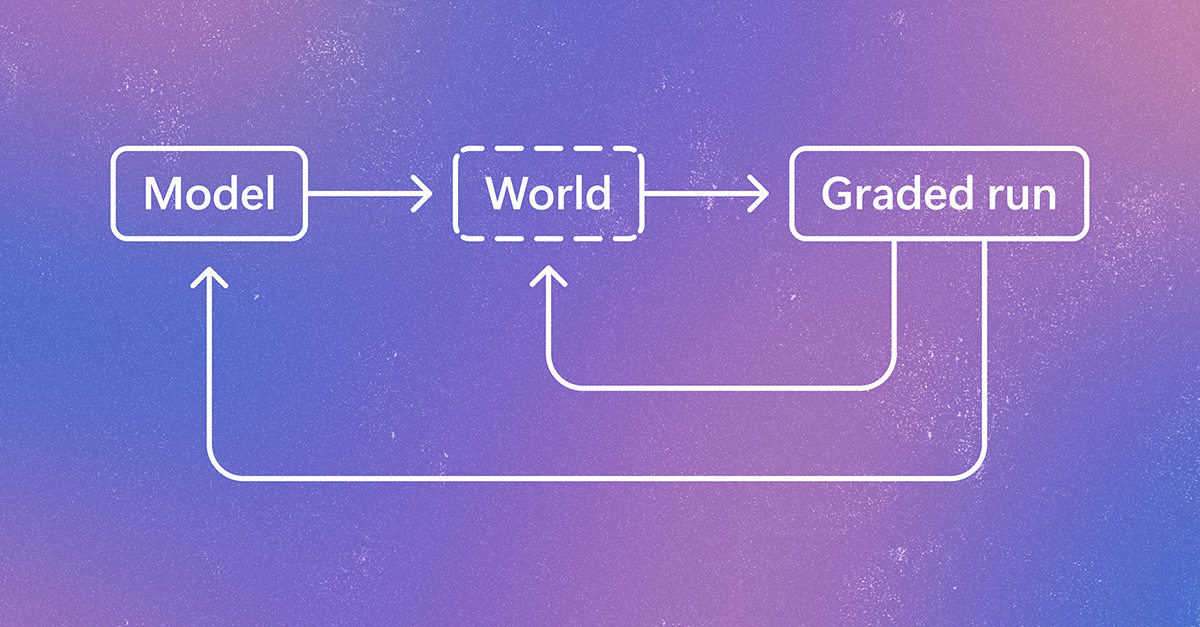
Computer-use AI agents struggle with multi-step workflows like email and customer support. Echoverse trains agents in realistic environments rather than simply providing more training tasks, helping them improve as the tasks, tests, and environments evolve. The post Echoverse: Deep, evolving environments for computer-use agents appeared first on Microsoft Research.

We use cookies to run the site and, with your consent, for analytics and to show ads. See our Cookie Policy.