Sep 2023· 2023 IEEE 31st International Requirements Engineering Conference Workshops (REW)· pp. 365-366· 1 citation· 1 references
Computer Science
TL;DR
The Second International Workshop on Requirement Engineering for Software startups and Emerging Technologies (RESET) brought together requirements engineering researchers and practitioners to discuss the need for adapting conventional requirement engineering artifacts in developing and operating emerging technologies.
Abstract
The Second International Workshop on Requirement Engineering for Software startups and Emerging Technologies (RESET) is a part of the 31st IEEE International Requirements Engineering Conference 2023, held on 4 September 2023. The workshop brought together requirements engineering researchers and practitioners to discuss the need for adapting conventional requirement engineering artifacts (i.e., requirement definition, metrics), processes and practices in developing and operating emerging technologies, including Software Startups, Artificial Intelligence (AI), Blockchain, and Quantum Computing. Participants gained insights into the RE practices, tools, techniques, and frameworks that can help them build scalable, robust, and innovative software-intensive systems. The workshop included a keynote presentation and four paper presentations.
This paper presents a realistic case study showing how the implementation of DevOps principles in cross-functional teams, with the help of the standardized pipelines and integrated automation, facilitates cooperation, reduces cycle times, enhances quality assurance and accelerates delivery outcomes.
Karthik Allam· International Journal of Eme...· 0 citations
This research presents the details of a real case for a prototype management request in a vehicle project and proposes how blockchain technology can be applied to improve the traditional approach to handling this type of request, yielding several benefits that will be highlighted.
Manuel Sobrino, J. Pajares, J. Adiego et al.· International Journal of Pro...· 0 citations
A web-based expert system designed to support the selection of blockchain consensus mechanisms according to specific user-defined operational requirements, which contributes a transparent and extensible decision-support framework intended to simplify architectural planning and management of blockchain-based distributed...
Ivica Lukić, Nikola Ramčić, Iván Ivkovic et al.· Network· 0 citations
This paper analyzes the two software architectural approaches namely Monolithic Architecture vs Microservices Architecture when considering scalable software development, and puts the following into consideration: empirical trade-offs, scalability consideration, organizational implications, and development complexity.
Theophilus Bamise Ajala, A. Oduroye, I. Ayoade et al.· Asian journal of applied sci...· 0 citations
Smart contracts in blockchains often implement critical functionality; consequently, their development-time software fault detection, removal, and avoidance have been the target of intensive research. However, the applicability of runtime dependability mechanisms to smart contracts has not been explored systematically,...
Damaris Jepkurui Kangogo, Bertalan Zoltan Peter, Attila Klenik et al.· IEEE Access· 0 citations
Global transition toward circular economy (CE) has fundamentally changed the operation requirements of Supply Chain Management (SCM) systems and the architecture requirements to enable such transition are still largely under-explored. The traditional SCM structure is fundamentally unsuitable to deal with the bidirectio...
Xiao-Jia Chong, Jia-Xin Lim, Xin-Qian Chai et al.· International journal of res...· 0 citations
Jennifer Neville did not want to go into computer science—but that’s exactly where she landed. Neville discusses the starts and stops that led to her professional sweet spot and her work identifying “surprising failures” making it hard for AI to handle complexity. The post What AI gets wrong and what failure teaches us appeared first on Microsoft Research.
Microsoft Research Blog· microsoft.comJul 30, 2026
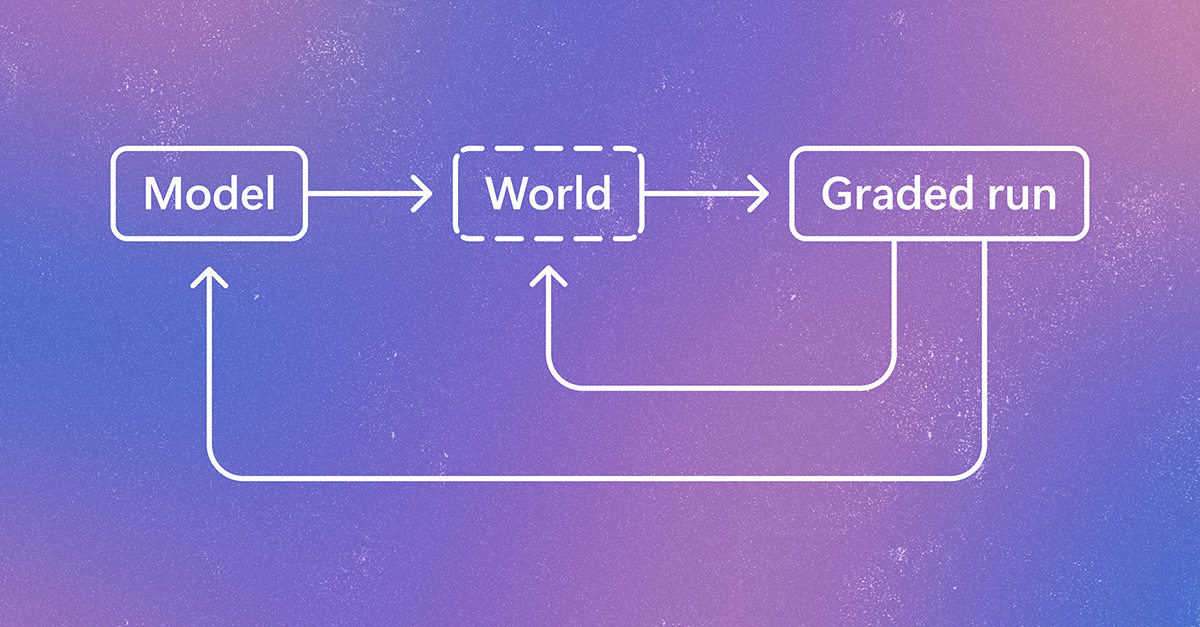
Computer-use AI agents struggle with multi-step workflows like email and customer support. Echoverse trains agents in realistic environments rather than simply providing more training tasks, helping them improve as the tasks, tests, and environments evolve. The post Echoverse: Deep, evolving environments for computer-use agents appeared first on Microsoft Research.
Computer scientist, entrepreneur, and philanthropist will collaborate with the MIT Schwarzman College of Computing to advance AI and scientific discovery.
We use cookies to run the site and, with your consent, for analytics and to show ads.
See our Cookie Policy.