Nov 2020· ESEC/SIGSOFT FSE· pp. 1513-1516· 9 citations· 22 references
Computer Science
TL;DR
A holistic view of an iterative, continuous approach to develop industrial AI software basing on business goals, requirements and Minimum Viable Products is described and a research agenda with seven questions for future studies is proposed.
Abstract
Moving from experiments to industrial level AI software development requires a shift from understanding AI/ ML model attributes as a standalone experiment to know-how integrating and operating AI models in a large-scale software system. It is a growing demand for adopting state-of-the-art software engineering paradigms into AI development, so that the development efforts can be aligned with business strategies in a lean and fast-paced manner. We describe AI development as an “unknown unknown” problem where both business needs and AI models evolve over time. We describe a holistic view of an iterative, continuous approach to develop industrial AI software basing on business goals, requirements and Minimum Viable Products. From this, five areas of challenges are presented with the focus on experimentation. In the end, we propose a research agenda with seven questions for future studies.
By foregrounding decision intelligence in complex systems, Enactive AI expands the frontier of AI from model capability to system-aware action, opening new possibilities for scalable, governable, and socially valuable AI deployment.
Zuo-Jun Max Shen, Yuan Qu, Pu-Jun Zhang et al.· 0 citations
This practice-oriented study adopts AIware to build a traditional human-directed software model to eliminate manual software engineering development effort and incorporates human intervention to fine tune some important decisions during the development process.
Nalinee Sophatsathit· International Journal of Ser...· 0 citations
This workshop aims to bring together researchers and practitioners to examine how enterprise AI agents can successfully move from prototypes to production, and focuses on three pillars: 1) Agent architectures and systems; 2) Enterprise applications and deployments; 3) Evaluation and governance.
Min Du, Anbang Xu, Jasmine Jaksic et al.· Proceedings of the 32nd ACM...· 0 citations
A three-level taxonomy inspired by autonomous driving that distinguishes degrees of autonomy along a roadmap from today’s AI-assisted development workflows to fully autonomous software development in which AI systems autonomously identify demands and design, implement, verify, and maintain software without human oversi...
The research provides a transferable, AI-driven business model structured around Osterwalder's business model canvas components, addressing the tension between AI as an operational tool and as a transformative force and moves beyond viewing AI as a toolbox for isolated tasks to explore its potential to reconfigure the...
R. Nyqvist, Mikko Kuusakoski, Sakari Aaltonen et al.· Engineering Construction and...· 0 citations
Jennifer Neville did not want to go into computer science—but that’s exactly where she landed. Neville discusses the starts and stops that led to her professional sweet spot and her work identifying “surprising failures” making it hard for AI to handle complexity. The post What AI gets wrong and what failure teaches us appeared first on Microsoft Research.
MIT News · Artificial Intelligence· news.mit.eduOct 15, 2026
A new computational approach reveals how cells communicate to assemble into tissues. This could accelerate stem cell engineering, improve disease models, and inform therapies.
Microsoft Research Blog· microsoft.comSep 29, 2026
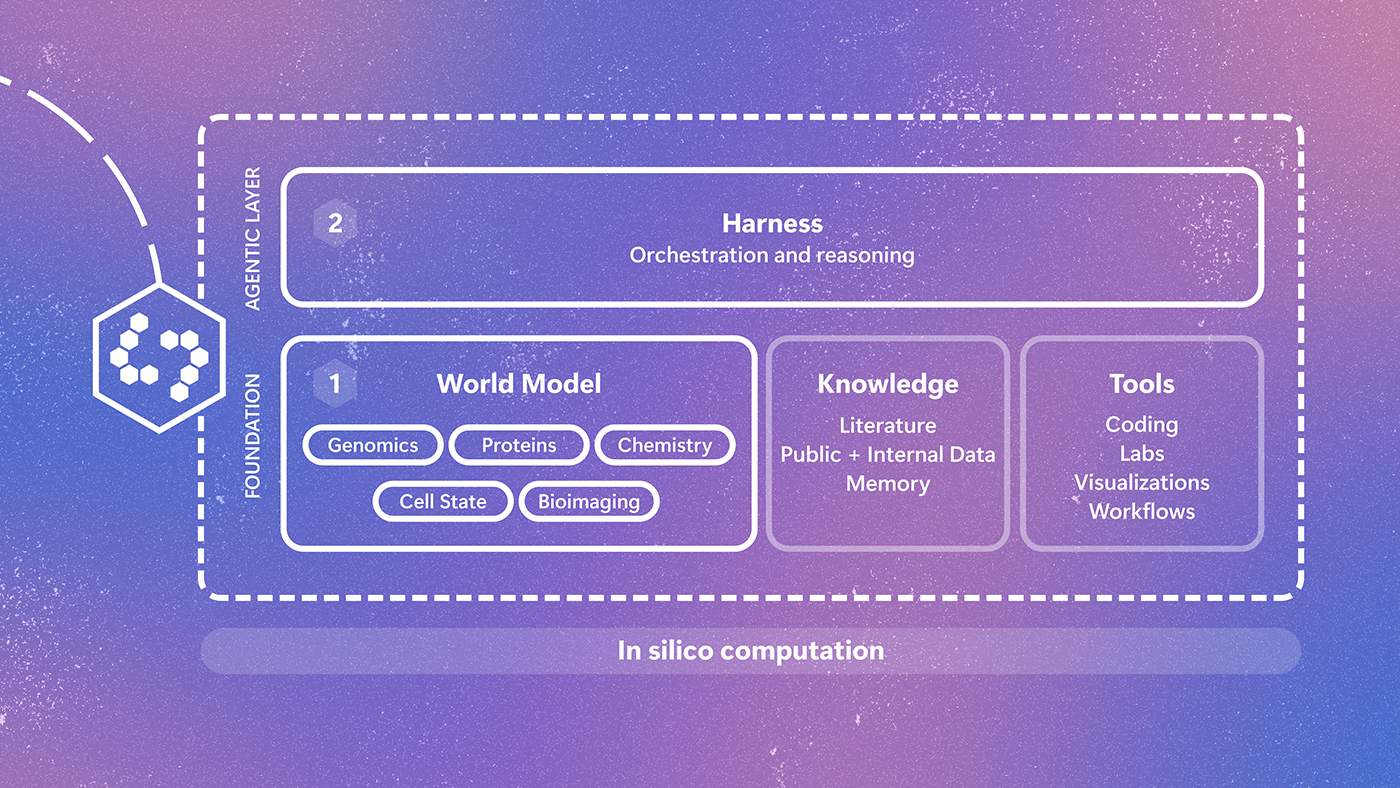
Biology doesn't operate in silos, and neither should the AI representation of it. Quine is an early-stage research effort to create a multimodal world model of biology. By connecting insights across biological scales and modalities, Quine helps scientists computationally search a space far larger than intuition allows and prioritize hypotheses before they reach the lab. Experimental results provide important feedback, helping researchers sharpen future research directions. The post Introducing Q…