Skip to content

Agile Processes in Software Engineering and Extreme Programming, 9th International Conference, XP 2008, Limerick, Ireland, June 10-14, 2008. Proceedings

2008 · International Conference on Agile Software Development · Vol 9 · 3 citations
Computer Science Engineering

TL;DR

The "Devils" within: Agile Taboos in a Large Organization.
View source

Similar papers

Open access 2026

Programming Methodologies: Agile, Scrum, and Devops in Practice

This study highlights how these methodologies complement each other in practice, improve software quality, reduce time-to-market, and enhance collaboration among stakeholders in modern software engineering environments.

Nkiwa Monkila Jonathan, Monkila Nkiwa Barthelemy, Padinganyi Tshiombela Faustin et al. · 0 citations
Review Open access Jul 2026

A Comprehensive Systematic Literature Review of Agile Methodology

A literature review of Agile methodologies from 2001 to 2025 is presented, systematically examining their evolution, cross-sectoral diffusion, and key adaptations, and identifies critical gaps in the literature and outlines future research directions.

Majid Al-Nabae, Norshahrizan Nordin, Abdulwadod S. A. Hassan et al. · 0 citations
Review Open access Aug 2026

Agile Software Development Challenges: Identification, Validation, and Prioritization Using the Analytic Hierarchy Process

This study identifies Inadequate Architecture, Lack of Standardized Framework, Communication and Coordination, Poor Requirement Verification, and Minimum Documentation as the most significant challenges in Agile development.

Kamran Khan Tatari, Shahid Latif, Salim ur Rehman et al. · 0 citations
Open access Jul 2026

AGILE SOFTWARE DEVELOPMENT RISK ASSESSMENT: A MONTE CARLO-BASED SIMULATION METHOD USING JIRA SCRUM AND KANBAN DATASETS

Agile Software Development (ASD) has turned out to be the foundation of the present-day software development practices with the provision of iterative processes, such as Scrum or Kanban, that emulate focus on flexibility, cooperation, and continuous deployment. Nonetheless, it is always a cumulative issue to deliver on...

Neha Choudhary, Mahaveer Kumar Sain · 0 citations
#generative ai Review Open access Aug 2026

MEASURING THE IMPACT OF GENERATIVE AI ON SOFTWARE TEAM PRODUCTIVITY AND OUTPUT QUALITY IN AGILE ENVIRONMENTS

Generative artificial intelligence (GAI) is becoming more incorporated into software engineering functions like code creation, debugging, requirement analysis, testing, and sharing knowledge. This research looks at how GAI affects software teams in terms of productivity and quality of the output in Agile environments....

Abdalmenam Khalif Masaud Abuswah, Abdarrahman Khalif Ali Abousowa, Ziad Omar Salem Wareg · 0 citations

Related blog posts

Microsoft Research Blog Oct 6, 2026

What AI gets wrong and what failure teaches us

Jennifer Neville did not want to go into computer science—but that’s exactly where she landed. Neville discusses the starts and stops that led to her professional sweet spot and her work identifying “surprising failures” making it hard for AI to handle complexity.  The post What AI gets wrong and what failure teaches us appeared first on Microsoft Research.

Microsoft Research Blog Jul 30, 2026

Echoverse: Deep, evolving environments for computer-use agents

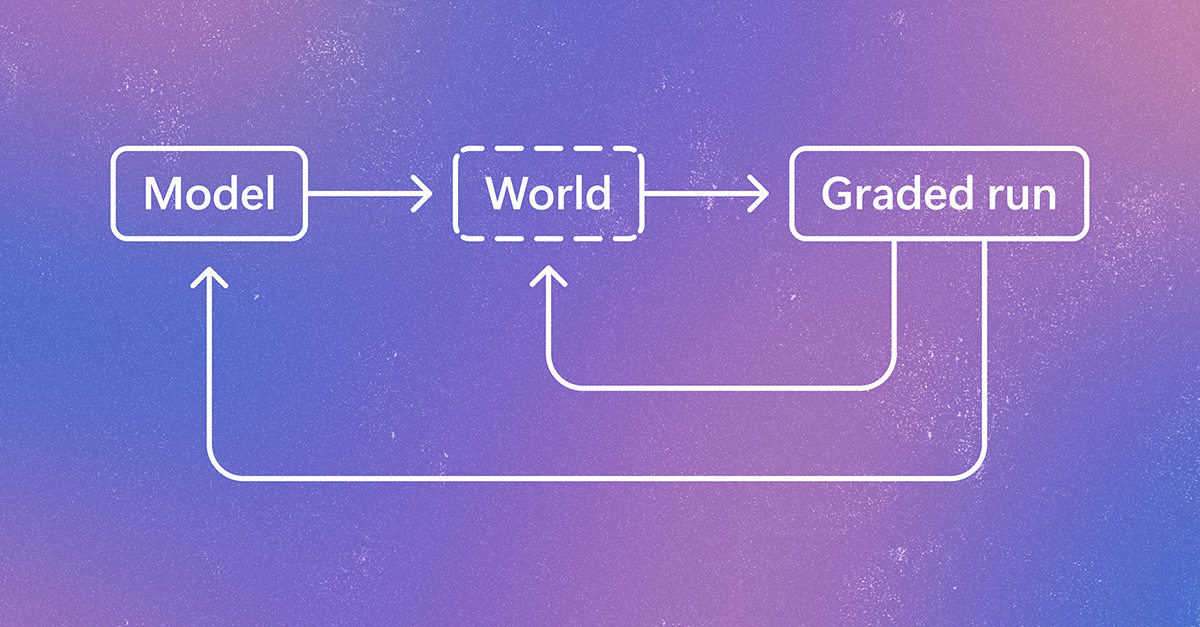
Computer-use AI agents struggle with multi-step workflows like email and customer support. Echoverse trains agents in realistic environments rather than simply providing more training tasks, helping them improve as the tasks, tests, and environments evolve. The post Echoverse: Deep, evolving environments for computer-use agents appeared first on Microsoft Research.

Microsoft Research Blog Oct 15, 2026

Proof-based general-purpose computing with Magnetar

Zero-knowledge proofs can verify computing results without rerunning workloads or exposing sensitive data. Magnetar helps bring them into the mainstream with support for standard programming languages, major speed gains, and quantum-resistant security. The post Proof-based general-purpose computing with Magnetar appeared first on Microsoft Research.

We use cookies to run the site and, with your consent, for analytics and to show ads. See our Cookie Policy.