Skip to content
#protein folding Open access

Structural and Evolutionary Analysis of Non-specific Lipid Transfer Proteins (nsLTPs) in Cereus (Cactaceae).

Oct 2026 · Journal of Molecular Evolution · 0 citations
Medicine

TL;DR

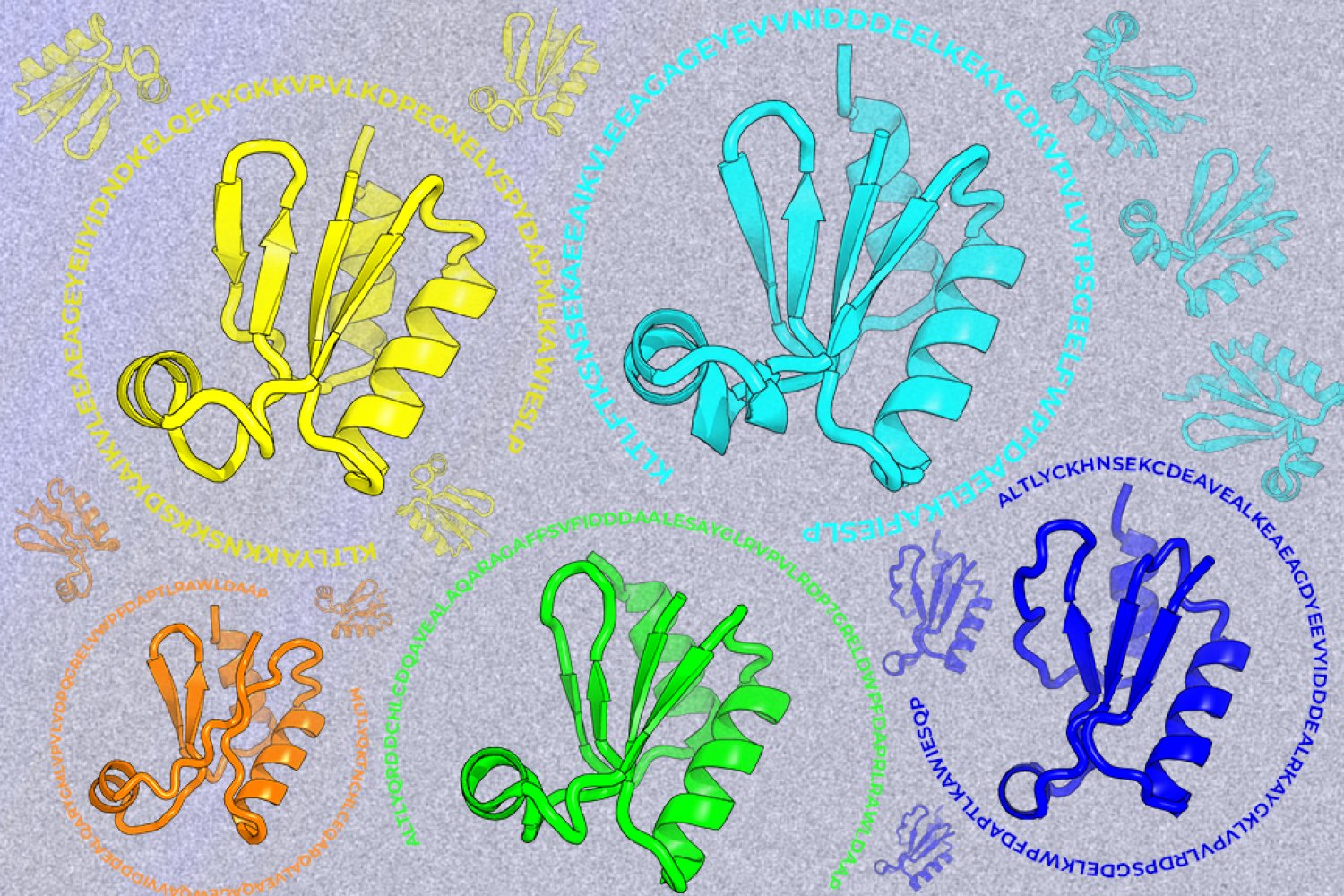
The results provide the first integrated characterization of nsLTPs in Cereus, supporting a gate-modulation hypothesis in which structural variation concentrated at tunnel entrances may contribute to functional diversification while preserving the conserved nsLTP fold (four-helix scaffold).

Abstract

The genus Cereus (Cactaceae), widely distributed across arid and semi-arid environments of South America, exhibits adaptive capacity that is partly associated with proteins involved in lipid metabolism and stress responses, such as non-specific lipid transfer proteins (nsLTPs). Although well-characterized in model plants, the structural diversity and functional roles of these proteins in cacti remain largely unexplored. In this study, we characterized the nsLTP repertoire of Cereus by integrating transcriptomic data, phylogenetic analyses, structural modeling, and ligand-binding site mapping. Structural comparisons revealed conservation of the typical nsLTP fold, with variations mainly localized to loop regions surrounding the binding cavity, suggesting functional plasticity without compromising scaffold stability. Phylogenetic analyses revealed frequent duplication and loss events, as well as species-specific paralogs. Several lineage-specific copies exhibited distinctive loop architectures and pocket geometries relative to their closest orthologs, suggesting rapid structural diversification following duplication. This pattern is consistent with functional fine-tuning after gene duplication. Positive selection analyses identified nine codons with significant evidence of episodic diversifying selection (p < 0.05), some of which mapped near predicted functional regions, supporting the hypothesis that selective pressures have shaped key interaction interfaces. Together, these results provide the first integrated characterization of nsLTPs in Cereus, supporting a gate-modulation hypothesis in which structural variation concentrated at tunnel entrances may contribute to functional diversification while preserving the conserved nsLTP fold (four-helix scaffold). Rather than asserting adaptation directly, our findings provide a structural basis and testable predictions for how nsLTP diversification may influence lipid trafficking processes relevant to cuticle/membrane function under abiotic stress.

Read PDF

Similar papers

#computer vision Review Open access May 2015

A survey study on major technical barriers affecting the decision to adopt cloud services

The comparison of adopter and non-adopter sample reveals three potential adoption inhibitor, security, data privacy, and portability, which underlines the importance of the technical and security perspectives for research investigating the adoption of technology.

Nattakarn Phaphoom, Xiaofeng Wang, S. Samuel et al. · 111 citations · ⚡8
#computer vision Open access Feb 2018

Lean Internal Startups for Software Product Innovation in Large Companies: Enablers and Inhibitors

This study investigates how Lean internal startup facilitates software product innovation in large companies and identifies its enablers and inhibitors, and shows the potential of the method-in-action framework to investigate the Lean startup approach in non-startup context.

Henry Edison, Nina M. Smørsgård, Xiaofeng Wang et al. · 78 citations · ⚡6
#computer vision Book Open access Jul 2015

Understanding the affect of developers: theoretical background and guidelines for psychoempirical software engineering

This paper highlights the challenges to conduct proper affect-related studies with psychology, provides a comprehensive literature review in affect theory, and proposes guidelines for conducting psychoempirical software engineering.

D. Graziotin, Xiaofeng Wang, P. Abrahamsson · 56 citations · ⚡4
#machine learning Open access May 2017

What Influences the Speed of Prototyping? An Empirical Investigation of Twenty Software Startups

This study conducts a multiple case study on twenty European software startups and proposes a prototype-centric learning model in early stage software startups, and identifies factors that occur as barriers but also facilitators for prototyping in earlystage software startups.

Anh Nguyen-Duc, Xiaofeng Wang, P. Abrahamsson · 44 citations · ⚡5
#protein folding Open access Sep 2026

Programmable design of functional proteins from natural language

Pinal, a 16-billion-parameter foundation model that produces protein candidates from natural-language functional descriptions, supports natural language as a high-level interface for candidate generation in protein design, enabling programmable exploration with reduced reliance on manually specified structural or seque...

Fengyuan Dai, Shiyang You, Yudian Zhu et al. · 31 citations · ⚡3

Related blog posts

Google DeepMind Blog Sep 30, 2026

Introducing SynthID Bio

Proof of concept for watermarking AI-generated proteins while preserving biological function.

MIT News · Artificial Intelligence Aug 27, 2026

Looking beyond natural sequences

A new machine-learning framework aims to improve the success rate of computational protein design while moving away from results that reproduce sequences found in nature.

We use cookies to run the site and, with your consent, for analytics and to show ads. See our Cookie Policy.